
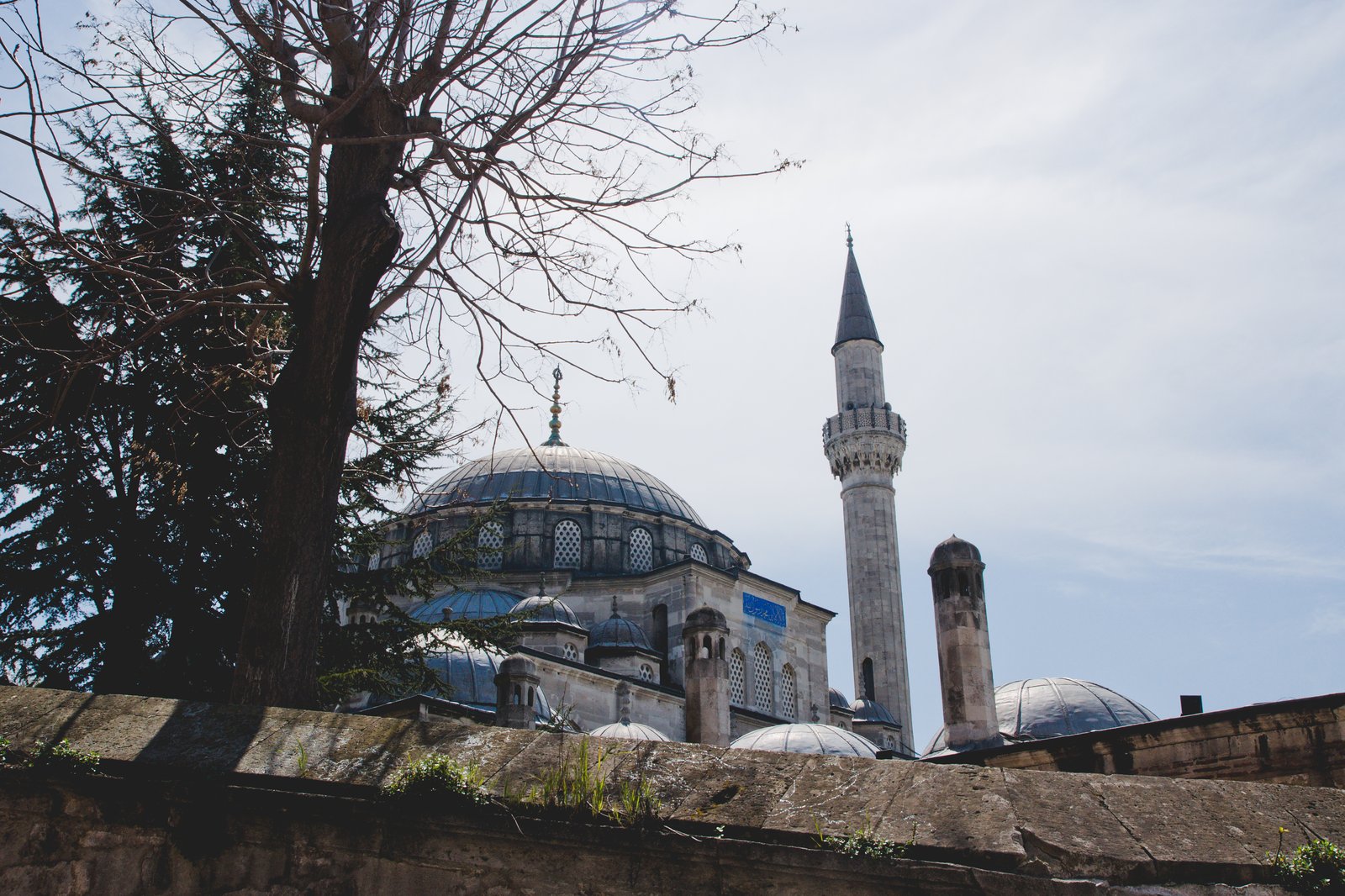
Fatih is the municipality that covers most of Istanbul’s original walled city. Most tourists know Sultanahmet and perhaps Eminönü. Fatih itself, the neighborhoods running from the city walls to the Golden Horn, is a different world: deeply religious, historically dense, and largely unmodified by the tourism industry. It is also home to some of the finest Ottoman monuments in existence.
Understanding Fatih Before You Go
Fatih is a conservative neighborhood. That is not a problem for visitors, but it is worth knowing before you arrive. Women should have a scarf available for mosque visits. Dress modestly: covered shoulders and knees for both men and women. Alcohol is available in some restaurants but this is not the area to look for bars.
The neighborhood is also genuinely residential and working. The grand bazaars and tourist infrastructure of Sultanahmet are absent here. What you get instead is a living city that looks in some streets very much as it did a century ago.
The Fatih Mosque Complex
The Fatih Mosque gives the district its name. It was built by Mehmed the Conqueror in the 1460s on the site of the Church of the Holy Apostles, the second most important church in Byzantine Constantinople after Hagia Sophia. The current building mostly dates from an 18th-century reconstruction after earthquake damage, but it remains one of the largest and most important mosques in Istanbul.
The courtyard and medrese complex around the mosque covers a large area. The tomb of Mehmed the Conqueror is here and is a significant pilgrimage site for Turkish Muslims. The complex is active: prayers are held five times a day and the faithful fill the mosque at each of them. Visits are welcome outside prayer times.
Süleymaniye Mosque
Süleymaniye is on the Fatih-Eminönü border and is the most architecturally significant imperial mosque in Istanbul. Designed by the architect Sinan for Suleiman the Magnificent and completed in 1558, it sits on a hill above the Golden Horn with a commanding view of the city.
The mosque complex includes the tombs of Suleiman and his wife Hürrem Sultan, a medrese that is now a library, and several other buildings. The scale and quality of the architecture are extraordinary. Entry to the mosque itself is free. The tombs charge a small entry fee. This is one of the genuinely unmissable buildings in Istanbul and it gets a fraction of the visitors that Hagia Sophia receives.
💡 Pro Tip: The park on the northwest side of Süleymaniye has one of the best views of the Golden Horn and the Bosphorus in the entire old city. There is a tea garden there. Locals use it as an evening spot. Come here for sunset and you will understand why Istanbul gets written about the way it does.
The Byzantine Walls
The land walls of Constantinople run for nearly seven kilometers from the Golden Horn to the Marmara Sea. Most of this fortification survives in some form and it is one of the most extraordinary pieces of ancient infrastructure still standing in any city in the world. The walls date from the 5th century under Emperor Theodosius II.
Walking sections of the wall is possible and rewarding. The area around the Edirnekapı gate (where Mehmed the Conqueror entered the city in 1453) and the Yedikule fortress at the Marmara end are the most accessible and most historically charged sections. Yedikule can be visited as an open-air museum.
The Vefa and Zeyrek Neighborhoods
These two neighborhoods between Atatürk Bulvarı and the old walls are among the most historically intact areas of the old city. Zeyrek is built around the Church of the Pantokrator, a Byzantine double church complex now converted to a mosque (Molla Zeyrek Mosque). The building dates from the 12th century and retains significant Byzantine architectural elements.
Vefa is famous for one thing: the Vefa Bozacısı, an historic shop that has been selling boza (a fermented grain drink) since 1876. It is one of the oldest still-operating food businesses in Istanbul. The interior is preserved with original fittings. A glass of boza is around 100 TL.
💡 Pro Tip: In Zeyrek, look up. The neighborhood sits on a hill and the streets offer unexpected framed views of the Bosphorus between the buildings. The area is largely ungentrified, which means it also has some of the most intact street-level Ottoman architecture in the city.
What to Know About Visiting Mosques
All major mosques in Fatih are free to visit outside prayer times. The visit rules are consistent:
- Remove shoes before entering. Bags for shoes are usually provided.
- Women should cover their hair and shoulders. Scarves are available at the entrance of major mosques.
- Men should cover their knees. Shorts are generally not appropriate.
- Keep voices low inside. Photography is usually permitted but avoid photographing people at prayer.
- Avoid arriving at prayer times (dawn, midday, afternoon, sunset, night). The times vary daily and are posted at mosque entrances.
Getting Around Fatih
Fatih is connected by bus on Atatürk Bulvarı and several cross streets. The tram runs along the edge at Eminönü. Walking is often the best option within the neighborhood because the streets are dense and the distances are manageable.
For the full overview of Fatih district including Balat and Fener, start with the district guide: Fatih and Old City Guide. For the specific neighborhoods along the Golden Horn, the Balat and Fener article has routes and practical detail: Balat and Fener: Istanbul’s Most Photogenic Streets. For the Ministry of Culture’s listings on the Byzantine walls, the official heritage site has documentation: Kültür ve Turizm Bakanlığı.