The Blue Mosque and Hagia Sophia get most of the attention. That makes sense: they are extraordinary. But Istanbul has hundreds of historic mosques, and some of the most beautiful ones sit almost entirely empty of tourists. These twelve are places I return to regularly. None of them are obscure to Istanbullites. All of them are obscure to visitors, and that is a shame.
Quick Reference: The 12 Mosques
- Rüstem Paşa Mosque (Eminönü): unmatched Iznik tile interior
- Sokullu Mehmet Pasha Mosque (Kadırga): Sinan at his quietest
- Atik Valide Mosque (Üsküdar): sweeping Bosphorus views
- Mihrimah Sultan Mosque (Edirnekapı): extraordinary afternoon light
- Eyüp Sultan Mosque (Eyüp): important Islamic pilgrimage site
- Şehzade Mosque (Fatih): Sinan’s first imperial commission
- Kılıç Ali Pasha Mosque (Tophane): recently restored, Hagia Sophia-inspired plan
- Nuruosmaniye Mosque (Grand Bazaar): Ottoman baroque showpiece
- Zal Mahmud Pasha Mosque (Eyüp): double prayer hall, unusual plan
- Kara Ahmet Pasha Mosque (Topkapı district): finest smaller Sinan work
- Piyale Pasha Mosque (Kasımpaşa): six-dome plan unlike any other
- Cerrahpaşa Mosque (Cerrahpaşa): quiet, local, original tiles intact
1. Rüstem Paşa Mosque: The Tiled Masterpiece Near the Spice Bazaar
This is the one I recommend first to anyone who says the Blue Mosque disappointed them. Rüstem Paşa was built by Sinan in 1561 and is covered, floor to ceiling including the arches and columns, in Iznik tiles. The tile work here is denser and more elaborate than anything in the Blue Mosque. It is also tiny, easy to miss tucked above the shops near the Spice Bazaar in Eminönü, and almost always quiet.
Go mid-morning on a weekday. Entrance is free. Remove shoes and cover heads as with any mosque. Stand in the middle of the prayer hall and look in every direction. It is one of the genuinely remarkable interiors in Istanbul.
2. Sokullu Mehmet Pasha Mosque: Sinan at His Quietest Best
Also by Sinan, also from the sixteenth century, but a completely different scale and atmosphere. Sokullu Mehmet Pasha is in the Kadırga neighbourhood between Sultanahmet and Kumkapı, and almost no tourists find their way there despite being fifteen minutes on foot from the Hippodrome. The İznik tiles here are fewer but placed with precision, and the space has a calm that the more famous mosques lack entirely. The surrounding medrese courtyard is beautiful and usually empty.
3. Atik Valide Mosque: The Best View in Üsküdar
Atik Valide sits on the ridge above Üsküdar on the Asian side and is another Sinan commission, built for Nurbanu Sultan in 1583. The complex is enormous: mosque, medrese, caravanserai, and soup kitchen, most of which still function. The mosque interior is spacious and serene. The walk up through the old Üsküdar backstreets to reach it is itself worth the ferry crossing.
4. Mihrimah Sultan Mosque at Edirnekapı: Stained Glass and Afternoon Light
Sinan built two mosques for Mihrimah Sultan. The one near Üsküdar ferry terminal is well-known. The one at Edirnekapı in the old city walls is not, and it is arguably the finer of the two. The interior is flooded with natural light through hundreds of windows. On a sunny afternoon the effect is extraordinary. The mosque sits on the highest point of the old Istanbul peninsula with views over the city walls and the Golden Horn.
💡 Pro Tip: Edirnekapı is far from the usual tourist circuit, which means you will likely have the mosque almost to yourself. Take the 28 or 87 bus from Eminönü and allow time to walk along the Byzantine land walls while you are in the area.
5. Eyüp Sultan Mosque: Sacred and Overlooked by Western Visitors
Eyüp Sultan is one of the most significant mosques in the Islamic world, built at the tomb of Eyüp el-Ensari, a companion of the Prophet. It is a place of genuine pilgrimage for Turkish and Muslim visitors. Western tourists rarely come here, which is an oversight. The mosque complex and the surrounding neighbourhood, with its tea gardens and the cable car up to Pierre Loti hill, form one of the most atmospheric areas in the city. It is about 5 km along the Golden Horn from the Galata Bridge, easily reached by bus.
6. Şehzade Mosque: Sinan’s First Imperial Commission
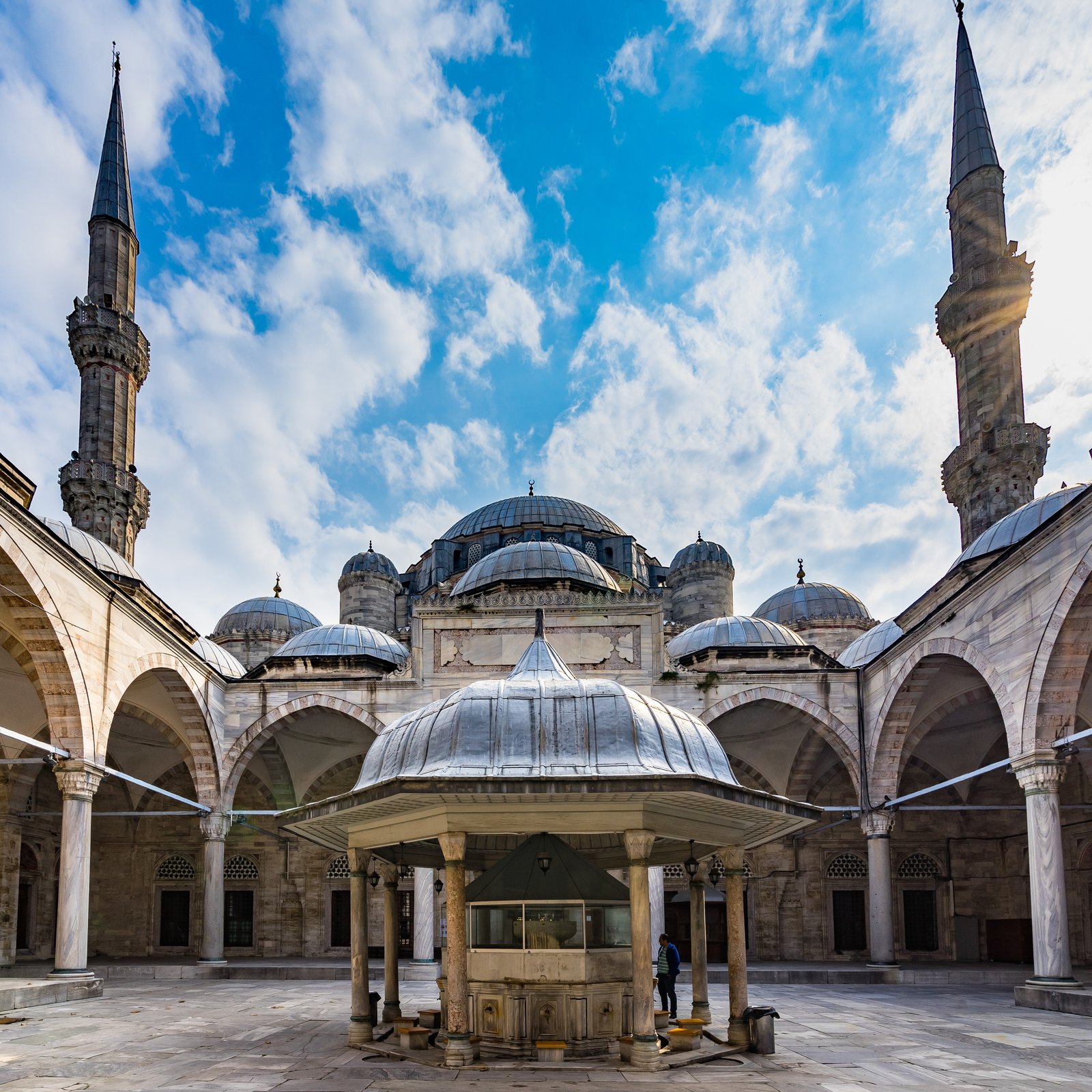
Şehzade, built between 1543 and 1548, was Sinan’s first major imperial mosque. He later dismissed it as his apprentice work. By any reasonable standard it is extraordinary, with a fully symmetrical four-semi-dome design that was innovative at the time. It sits near Istanbul University in Fatih. The exterior is as striking as the interior, especially from the Atatürk Bulvarı side in the late afternoon light.
7. Kılıç Ali Pasha Mosque: Tophane’s Quiet Sinan
Built in 1580, Kılıç Ali Pasha in Tophane was designed for a grand admiral and resembles Hagia Sophia in plan, deliberately so. It recently reopened after a restoration and the interior is in excellent condition. The surrounding Tophane neighbourhood has changed rapidly with art galleries and coffee shops, but the mosque itself sits in its own courtyard with its own sense of time.
8. Nuruosmaniye Mosque: Ottoman Baroque at the Grand Bazaar Entrance
Nuruosmaniye is technically famous, but thousands of people walk past it every day without going inside because they are heading to the Grand Bazaar. Built in 1755, it was one of the first Ottoman mosques to incorporate baroque elements, and the interior is bright, wide, and unlike anything built before it in the Ottoman tradition. The gate at the back of the mosque courtyard is also one of the most photographed entry points to the Grand Bazaar.
💡 Pro Tip: Most mosques in Istanbul are open to visitors between prayer times. Avoid the 15 minutes before and after the call to prayer (ezan). If the doors are locked, wait a few minutes. They open again quickly.
9. Zal Mahmud Pasha Mosque: Eyüp’s Other Sinan
Near Eyüp Sultan but much less visited, Zal Mahmud Pasha was built by Sinan in 1580 as a double mosque complex with two separate prayer halls sharing one courtyard. The structure is unusual and the neighbourhood around it feels genuinely off the tourist path. Worth combining with a visit to Eyüp Sultan on the same trip.
10. Kara Ahmet Pasha Mosque: Topkapı’s Hidden Gem
Not to be confused with Topkapi Palace, this is the Topkapı neighbourhood further along the old city walls. Kara Ahmet Pasha was built by Sinan in 1555 and is considered one of his finest smaller works. The Iznik tile panels in the porch are among the earliest examples of that style anywhere. The mosque is rarely visited but in excellent condition.
11. Piyale Pasha Mosque: The Unusual Six-Dome Plan
In Kasımpaşa, north of Beyoğlu, Piyale Pasha Mosque has a completely atypical plan: six equal domes in two rows covering a wide rectangular hall, more like a medieval Anatolian mosque than an Ottoman imperial one. Sinan built it in 1573 and the design reflects the admiral patron’s wish for something different. It is genuinely unlike any other mosque in the city.
12. Cerrahpaşa Mosque: Quiet and Undervisited
In the Cerrahpaşa neighbourhood near the famous hospital of the same name, this mosque was built around 1593 and is a rare example of late sixteenth-century craftsmanship with good original tile work still in place. The neighbourhood itself is a quieter, more residential part of the old city that sees little tourist traffic. The mosque feels like it belongs to the locals around it, which is mostly true.
For more ways to explore Istanbul beyond the main sites, our hidden gems guide covers neighbourhoods and corners most visitors never reach. If you are planning a mosque tour, pair it with our guide on personal Istanbul itineraries and allow full days for the Eyüp and Edirnekapı areas in particular. More context on Istanbul’s architectural heritage is available via the Turkish Ministry of Culture and Tourism.
None of these mosques require a ticket. All of them require respect for visitors in prayer. They are living places of worship first, and that is exactly why they are worth visiting.