
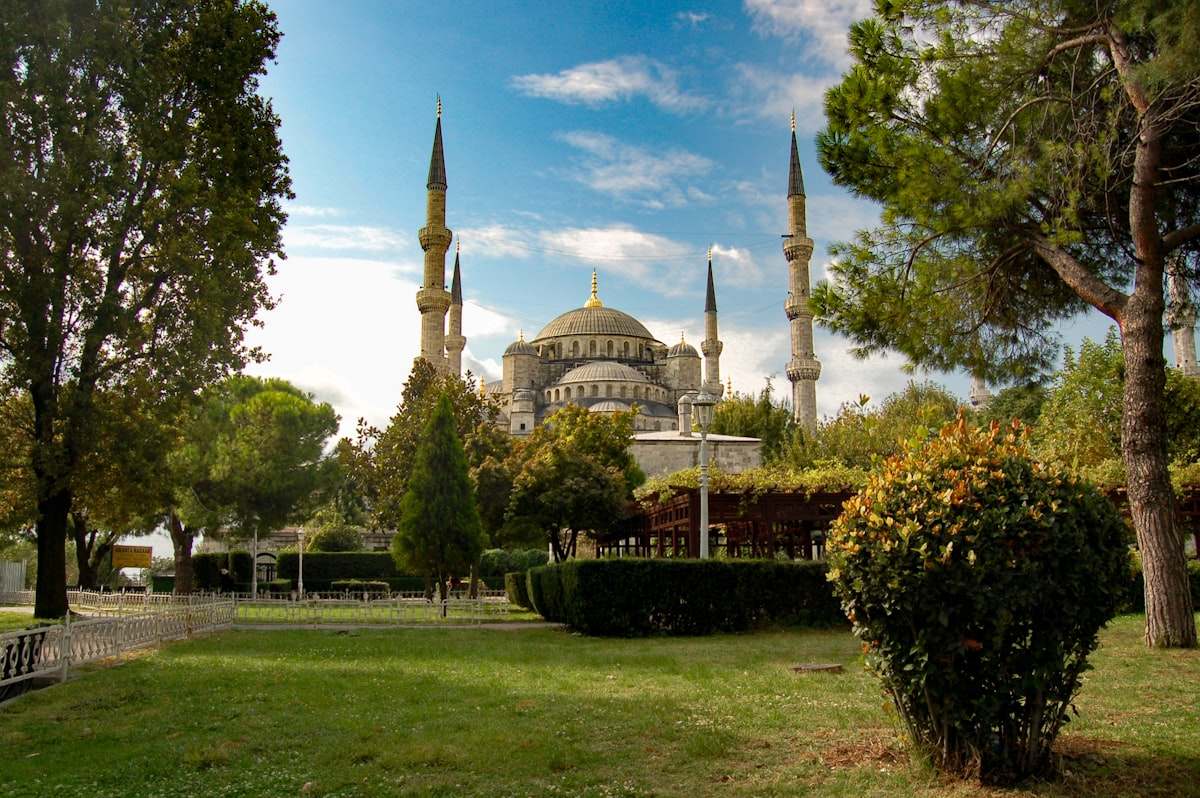
There’s a moment in Sultanahmet when you stand between Hagia Sophia and the Blue Mosque at sunset, the call to prayer echoing from six minarets at once, and the weight of fifteen hundred years of history presses down on your shoulders like a warm hand. Pigeons scatter across the pinklit stone. A vendor pushes a cart of roasted corn. The fountains of the Hippodrome catch the last light. This is the spot where the Byzantine and Ottoman empires ruled the world — and it still feels like the center of everything.
⚠️ Restoration note (2026): Hagia Sophia is undergoing a multi-year structural restoration. Significant interior areas may be covered with scaffolding during your visit. The site remains open and the entrance fee is unchanged.
Sultanahmet is Istanbul’s historic heart, the UNESCO World Heritage zone where first-time visitors spend most of their time, and for good reason. Within a walkable square kilometer, you’ll find the Hagia Sophia, the Blue Mosque, Topkapı Palace, the Basilica Cistern, the Grand Bazaar, and the ancient Hippodrome. This Sultanahmet neighborhood guide covers what to see, where to eat (without getting ripped off), and how to navigate the area like someone who’s been here before.
Top Sights and Attractions
Hagia Sophia (Ayasofya): The building that was the world’s largest cathedral for nearly a thousand years, then an Ottoman mosque, then a museum, and — since 2020 — a mosque once more. The interior is staggering: soaring domes, gold mosaics, and enormous calligraphic medallions hanging alongside Byzantine archangels. Entry to the mosque area is free; the upper gallery museum section costs €25 (as of late 2025). Some travelers skip the museum at that price — the mosque floor alone is worth the visit.
Blue Mosque (Sultanahmet Camii): The six-minaret Ottoman masterpiece, famous for the 20,000+ blue İznik tiles lining its interior. Entry is free. Visit outside prayer times (open to tourists from about 8:30 AM, with breaks during the five daily prayers). Dress modestly — coverings are available at the entrance. Arrive early morning for the shortest waits.
Topkapı Palace: The sprawling palace complex that served as the administrative center of the Ottoman Empire for nearly 400 years. Don’t miss the Harem (a separate ticket), the Spoonmaker’s Diamond, and the views over the Golden Horn from the Fourth Courtyard. Combined ticket (Palace + Harem + Hagia Irene): 2,400 TL (~$65). Closed Tuesdays.
Basilica Cistern (Yerebatan Sarnıcı): An underground chamber of 336 marble columns, eerily lit, with water reflecting the ceiling above. Look for the two upside-down Medusa heads at the base of the columns. Entry: 1,500 TL. The cistern has been beautifully restored and is featured in the James Bond film From Russia with Love and Dan Brown’s Inferno.
The Hippodrome (Sultanahmet Square): The ancient chariot-racing arena of Constantinople, now an open-air park between the Blue Mosque and Hagia Sophia. Three original monuments survive: the Egyptian Obelisk (3,500 years old), the Serpentine Column from Delphi, and the Constantine Column. The German Fountain — a gift from Kaiser Wilhelm II — anchors the northern end.
Grand Bazaar (Kapalıçarşı): A 15-minute walk from Sultanahmet Square, the Grand Bazaar is one of the world’s oldest and largest covered markets — over 4,000 shops across 61 covered streets. Free to enter, closed Sundays. Bargaining is expected. Separate zones for leather, ceramics, jewelry, carpets, and textiles.
Turkish and Islamic Arts Museum: Across from the Blue Mosque, housed in the former palace of Ibrahim Pasha. Smaller crowds, beautiful carpets, calligraphy, and ethnographic exhibits.
Gülhane Park: Istanbul’s oldest public park, next to Topkapı Palace. A green escape when you need a break from stone and marble. Visit in April during the annual tulip festival for a sea of color.
>
💡 Pro Tip: If you’re visiting multiple museums, check whether the Museum Pass Istanbul (€105, valid 5 days) saves you money. Note: it does NOT include Dolmabahçe Palace, Beylerbeyi Palace, or the Basilica Cistern.
Best Restaurants and Cafés
Sultanahmet has a reputation — partly deserved — for tourist-trap restaurants with pushy touts and inflated prices. But genuine gems exist if you know where to look.
Worth Your Time:
- Tarihi Sultanahmet Köftecisi Selim Usta: The most famous meatball restaurant in Istanbul. Cash only, no-frills, and the köfte are genuinely delicious. A Sultanahmet institution since 1920.
- Sefa Restaurant: A home-style lokanta (workers’ restaurant) where you point at the dishes behind the counter. Cheap, filling, and local.
- Bitlisli: Just minutes behind Hagia Sophia, serving delicious eastern Turkish dishes. Multiple travelers rave about it.
- Deraliye Restaurant: For Ottoman-era cuisine — think Adana kebab, şiş kebab, and dishes inspired by palace recipes.
- Balıkçı Sabahattin: An iconic seafood restaurant operating for decades. Grilled sea bass, octopus, fish meze — pair with rakı for the full experience.
- Mandabatmaz: Tiny café near Sultanahmet, famous for its impossibly thick Turkish coffee. A small cup with a Turkish delight on the side is pure ritual.
For a Splurge:
- Roof Mezze 360: Rooftop dining with panoramic views of Hagia Sophia and the Blue Mosque. The price matches the view, but for a special evening, it delivers.
- Gülhane Şark Sofrası: Near Gülhane Park, highly rated for Turkish cuisine in a garden setting.
>
💡 Pro Tip: If a restaurant on Sultanahmet’s main streets has no prices on the menu, leave immediately. This is a common scam where the bill arrives in euros at three times the reasonable rate.
Shopping Spots
- Grand Bazaar: The main event. Expect to bargain — the first price quoted is usually 2–3 times the real price. Best for: ceramics, Turkish lamps, leather goods, scarves, and spices.
- Arasta Bazaar: A quieter, less aggressive alternative right behind the Blue Mosque. Higher-quality handmade goods, including Iznik tiles and carpets.
- Spice Bazaar (Egyptian Bazaar): A 10-minute walk toward Eminönü. Turkish delight, dried fruits, saffron, teas, and the intoxicating smell of a thousand spices.
- Soğukçeşme Street: A charming restored Ottoman street between Hagia Sophia and Topkapı Palace — quiet, photogenic, with a handful of small shops.
Getting There
- T1 Tram: The Sultanahmet stop puts you right between the Blue Mosque and Hagia Sophia. This is the easiest way to arrive from Beyoğlu, Karaköy, or Eminönü.
- Havaist Airport Shuttle: HVIST-12 runs from Istanbul Airport to the Sultanahmet area via Aksaray (~275 TL, ~90 minutes).
- From Taksim: Take the M2 metro toward Yenikapı, exit at İstanbul Üniversitesi, and catch the T1 tram to Sultanahmet. Or take the F1 funicular from Taksim to Kabataş, then the T1 tram the full length.
- Walking from Galata Bridge: A pleasant 15-minute walk from Eminönü through Sirkeci.
>
💡 Pro Tip: Don’t buy “guided tickets” from people standing near Hagia Sophia’s entrance. They’re unofficial and overpriced. Buy directly at the ticket counter or online.
Where to Stay
The hottest debate on travel forums: “Should I stay in Sultanahmet?” The consensus? Visit, but consider staying elsewhere.
Sultanahmet is convenient for sightseeing, but the neighborhood empties after dark, restaurants are pricier than elsewhere, and options for nightlife, local food, and a genuine neighborhood feel are limited compared to Galata, Karaköy, or Kadıköy. If you do stay, you’ll love the sunrise walks past Hagia Sophia with nobody around.
| Budget | Option | Why |
|---|---|---|
| Budget | Hostels near Çemberlitaş | Walkable to everything, quieter than the main square |
| Mid-range | Boutique hotels on Akbıyık Caddesi | The backpacker strip below Sultanahmet with decent options |
| Upscale | Four Seasons at Sultanahmet | A converted Ottoman prison — seriously |
Best Time to Visit
- Early morning (before 9 AM): The square is magical at sunrise with almost no one around.
- Spring (April–May): Gülhane Park’s tulip festival, comfortable walking temperatures, and manageable crowds.
- Winter (December–February): “No lines, no heat, no waits” — as one seasoned traveler reported. Atmospheric and uncrowded.
- Avoid: Friday afternoons (Blue Mosque prayer times create long tourist waits) and July–August peak afternoons (hot, humid, overcrowded).
Insider Tips
- The Sultanahmet Archaeological Park between Hagia Sophia and the Blue Mosque is an underrated spot to sit, people-watch, and absorb the scale of what surrounds you.
- Sirkeci, just north toward the waterfront, has better-value restaurants than the main Sultanahmet square. Look for the historic Sirkeci train station — the terminus of the original Orient Express.
- Şehzade Cağ Kebap in the Hocapaşa neighborhood near Sirkeci serves outstanding cağ kebab at local prices.
What to Avoid
- Carpet shop invitations: “My friend, let me show you my uncle’s shop — just for tea!” It’s a high-pressure sales situation. Politely decline unless you genuinely want to shop for carpets.
- Restaurants with touts outside: If someone is physically pulling you in, the food is almost never good enough to justify the price.
- The “fake museum pass” sellers: Unofficial guides near Hagia Sophia and Topkapı who pressure tourists into buying overpriced packages.
- Kumkapı fish restaurants: Once famous for meyhane culture, now widely regarded as tourist traps with inflated bills and aggressive touts.
Conclusion
Sultanahmet is where Istanbul began — literally. Fifteen centuries of empires, religions, and revolutions are stacked on top of each other within a few city blocks. It can feel overwhelming, touristy, and transactional at its worst, but at its best — early morning, late evening, or during the off-season — it’s one of the most extraordinary open-air museums on earth. Visit it thoroughly, eat carefully, and save your evenings for the livelier neighborhoods across the Golden Horn. What was the most surprising thing you discovered in Sultanahmet?
—
Useful links: Go Türkiye – Istanbul Tourism · Turkish Museums Portal
Prices last updated: March 2026. Exchange rate used: 1 USD ≈ 45 TL. Prices in Turkish lira can change frequently due to inflation. Attraction fees set in euros (€) are more stable. Always check official websites for the latest prices before your visit.






[…] gem near the Sultanahmet tram stop, housing spectacular in-situ Byzantine mosaics from the Great Palace of Constantinople. […]