
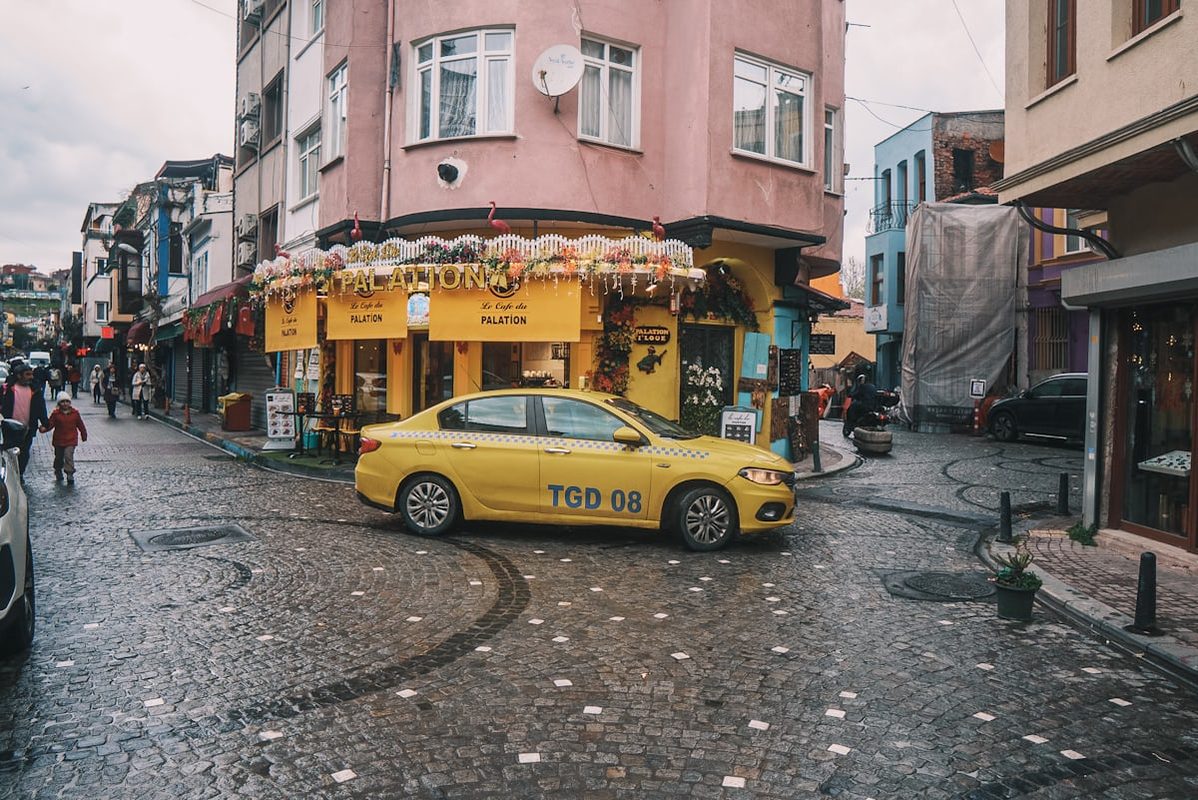
Let’s be honest: Istanbul taxis have a reputation problem, and it’s earned. Not every taxi driver in Istanbul is trying to scam you — plenty are honest, hardworking professionals. But enough bad actors exist that “Istanbul taxi scam” is one of the most-searched travel phrases for the city. The good news: with the right knowledge and apps, you can navigate Istanbul’s taxi system confidently, avoid the common tricks, and actually enjoy the ride. This guide covers everything — from the specific scams to watch for, to the apps that protect you, to the alternatives that make taxis unnecessary for most trips.
The Current Taxi Landscape (2026)
Taxi fares (February 2026):
- Meter opening fee: 65 TL
- Per kilometer: 44 TL
- Minimum fare (short ride): 210 TL
What this means in practice:
- Sultanahmet to Taksim: ~200–300 TL
- Taksim to Kadıköy (including bridge toll): ~400–600 TL
- City center to Istanbul Airport: 1,500–2,500 TL
All Istanbul taxis must use meters. If a driver refuses to turn on the meter, get out immediately.
The 7 Most Common Taxi Scams
1. The Meter Manipulation
How it works: The driver runs the meter, but it’s been tampered with to run faster. The fare jumps suspiciously quickly.
How to avoid: Use Google Maps to track your route in real-time. If the meter seems to be racing ahead of the distance covered, speak up or note the taxi number for a complaint.
2. The Long Route
How it works: The driver takes a circuitous route to inflate the fare, especially from airports or to hotels where the tourist won’t know the geography.
How to avoid: Open Google Maps and show the driver you’re tracking the route. Say “kısa yoldan” (shortest route) when you get in.
3. The Bill Switch
How it works: You hand the driver a 200 TL note, and they quickly swap it for a 20 TL note, claiming you didn’t pay enough.
How to avoid: State the denomination out loud as you hand it over: “Two hundred lira.” Pay by card when possible. Keep small bills separate from large ones.
4. The Broken Meter
How it works: “My meter is broken, I’ll give you a fair price” — which is always 3–5x the actual fare.
How to avoid: If the meter doesn’t work, get out. There’s always another taxi. No legitimate taxi operates without a working meter.
5. The Euro/Dollar Demand
How it works: At the end of the ride, the driver demands payment in euros or dollars at an inflated exchange rate.
How to avoid: Always pay in Turkish Lira. If they insist on foreign currency, you’re being scammed. Period.
6. The Airport Extra Charge
How it works: Driver claims there’s a surcharge for airport pickups, luggage, nighttime, bridge crossings, etc.
How to avoid: The meter fare IS the fare. Bridge tolls are included in the meter. There is no legitimate luggage surcharge.
7. The Uber/BiTaksi Upsell
How it works: You order through an app, the driver messages saying the app price is wrong and demands more (often 3–5x the quote). If you refuse, they cancel.
How to avoid: Don’t respond to messages demanding more money. If they cancel, re-order. Report the driver through the app. Uber generally refunds overcharges within 1–2 days.
Your Defense Arsenal: Apps and Tools
BiTaksi
The most popular Turkish ride-hailing app. Key features:
- Digital fare tracking
- Driver rating system
- In-app payment option
- Dispute resolution
- Trip history for receipts
Uber
Works in Istanbul and dispatches yellow taxis (not private cars). Features:
- Upfront price estimate
- GPS-tracked route
- Digital payment (no cash needed)
- Easy fare disputes
- Note: A 20 TL booking fee may apply
Google Maps
Not a ride-hailing app, but invaluable for:
- Showing drivers your destination (avoids language-barrier wrong turns)
- Tracking the route in real-time (catches long-routing immediately)
- Estimating public transit alternatives
💡 Pro Tip: Always order taxis through BiTaksi or Uber rather than hailing from the street. App-dispatched taxis are tracked, which dramatically reduces scam incentives.
Alternatives to Taxis
For most tourist trips, taxis aren’t even necessary:
Public transport (Istanbulkart): Metro, tram, ferry, and bus cover virtually every tourist destination. A single ride costs 42 TL vs. 200–500 TL for a taxi.
Ferries: For cross-Bosphorus trips, ferries are faster, cheaper, and infinitely more scenic than taxis stuck in bridge traffic.
Walking: Istanbul’s main tourist areas (Sultanahmet, Galata, Beyoğlu) are walkable, though hilly. The walk from Sultanahmet to Galata Tower takes about 25 minutes.
Airport metro: The M11 metro from Istanbul Airport to Gayrettepe takes 35 minutes and costs 42 TL. Compare that to a taxi at 1,500–2,500 TL. The metro wins on every metric except having someone carry your bags.
When Taxis Make Sense
- Late at night after metro/tram service ends (midnight)
- With heavy luggage to/from places to stay
- To Sabiha Gökçen Airport (limited public transit options)
- Groups of 3–4 where the taxi fare split approaches public transit costs
- When you’re exhausted after a long day and the hotel is uphill
What to Do If You Get Scammed
- Note the taxi number (displayed on the outside of the car)
- Report via app (if you used BiTaksi/Uber)
- Call 153 (Istanbul’s city complaint line — they take taxi complaints seriously)
- Ask your hotel to call the taxi company on your behalf
- Leave an online review warning other travelers
A Few Good Words
Not every taxi driver is a scammer. Many are honest, friendly, and proud of their city. I’ve had conversations in taxis (in broken Turkish and enthusiastic hand gestures) that taught me more about Istanbul than any guidebook. The system has problems, but the people in it are mostly good. Ride with awareness, not paranoia.
What’s been your taxi experience in Istanbul? Horror stories and good ones alike — share below.
—
—
Useful links: Booking.com Istanbul · Turkey Immigration Portal
Prices last updated: March 2026. Exchange rate used: 1 USD ≈ 45 TL. Prices in Turkish lira can change frequently due to inflation. Attraction fees set in euros (€) are more stable. Always check official websites for the latest prices before your visit.