
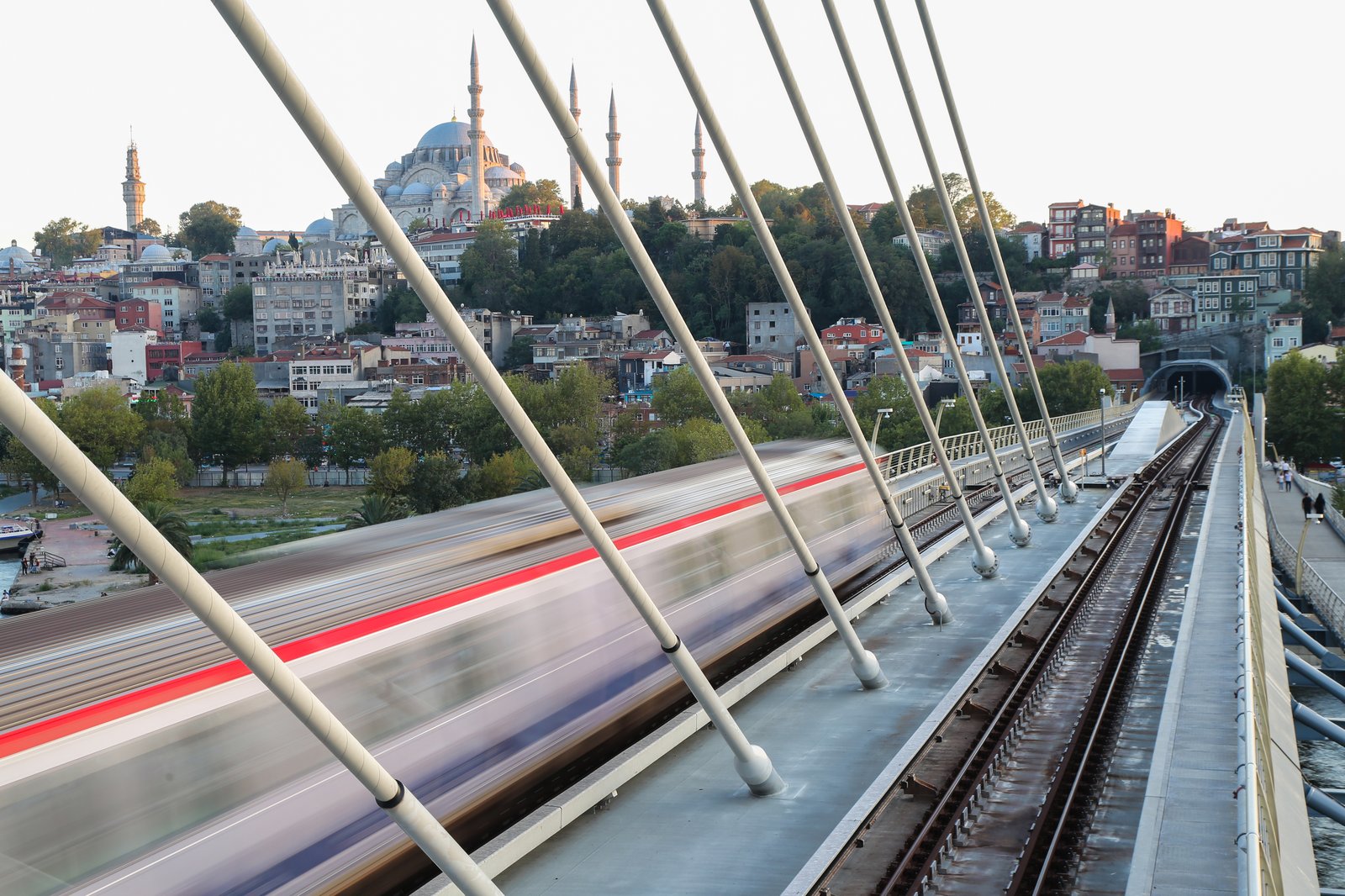
The first time I arrived in Istanbul, I took a taxi from the airport. It cost a fortune and took almost two hours in traffic. By my third day, I was zipping around on the metro and tram like I’d lived there for years. Istanbul’s public transport network is genuinely excellent once you understand how it fits together — and it will save you enormous amounts of time and money compared to taxis.
This guide covers everything: the Istanbulkart, every metro line, the iconic tram, the Marmaray tunnel under the Bosphorus, the Metrobus, and the ferries that make the city magical.
Start Here: The Istanbulkart
Before anything else, get an Istanbulkart. This rechargeable smart card works on every metro, tram, bus, ferry, funicular, and cable car in the city.
Cost: 165 TL ($3.75) for the card itself, then load credit separately
Single ride with Istanbulkart: 35 TL ($0.80) for metro/bus/tram; 40 TL Metrobus; 55 TL Marmaray
Without Istanbulkart: 42 TL per ride (cash/anonymous card — significantly more expensive)
Where to buy: Yellow vending machines at Istanbul Airport (IST) arrivals floor -2, Sabiha Gökçen Airport exit, major metro stations (Taksim, Sultanahmet, Kadıköy), and most convenience stores
💡 Pro Tip: Get a separate card for each person in your group — transfers and discounts only apply per card, not per group tap.
The card can be topped up at any vending machine, via the Istanbulkart mobile app, or at most kiosks and shops displaying the Istanbulkart logo. Always keep at least 100 TL ($2.28) credit on your card — running out of credit when you’re trying to catch a ferry is avoidable.
Metro Lines: Your Quick-Reference Guide
Istanbul’s metro network has 12+ lines covering both the European and Asian sides. The European and Asian networks connect via the Marmaray rail tunnel under the Bosphorus.
Key lines for visitors:
M2 (Yenikapı – Hacıosman) — The most useful tourist line. Runs from the historic center at Yenikapı up through Şişhane (close to Galata), Taksim Square, Şişli/Mecidiyeköy, and further north to Levent (business district) and Maslak. If you’re staying in Taksim or Beyoğlu, this is your main line.
M11 (Gayrettepe – Istanbul Airport) — Direct metro connection to Istanbul’s main airport (IST). Approx. 35 minutes, fare: 38.49 TL ($0.87). Then connect to M2 at Gayrettepe for onward travel. Total to Taksim: around 57 TL ($1.30). By far the cheapest airport transfer option.
M4 (Kadıköy – Sabiha Gökçen Airport) — Asian side line running from Kadıköy through Bostancı and out to SAW airport. Essential if you’re staying on the Asian side.
M1A (Yenikapı – Atatürk Airport) — Now connects the historic area to the old airport zone, useful for transfer connections at Yenikapı hub.
M7 (Kabataş – Mahmutbey) — Useful for Kabataş (near Dolmabahçe Palace) and connecting European districts.
Operating hours: Most metro lines run daily 06:00–00:00. Some night metro services operate on selected lines until later.
The T1 Tram: Sultanahmet to Kabataş
The T1 tram line is the most tourist-useful line in Istanbul, running right through the heart of the historic center. Clean, frequent, and air-conditioned.
Key stops:
– Kabataş → Dolmabahçe Palace, funicular to Taksim
– Tophane → Istanbul Modern art museum
– Karaköy → Galata Bridge, ferries
– Eminönü → Spice Bazaar, Bosphorus ferries
– Sirkeci → Marmaray connection
– Sultanahmet → Hagia Sophia, Blue Mosque, Topkapı Palace
– Beyazıt → Grand Bazaar
Fare: 35 TL ($0.80) with Istanbulkart | Operating hours: 06:00–01:00
💡 Pro Tip: The T1 tram is heavily crowded during rush hours and tourist peak times. Leave your larger bags at your accommodation if possible. Watch for pickpockets in crowded trams.
Marmaray: Under the Bosphorus
The Marmaray commuter rail is one of Istanbul’s engineering marvels — a tunnel running 60 meters under the Bosphorus Strait connecting Europe and Asia. It’s the fastest way to cross between the two continents.
Key stations:
– European side: Yenikapı (connects to M1/M2 metro), Sirkeci (connects to T1 tram)
– Asian side: Üsküdar, Ayrılık Çeşmesi (connects to M4 metro)
Fare: 55 TL ($1.25) — slightly higher than regular metro
Journey time: Sirkeci to Üsküdar in about 4 minutes (under the strait)
Operating hours: 06:00–00:00
For a day trip to Kadıköy or the Asian side, the combo of T1 tram → Sirkeci → Marmaray → Ayrılık Çeşmesi → M4 to Kadıköy is seamless and fast.
Metrobus: Istanbul’s BRT System
The Metrobus is a bus rapid transit system running in a dedicated lane along the E5 motorway corridor. It’s genuinely fast — unaffected by regular traffic — and connects Beylikdüzü (far west) to Söğütlüçeşme on the Asian side across the Bosphorus bridges.
Fare: 40 TL ($0.91) with Istanbulkart only (cash not accepted)
Who uses it: Mainly commuters connecting distant western and eastern suburbs to the city center
For tourists: Less useful unless you’re staying far from the center. The key interchange is at Zincirlikuyu (M2 metro connection) for European-side transit
City Ferries: The Scenic Option
Istanbul’s ferry network (operated by Şehir Hatları) is efficient, affordable, and genuinely beautiful. Crossing the Bosphorus by ferry feels nothing like getting on a subway.
Main routes:
– Eminönü ↔ Kadıköy: 44–49 TL ($1) — the most popular commuter crossing
– Eminönü ↔ Üsküdar: similar price
– Kabataş ↔ Kadıköy: fast, scenic crossing
– Kabataş/Eminönü ↔ Princes’ Islands: 55–70 TL ($1.25–1.60) one way
All ferries accept Istanbulkart. Full Bosphorus cruise by public ferry: 200–250 TL ($4.55–5.68) — the cheapest way to see the strait’s palaces and mansions.
Funiculars and Cable Cars
F1 Funicular (Kabataş – Taksim): Links the T1 tram at Kabataş to Taksim Square. Two minutes, 35 TL. Avoids walking uphill.
Tünel (T – Karaköy – Tünel): One of the world’s oldest underground railways, running from Karaköy up to the bottom of Istiklal Street. 35 TL.
Eyüp Cable Car: Up to Pierre Loti Hill and the tea garden with incredible Golden Horn views.
IDO and Private Ferries
Beyond the main Şehir Hatları network, IDO (Istanbul Sea Buses) operates fast sea bus routes connecting more distant points — Bakırköy, Bostancı, Kadıköy, and across to the Yalova and Bandırma areas on the Sea of Marmara’s southern coast. Sea buses are faster than regular ferries but slightly more expensive. For day trips to Yalova (gateway to Bursa) or Çınarcık, IDO is your best option.
Private motor ferries (motor) operate between many of the same waterfront stops and are even cheaper than Şehir Hatları on some routes. They’re slightly older and less scheduled but fine for locals and adventurous visitors.
Using the Moovit App for Navigation
The best way to navigate Istanbul’s complex transit network in real time is Moovit — significantly more accurate than Google Maps for Istanbul’s multi-modal transit. Moovit shows you real-time departure information, platform numbers, and the best combinations of metro, ferry, and bus for your journey. Download it before you arrive and bookmark a few key routes.
The Metro Istanbul official app provides static line maps and station information. The Istanbulkart app lets you check your balance and top up remotely. Between these three apps, you have everything you need.
Night Buses and Late Transport
Istanbul’s metro and tram lines generally stop around midnight. For late-night travel, the city operates a network of gece otobüsü (night buses) that run from the main hubs at Taksim and Kadıköy through the night. These are practical but slower — they stop everywhere.
Alternatives for getting home after midnight:
– BiTaksi or Uber: Always available, prices standard
– Martı e-scooters: Practical for shorter distances if you’re sober and confident
– Night ferries (limited): Check the Şehir Hatları schedule — some routes operate very late on weekends
For anyone staying in Kadıköy and spending evenings on the European side: the last regular ferry back across the Bosphorus leaves around 23:00–23:30. After that, the bridge-crossing taxi (via the Bosphorus or Fatih Sultan Mehmet bridge) adds 15–20 minutes and costs 200–400 TL ($4.55–9.10). Plan accordingly or book a hotel on the same side you’re going out on.
Istanbul’s Minibuses (Dolşmuş)
The dolşmuş (shared minibus) is one of Istanbul’s oldest transport institutions. These fixed-route minibuses run on set corridors, pick up and drop off passengers anywhere along the route, and charge a flat fare (typically 20–35 TL / $0.45–0.80 depending on distance). They’re faster than regular buses on the same routes because they’re smaller and more nimble.
Dolşmuş routes are less obvious to visitors — the route is written on a card in the windscreen, in Turkish. But for specific corridors where they operate (Taksim to Beşiktaş, Taksim to Ortaköy, Kadıköy to Bostancı), they’re quicker and often cheaper than the metro. Ask your accommodation what dolşmuş routes are useful for your neighborhood.
Getting There: From the Airports
From Istanbul Airport (IST):
– Metro M11 to Gayrettepe, then M2 onward: 38.49 TL ($0.87) + transfer
– Havaist bus to Taksim: 275 TL ($6.25), ~60–90 minutes
– Taxi to Sultanahmet: 1,372–1,498 TL ($31–34) — only in no-traffic conditions
From Sabiha Gökçen (SAW):
– Havabus to Taksim: 283.50 TL ($6.44)
– Metro M4 from Sabiha Gökçen to Kadıköy: practical for staying on the Asian side
What to Avoid
– Buying single-use tokens or QR codes for regular travel — Istanbulkart saves you money on every ride
– Taxis for routes with good metro/tram coverage — almost always faster and much cheaper by rail
– Rush hour on the T1 tram — 08:00–09:30 and 17:00–19:00 are extremely crowded
– Assuming the ferry schedule is the same every day — weekend and holiday schedules differ from weekdays; check the Şehir Hatları app
Conclusion
Istanbul’s public transport network is one of the great joys of visiting this city — cheap, frequent, and genuinely useful for getting to nearly every attraction. The Istanbulkart is your key to it all. Download the Metro Istanbul app and Moovit for real-time navigation, and you’ll move through this 15-million-person city with ease.
What’s your favorite way to get around Istanbul? Let us know in the comments!
Prices last updated: March 2026. Exchange rate: 1 USD ≈ 45 TL.
Useful links: US Travel Advisory Turkey · Şehir Hatları Istanbul Ferries







[…] metro/tram […]