One of the most common mistakes first-time Istanbul visitors make is picking a hotel location based solely on price, without realising that some cheap areas in Istanbul are cheap for a reason. This isn’t a guide designed to scare you — Istanbul is a large, mostly safe city for tourists — but there are specific neighbourhoods that will make your trip harder, less comfortable, or occasionally unsafe.
Here’s an honest guide to the areas worth avoiding and, crucially, where to stay instead.
—
Tarlabaşı: Beautiful Buildings, Difficult Reality
Tarlabaşı is located just minutes from İstiklal Caddesi in Beyoğlu — and that proximity is exactly how people end up there by accident. The neighbourhood has some extraordinary late 19th-century apartment buildings that have attracted urban renewal projects, but the social reality remains complex. Parts of the area experience street crime, and solo travellers — particularly women — can experience harassment.
The risk: Wandering too far east or northeast from İstiklal Street in the dark, or booking accommodation in the interior streets of Tarlabaşı.
The alternative: Stay in Karaköy (10 minutes south) or central Beyoğlu near İstiklal. Both give you the same access to the city at genuinely equivalent or better prices, with a much more comfortable environment.
—
Dolapdere: Worth Avoiding Entirely
Dolapdere is a neighbourhood in the Şişli district, technically walkable from Taksim Square but a world apart in character. It’s one of Istanbul’s most economically marginalised areas. There are no tourist attractions here, no good restaurants, no reason to stay.
Occasional listings on budget booking platforms place accommodation here. Do not book anything in Dolapdere. If you see a hotel in this area, keep scrolling.
—
Aksaray: Uncomfortable for Solo Travellers
Aksaray is not dangerous in the way the above neighbourhoods are, but it’s not a comfortable area for solo travellers — especially women. It’s a conservative, working-class district with a large population of religious conservative residents. Modest dress is expected and frankly necessary. Street harassment, while rarely violent, can be persistent.
The area is also a hub for budget-end wholesale tourism (the kind involving large charter groups) which results in a less pleasant atmosphere in the streets around the main bazaar areas.
The alternative: Sultanahmet proper (the tourist zone around the Blue Mosque) is only 15 minutes away and far more suitable. Or stay in Karaköy.
—
Laleli: Fine by Day, Less Fine After Dark
Laleli shares characteristics with Aksaray and has an additional complication: a persistent street sex trade after dark, mostly concentrated on certain blocks. During the day it’s fine for shopping — the shoe and wholesale clothing district is worth visiting. But don’t book accommodation in the backstreets of Laleli unless you’re on a wholesale buying trip and don’t care about the atmosphere.
—
Esenyurt: Too Far Out
Esenyurt is on the far western outskirts of the European side of Istanbul. It’s not dangerous for most foreign tourists in the way some inner-city neighbourhoods are, but it puts you an hour or more from every tourist attraction in the city. Budget accommodation listings here look attractive on price, but the transport time and cost will eat up any savings.
The hidden cost: A 70–100 TL ($1.60–2.25) round-trip public transport cost becomes 140–200 TL ($3.20–4.55) per day if you leave the neighbourhood once. Add taxi costs for evenings and you’ve erased the accommodation saving.
The alternative: A slightly more expensive room in Beyoğlu, Karaköy, or Kadıköy keeps you within 20–30 minutes of everything.
—
Sultanbeyli: Asian-Side Outskirts
Similar logic to Esenyurt but on the Asian side. An area on the far suburban fringe that has nothing for tourists and puts you at least 45–60 minutes from central Kadıköy or the ferry to the European side. Only relevant for long-stay residents on a very tight budget.
—
Gülsuyu (Maltepe): Not for Short Stays
Gülsuyu is a neighbourhood in the Maltepe district on the Asian side, near Kadıköy but distinctly different in character. The broader Maltepe district has beautiful coastal areas (Idealtepe, Küçükyalı) that are perfectly fine, but the inland hillside neighbourhood of Gülsuyu is not suitable for tourist accommodation.
If you want to stay in Maltepe, stick to the waterfront zone.
—
Busy vs. Quiet: Understanding the Trade-Off
A question that comes up constantly: should I stay on the European side (Sultanahmet or Beyoğlu) or the Asian side (Kadıköy)?
European Side Pros: Walking distance to the major tourist sights (Hagia Sophia, Topkapi, Grand Bazaar). Most guided tours depart from here.
European Side Cons: More crowded, higher tourist price premium, noisier.
Asian Side Pros: More local atmosphere, better food per lira, cheaper accommodation, quieter nights. Kadıköy is excellent.
Asian Side Cons: A ferry or metro ride from most tourist sights (20–35 minutes depending on route).
Our Recommendation: First-timers with 3–4 days: stay in Sultanahmet or Karaköy for convenience. Second trips or week-long stays: consider Kadıköy. Digital nomads and longer stays: Cihangir, Galata, or Moda (Kadıköy) are the best combinations of quality and price.
—
The Best Neighbourhoods to Stay
| Neighbourhood | Best For | Price Range (USD/night) |
|---|---|---|
| Sultanahmet | First-timers, sightseeing | $50–120 (mid-range) |
| Karaköy | Style, art scene, Bosphorus | $80–200 |
| Cihangir / Galata | Expats, digital nomads | $60–150 |
| Beyoğlu (near İstiklal) | Nightlife, restaurants | $60–150 |
| Kadıköy / Moda | Local experience, food | $50–120 |
| Beşiktaş | Good transport links | $60–130 |
—
What to Watch Out for When Booking
– Hotel names that include “Sultanahmet” without being in Sultanahmet: Some properties use prestigious neighbourhood names without being in them. Always check the pin on the map before booking.
– Very cheap prices in what should be expensive areas: A $20/night room in central Karaköy usually means something isn’t quite right — check reviews carefully.
– Hotels on noisy street corners: In Beyoğlu especially, the noise from evening foot traffic and bar music can make rooms on certain streets genuinely difficult for sleep. Read reviews mentioning noise.
—
Scams Related to Location
The “your hotel is closed / moved” taxi scam: A taxi driver picks you up from the airport and tells you your booked hotel is closed, flooded, or under renovation. He’ll offer to take you to an alternative (where he earns a commission). Your hotel is almost certainly fine. Call them directly from the taxi.
Free walking tour to “good neighbourhood” hotels: Some free tour guides are paid to steer tourists toward hotels in certain areas. Nothing wrong with free tours, but get hotel recommendations independently.
—
Conclusion
Istanbul’s geography rewards some research before you book. The difference between a hotel in Karaköy and a hotel in Dolapdere isn’t just comfort — it’s the entire texture of your trip. Where did you stay in Istanbul, and would you stay there again? Share your experience in the comments.
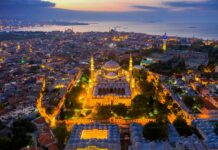
[Image alt text: Rooftop view of Istanbul at sunset from a hotel in Sultanahmet with Hagia Sophia in the background]
⚠️ Restoration note (2026): Hagia Sophia is undergoing a multi-year structural restoration. Significant interior areas may be covered with scaffolding during your visit. The site remains open and the entrance fee is unchanged.
Prices last updated: March 2026. Exchange rate: 1 USD ≈ 45 TL.
—
Article 12 | Title: Best Hotel Booking Sites for Istanbul: How to Get the Best Deal | Category: type
—
—
Useful links: Booking.com Istanbul · Go Türkiye – Istanbul Tourism