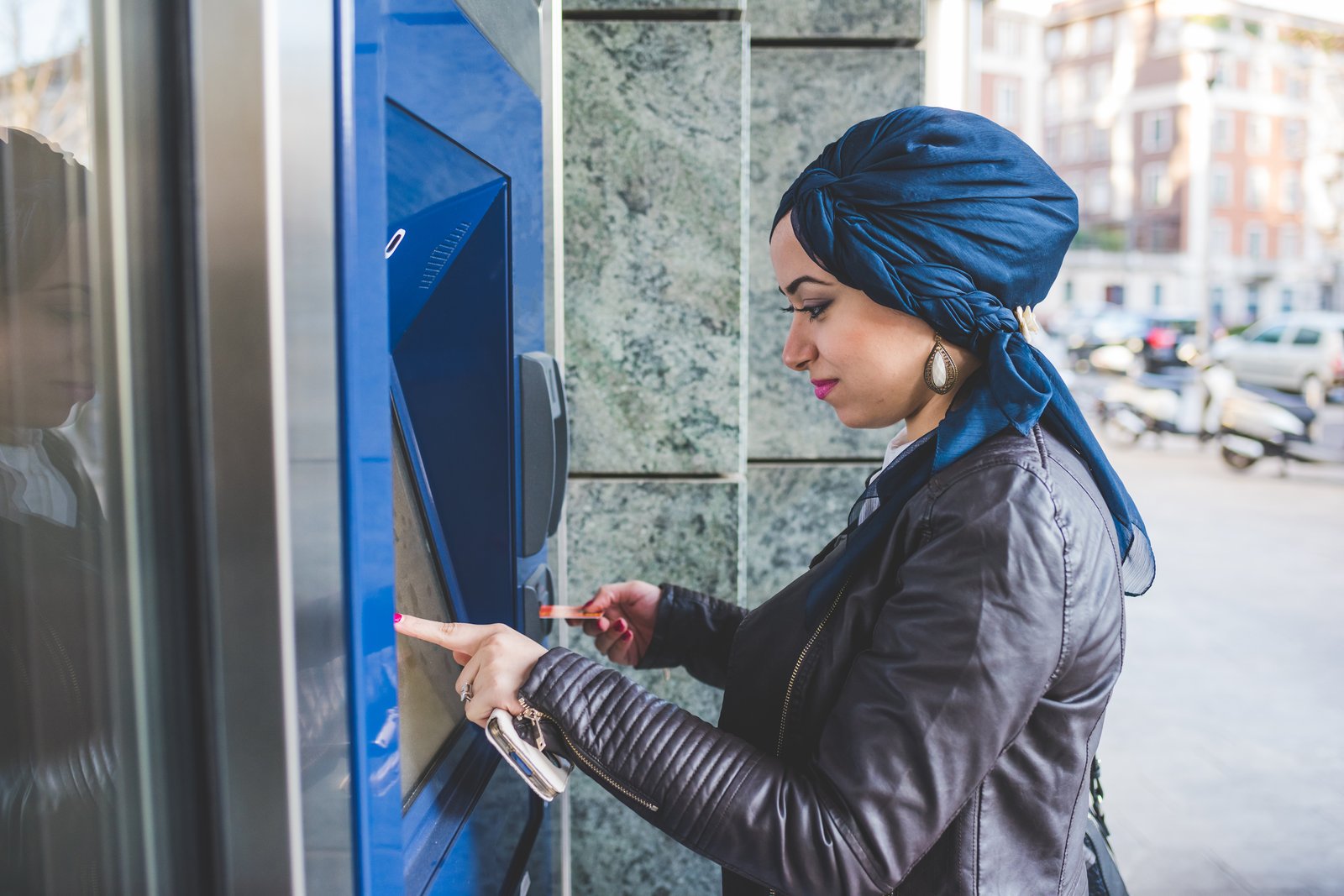
Istanbul has ATMs everywhere, from airports and shopping malls to side streets in residential neighbourhoods. For foreign visitors, not all of them are equal. Some charge additional fees on top of what your home bank charges. Most impose a currency conversion penalty of around 3 percent. Knowing which banks to use and which prompts to click saves you real money across a week in the city. Here is the practical guide.
The Main Turkish Banks and Their ATMs
These are the main Turkish banks with ATM networks you will encounter as a visitor. All accept major international cards including Visa, Mastercard, and Maestro:
- Garanti BBVA: One of the largest networks in Turkey. ATMs are widely available and generally reliable for foreign cards. Signage is often in English.
- Akbank: Extensive network, modern machines, generally foreign-card friendly with clear menus.
- Is Bankasi (Türkiye Is Bankasi): Very large network with older and newer machines mixed. Reliable for withdrawals in most parts of the city.
- Yapi Kredi: Good coverage across Istanbul, particularly in commercial and shopping areas.
- QNB Finansbank: Smaller network but modern machines with clear English-language menus.
- Ziraat Bankasi: State bank, very wide network including smaller districts outside the tourist core. Some older machines may have limited English options.
Most of these banks do not charge an additional flat fee to foreign cardholders for cash withdrawals, though this can change and is worth confirming with your home bank before travel. Private ATM operators (independent kiosks not branded with any bank name) almost always charge a flat fee of 50 to 150 TL per withdrawal on top of other charges. Avoid these entirely.
The 3 Percent Conversion Penalty
When you withdraw cash in Turkey with a foreign card, the Turkish bank processes the transaction and your home bank then charges a foreign transaction fee, typically 1.5 to 3 percent of the amount withdrawn. This is separate from any fee the Turkish ATM charges and is set by your card issuer, not the bank in Turkey.
On a 2,000 TL withdrawal, a 3 percent fee is 60 TL, roughly €1.15 at current rates. On larger or more frequent withdrawals, this adds up. The practical solutions are: use a card with no foreign transaction fees, or consolidate into fewer, larger withdrawals rather than many small ones.
Popular low-fee or no-fee cards for international use include Wise, Revolut, Starling Bank (UK), and Charles Schwab debit (US). Setting one of these up before your trip is one of the simplest ways to save money on a longer Istanbul visit.
💡 Pro Tip: When an ATM asks whether you want to proceed “with conversion” or “without conversion,” always choose “without conversion” (or “in local currency”). Choosing “with conversion” activates dynamic currency conversion, which uses a bank-set rate that is almost always 3 to 5 percent worse than your card’s own exchange rate. It looks helpful. It is not.
Withdrawal Limits
Turkish ATMs typically limit withdrawals to 3,000 to 5,000 TL per transaction at most banks. Some newer machines allow up to 10,000 TL per transaction. Your home bank may also impose its own daily withdrawal limit, which can conflict with larger single withdrawals.
If you need a large amount of cash, two separate withdrawals at the same ATM often works better than hunting for a machine with a higher single-transaction limit. Check your home bank’s daily withdrawal cap before you travel and consider requesting a temporary increase if you know you will need more cash on a specific day.
Where to Find ATMs in Istanbul
ATMs are not hard to find, but their distribution is uneven. Here is where to look in the areas visitors spend most time:
- Sultanahmet and Old City: Multiple ATMs near the tram stops on Divan Yolu. Garanti BBVA and Is Bankasi branches are easy to find within a few minutes’ walk of the main sights.
- Beyoglu and Taksim: Dense ATM coverage along Istiklal Caddesi and around Taksim Square. Several bank branches have ATM lobbies that are accessible outside business hours.
- Karaköy: Multiple bank branches with ATMs within a short walk of the ferry terminals and the Galata Bridge.
- Kadikoy (Asian side): Good coverage around the market area and the main streets connecting to the ferry terminal.
- Shopping malls: Every major mall has multiple bank-branded ATMs inside. A reliable option for avoiding independent kiosk machines, and the malls are open late.
At Istanbul Airport, ATMs on the arrivals level are bank-branded and functional. The rates are similar to city ATMs. Your home bank’s foreign fee still applies regardless of location.
What to Do If Your Card Is Blocked
Foreign cards are sometimes declined or blocked by home banks as a fraud precaution when used in Turkey. The solution is to notify your bank before you travel. Most banks allow you to add a travel notice via their app or website in minutes.
If your card is blocked mid-trip, your bank’s international support line is your first call. This is a common situation and banks resolve it quickly by phone. Having a backup card from a different provider or network is strongly recommended for any trip abroad.
💡 Pro Tip: If an ATM swallows your card, stay at the machine and press the intercom or assistance button immediately. The screen usually displays a contact number as well. Do not walk away. Proving the machine has your card is much harder once you leave the location.
ATMs vs. Exchange Offices: Which Is Better Value?
For most visitors, competitive exchange offices give marginally better rates than ATM withdrawals once all fees are accounted for. The difference is smaller than people expect, typically 1 to 2 percent in favour of a good exchange office. For convenience, ATMs win every time. For value on larger amounts, exchange offices are worth the extra steps.
A practical strategy for most visitors: arrive with a modest amount of local currency from a pre-departure exchange or exchange a small amount at the airport for immediate needs, then use a combination of exchange offices for larger cash needs and a fee-free card for restaurant and shop payments throughout the trip.
For rates, exchange spots, and tipping norms, see the full money in Istanbul guide. The Central Bank of Turkey (TCMB) publishes official daily exchange rates that serve as a useful benchmark when evaluating what you are being offered.