The first time I walked down İstiklal Street on a Friday evening, I thought I’d accidentally stepped into a controlled riot. Street musicians competed with honking horns, the smell of roasting chestnuts and fresh simit tangled in the air, and somewhere behind me the nostalgic red tram dinged its bell while a thousand people moved aside — barely. That’s Beyoğlu for you. It’s not polished. It’s not quiet. But it’s the neighborhood where Istanbul feels most alive, and any Beyoğlu neighborhood guide worth its salt will tell you: this is the district that bridges centuries of history with the city’s restless modern energy.
Beyoğlu is a sprawling district on Istanbul’s European side, stretching from Taksim Square down through the pedestrian corridor of İstiklal Street, past the iconic Galata Tower, and spilling into the bohemian hillside pocket of Cihangir. Whether you’ve got one afternoon or a full week, this is the neighborhood that’ll keep pulling you back.
The Soul of Beyoğlu: Four Neighborhoods in One
Beyoğlu isn’t a single neighborhood — it’s a constellation of micro-districts, each with its own personality.
Taksim Square is the anchor. It’s Istanbul’s Times Square: a transit hub, a protest ground, a meeting point for locals and tourists alike. The central metro and bus connections funnel thousands of people through daily. The Republic Monument at its heart commemorates the founding of modern Turkey. Taksim is loud and unapologetic — the kind of place where you grab a döner at midnight and nobody blinks.
İstiklal Street (İstiklal Caddesi) stretches 1.4 kilometers from Taksim Square to Tünel, and it carries over 90 million visitors a year — making it one of the busiest pedestrian avenues in the world. Once called “Grande Rue de Péra” by the French residents of Ottoman-era Constantinople, today it’s lined with international shops, historic passages, embassies, churches, and street performers. The famous red nostalgic tram rattles through the crowd at walking pace, and stepping into any of the side streets reveals a different world — art galleries, meyhanes (traditional taverns), rooftop bars, and hidden courtyards.
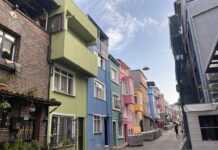
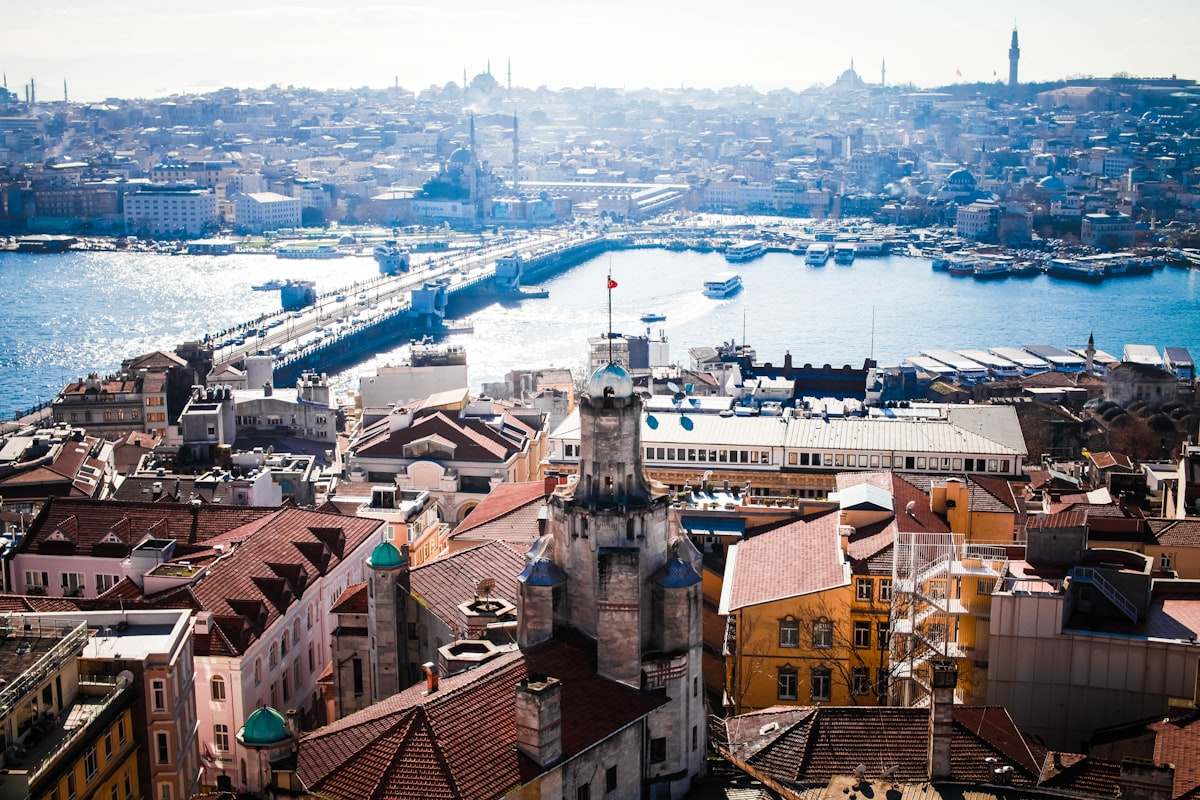
Galata sits at the southern end of İstiklal, clustered around the unmistakable Galata Tower. The tower dates to 1348, built by the Genoese, and its observation deck offers a 360-degree panorama of old Istanbul. The steep cobblestoned streets radiating from the tower are packed with boutique hotels, specialty coffee shops, vintage stores, and some of the city’s most photogenic alleyways. This is where travelers with a taste for design and history tend to gravitate.
Cihangir is the neighborhood that locals talk about when they say “I could live here.” Tucked just south of Taksim on a hillside overlooking the Bosphorus, Cihangir is Istanbul’s bohemian quarter — historically home to artists, writers, expats, and a famous community of street cats. The pace slows here. Mornings are for lingering over breakfast at sidewalk cafés, afternoons for browsing antique shops in the adjacent Çukurcuma quarter, and evenings for cocktails with a Bosphorus sunset glowing behind the minarets.
Top Sights and Attractions
- Galata Tower: The neighborhood’s crown jewel. Entry costs €30 (as of late 2025), which some find steep — but the view at sunset is genuinely unforgettable. Arrive early or late to avoid the worst queues.
- İstiklal Street’s Historic Passages: Don’t just walk the main drag. Duck into Çiçek Pasajı (Flower Passage), a gorgeous 1876 arcade filled with restaurants under a glass ceiling. Explore Atlas Pasajı and its Turkish Cinema Museum. Check out Narmanlı Han for hidden cafés and a quieter courtyard vibe.
- Pera Museum: Home to Osman Hamdi Bey’s famous painting The Tortoise Trainer. Entry is 300 TL. A small but beautifully curated museum that’s perfect for a rainy afternoon.
- St. Antoine Church: The largest Roman Catholic church in Istanbul, right on İstiklal, with a stunning Neo-Gothic interior.
- Madame Tussauds Istanbul (Permanently Closed): This attraction permanently closed on December 31, 2024 along with LEGOLAND Discovery Centre and SEA LIFE Istanbul. Older guides may still list it as open.
- Tünel: At the bottom of İstiklal, the historic Tünel funicular (opened 1875) is the world’s second-oldest underground railway, after London’s. The ride takes 90 seconds and costs a standard Istanbulkart fare.
- Cihangir Mosque and Tea Gardens: The twin tea gardens at the corner of Sıraselviler Caddesi and Akarsu Caddesi are the neighborhood’s social living room — packed from noon until late with actors, writers, and neighborhood cats.
Best Restaurants and Cafés
For Breakfast:
- Van Kahvaltı Evi (Cihangir): The most famous breakfast spot in the city. Huge Kurdish-Turkish spreads with regional cheeses, honey, kaymak, and eggs. Go early — it’s tiny and there’s always a wait.
- Savoy Pastanesi (Cihangir): Old-school patisserie for pastries and Turkish tea.
For Lunch and Dinner:
- Çiçek Pasajı (İstiklal): Classic meze and seafood under the glass arcade. Touristy, but still atmospheric.
- Helvetia (İstiklal area): A beloved locals’ spot with solid Turkish food and a laidback vibe.
- Smyrna (Cihangir): Western-inspired cuisine served in a former antique shop with its original bohemian furniture.
- Meyra (Cihangir, formerly Leyla): Popular with the literary set. Great breakfast and all-day dining.
- Journey (Cihangir): Two-storey café with a communal table upstairs and a buzzing atmosphere. Turkish food with a European twist.
For Coffee and Drinks:
- Karabatak (Karaköy/Galata): One of Istanbul’s original third-wave coffee spots, hidden inside a courtyard. Outstanding flat whites.
- Mua Gelatieri (Cihangir): Authentic Florentine gelato by the Firuzağa Mosque. The Italian owner lets you taste before you choose.
- 5. Kat (Cihangir): A fifth-floor restaurant and bar with a stupendous Bosphorus view and an international menu.
- Nevizade Street: The narrow alley off İstiklal lined with meyhanes and bars. It gets rowdy on weekend nights — fun for a drink, but the food is better elsewhere.
>
💡 Pro Tip: For an authentic rakı night, skip Nevizade (too touristy) and head to Asmalı Cavit in the nearby Asmalımescit quarter. Better meze, better prices, better crowd.
Shopping Spots
- İstiklal Street: International brands at Demirören AVM, plus local Turkish fashion at boutiques along the avenue.
- Çukurcuma (Cihangir): Istanbul’s antique quarter. Streets filled with vintage furniture, Ottoman curiosities, brass lamps, and oddities.
- Galata streets: Independent boutiques, handmade jewelry shops, and vinyl record stores cluster around the tower.
- Atlas Pasajı: Small shops selling handmade crafts and books.
- Hafız Mustafa 1864 (İstiklal): Famous Turkish delight, baklava, and desserts — worth buying as edible souvenirs. Multiple locations along the street.
Getting There
Beyoğlu is one of Istanbul’s best-connected districts:
- Metro: M2 line to Taksim station (connects to airport routes via transfers at Yenikapı or Gayrettepe).
- Tünel Funicular: Connects Karaköy (waterfront) to the bottom of İstiklal in 90 seconds.
- F1 Funicular: Connects Taksim to Kabataş (waterfront ferry terminal) in under 5 minutes.
- T1 Tram: Runs through Karaköy along the waterfront — connects to Sultanahmet, Eminönü, and the Grand Bazaar.
- Havaist Airport Shuttle: HVIST-9 runs from Istanbul Airport directly to Taksim (~275 TL, ~100 minutes).
- Walking: From Galata Bridge to Galata Tower is a 10-minute uphill walk. Taksim to Cihangir is 10 minutes downhill.
Where to Stay
| Budget | Option | Why |
|---|---|---|
| Budget | Stay Inn Hostel Taksim | Clean, social, walkable to İstiklal |
| Mid-range | Boutique hotels around Galata Tower | Best balance of atmosphere and access |
| Upscale | Soho House Istanbul (Cihangir) | Members’ club with rooftop pool and Bosphorus views |
For longer stays, Cihangir offers the best quality of life — quiet streets, great cafés, walkable to İstiklal, and a genuine neighborhood feel.
>
💡 Pro Tip: If noise bothers you, avoid staying directly on İstiklal or near Taksim Square’s main arteries. Side streets just one block off the main drag are dramatically quieter.
Best Time to Visit
Beyoğlu buzzes year-round, but spring (April–May) and autumn (September–October) bring the best energy — warm enough for rooftop terraces, cool enough to walk comfortably. Summer nights on İstiklal are electric but brutally crowded. Winter strips the tourist crowds away entirely, leaving you the atmospheric cafés and rainy cobblestone streets mostly to yourself.
What to Avoid
- The shoe shiner scam: A man “accidentally” drops his brush near you on İstiklal. When you pick it up, he insists on shining your shoes and demands an outrageous fee. Smile, say “hayır” (no), and walk on.
- Bar scams on İstiklal: If a stranger offers you a lighter or invites you for a drink at a “great bar nearby,” politely decline. These invitations often lead to places where the bill arrives at astronomical figures.
- Tarlabaşı back streets at night: The streets immediately north of İstiklal (especially deep Tarlabaşı) have a deserved reputation for being sketchy after dark, despite ongoing gentrification.
- Weekend afternoons on İstiklal if you dislike crowds: The avenue sees over 300,000 visitors on weekend days. Morning or late evening walks are far more pleasant.
Conclusion
Beyoğlu is the neighborhood where Istanbul reveals its many faces at once — Ottoman arcades and third-wave coffee, rooftop cocktails and street cats, 19th-century churches and late-night techno. It’s messy, loud, and endlessly surprising. Whether you spend an afternoon walking İstiklal or a week settling into a Cihangir café, you’ll understand why this district is the beating heart of modern Istanbul. What’s your favorite corner of Beyoğlu — Galata’s cobblestones, İstiklal’s chaos, or Cihangir’s quiet mornings?
—
Useful links: Go Türkiye – Istanbul Tourism · Turkish Museums Portal
Prices last updated: March 2026. Exchange rate used: 1 USD ≈ 45 TL. Prices in Turkish lira can change frequently due to inflation. Attraction fees set in euros (€) are more stable. Always check official websites for the latest prices before your visit.