
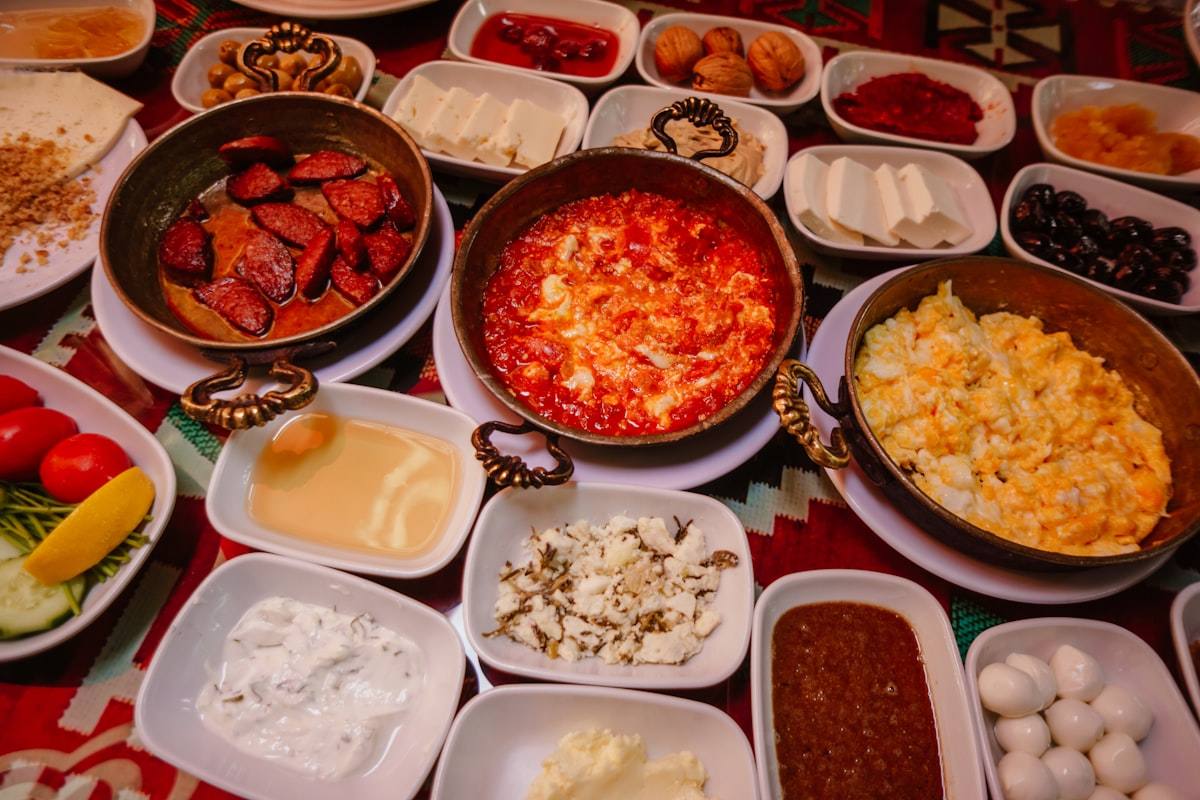
There’s a moment at a meyhane — usually around the third round of rakı, when the meze plates are stacked three deep and someone at the next table starts singing along with the musicians — when you understand why Turks call this “the long table.” A meyhane night isn’t dinner. It’s a ritual. A slow, generous, emotionally rich evening of food, drink, music, and conversation that stretches until the early hours and leaves you with the particular glow that only comes from being genuinely, deeply fed — in every sense.
If there’s one Istanbul experience that tourists consistently miss and locals consistently cherish, it’s an authentic rakı night at a real meyhane. Here’s how to do it right.
What Is a Meyhane?
A meyhane (pronounced “may-HAH-neh”) is a traditional Turkish tavern — part restaurant, part pub, part social institution. The word has Greek and Armenian roots, reflecting the multicultural Ottoman origins of the tradition.
| Feature | Details |
|---|---|
| Origin | Ottoman era, influenced by Greek and Armenian cultures |
| Main drink | Rakı (anise-flavored spirit, diluted with water) |
| Food | Cold and hot meze, grilled seafood, seasonal vegetables |
| vibe | Warm, conversational, often with live fasıl music |
| Ideal for | Groups of friends, couples, curious travelers |
| Typical hours | 7 PM – 1 AM (or later) |
A classic Istanbul meyhane is unpretentious: checkered tablecloths, walls covered in old photographs, simple wooden tables crowded with plates and glasses. There’s often live fasıl music — traditional Turkish melodies played on the violin, oud, and clarinet — and waiters with a sixth sense for refilling your rakı glass just in time.
Rakı 101: How to Drink It
Rakı is Turkey’s national spirit — a clear, anise-flavored drink that turns milky white when mixed with cold water, earning it the nickname aslan sütü (lion’s milk).
How to drink it properly:
- Pour rakı into a tall, narrow glass (about one-third full).
- Add cold water slowly — watch it cloud into an opaque white.
- Add ice to taste (purists add ice after water, never before).
- Sip slowly. Rakı is not a shot. It’s meant to be consumed over hours, between bites of meze.
- Toast with “Şerefe!” (pronounced “sheh-REH-feh”) — it means “to honor” or simply “cheers.”
>
💡 Pro Tip: Always have meze on the table when drinking rakı. Drinking it on an empty stomach is both culturally wrong and physically unwise. The traditional pairing is beyaz peynir (white cheese) and kavun (melon) — the sweetness of the fruit balances the anise perfectly.
What to expect: Rakı is typically ordered by the bottle (70cl), which is shared among the table. A bottle at a meyhane costs about 800–1,950 TL ($22–42 USD) depending on the venue. For a small group of 2–3 people, one bottle is usually enough for the evening.
How a Meyhane Night Unfolds
A meyhane evening follows a natural rhythm — don’t try to rush it.
| Time | What Happens |
|---|---|
| 7:30 PM | Arrive, settle in, order rakı and cold meze |
| 8:00 PM | First round of rakı poured, toasts exchanged, bread broken |
| 8:30 PM | Cold meze arrives: haydari, acılı ezme, topik, melon with cheese, stuffed vine leaves |
| 9:00 PM | Hot meze follows: fried calamari, liver cubes (Arnavut ciğeri), cheese rolls (sigara böreği), fried mussels |
| 9:30 PM | Live fasıl music begins (if available) — soft at first, building gradually |
| 10:00 PM | Main course ordered — grilled fish, lamb chops, or mixed grill |
| 10:30 PM | Atmosphere warms up. Singing may begin. Tables clink glasses more frequently. |
| 11:00 PM | Second bottle of rakı (optional but likely). Fruit platter arrives. |
| 11:30 PM+ | Turkish coffee, dessert (if desired), reflective conversation |
| Midnight–1 AM | Bill settled, warm goodbyes, and a slight wobble toward the taxi |
What to Order: The Essential Meze Guide
Cold Meze (Soğuk Meze)
These come first and set the tone:
- Haydari — thick yogurt with garlic and dill
- Acılı ezme — spicy tomato-pepper paste
- Topik — Armenian chickpea and currant meze with cinnamon
- Deniz börülcesi — samphire (sea beans) in olive oil and lemon
- Patlıcan salatası — smoky eggplant salad
- Fava — broad bean purée with fresh dill
- Beyaz peynir & kavun — white cheese and melon (the classic rakı pairing)
- Humus — served in many meyhanes, especially Armenian-influenced ones
- Atom — a fiery, bright red paste — the “dare” meze for spice lovers
Hot Meze (Sıcak Meze)
Ordered after the first round of cold plates:
- Kalamar tava — fried calamari
- Arnavut ciğeri — Albanian-style fried liver cubes with onion
- Karides güveç — shrimp baked in tomato sauce and cheese
- Sigara böreği — cigar-shaped cheese rolls
- Midye tava — fried mussels with tarator sauce
- Kabak mücver — zucchini fritters
Main Course (Ana Yemek)
If you still have room:
- Levrek or çipura ızgara — grilled sea bass or sea bream
- Kuzu pirzola — grilled lamb chops
- Mixed grill — a selection of kebabs
>
💡 Pro Tip: At most meyhanes, the waiter will bring a tray of cold meze for you to choose from visually. Point at what looks good — there’s no need to decipher the menu if you don’t speak Turkish.
Where to Go: The Best Meyhanes in Istanbul
The Classics (European Side)
Yakup 2 (Asmalımescit, Beyoğlu)
A bohemian institution. Ivy-draped courtyard, fairy lights, and a clientele of artists, writers, and Istanbul intellectuals. The topik and Cretan meze are exceptional. Reservations recommended for weekend nights.
Asmalı Cavit (Asmalımescit)
Timeless, authentic, and beloved by locals who’ve been coming for years. No frills, just excellent meze and properly cold rakı.
Tarihi Cumhuriyet Meyhanesi (Beyoğlu)
One of Istanbul’s most atmospheric meyhanes, with marble tables, vintage portraits, and live string and clarinet music. When the room breaks into song at midnight, you’ll understand why Turks are so attached to this tradition.
Eleos (Beyoğlu)
Aegean-Greek elegance: white-and-blue décor, a terrace overlooking the Golden Horn, and a menu starring octopus salad, fried anchovies, and Cretan ezme. Complimentary ouzo on arrival, though you should stay loyal to rakı.
Kör Agop (Kumkapı)
Since 1938. Armenian-run, with legendary meze and nightly fasıl that often spirals into full-blown dancing between the tables. Lively, raucous, and unforgettable.
The Asian Side (Kadıköy)
Pavlonya Meyhanesi
A multi-level spot in central Kadıköy with indoor and outdoor terrace seating. The meze selection is extensive and authentic. Great for people-watching.
Maş Devr Meyh (Osmanağa)
A hidden gem just off Kadıköy’s main bar strip. beautiful meze, an impressive rakı selection, and a garden area that plays classic Turkish melodies. The indoor space shows football matches.
Ala Kadıköy Meyhane
Cozy multi-level space with a rooftop terrace overlooking Kadıköy’s rooftops. Generous portions and a warm atmosphere.
Koço (Todori) (Moda)
An old-school meyhane by the sea in Moda — one of the most charming dining locations in all of Istanbul. Seafood-focused.
Off-the-Beaten-Path
Safa Meyhanesi (Yedikule)
A 120-year-old meyhane in the Yedikule neighborhood, far from the tourist circuit. If you want the most authentic, unreconstructed meyhane experience possible — no English menus, no tourist prices, just decades of tradition — this is it.
Agora Meyhanesi 1890 (Balat)
In the historic, colorful Balat neighborhood. Atmospheric, authentic, and conveniently combined with a daytime Balat walking tour.
Jash Istanbul (various)
Armenian community-run, serving rare traditional meze with transparent pricing. Highly recommended by locals for authenticity.
İnciraltı Meyhanesi (Beylerbeyi, Asian side)
Multiple local recommendations for this quiet Bosphorus-side meyhane in Beylerbeyi — a waterfront dining experience without European-side prices.
What to Avoid
- Nevizade Street (off İstiklal): Once the heart of meyhane culture, now overrun with tourist touts who’ll grab your arm and pull you to a table. Some restaurants here still deliver, but the overall experience has degraded.
- Kumkapı’s worst offenders: While Kör Agop is excellent, some Kumkapı meyhanes are notorious for padding bills. Always check prices before ordering.
- Any meyhane without prices on the menu. This is a red flag everywhere in Istanbul, but especially at meyhanes where the meze parade can add up quickly.
What a Meyhane Night Costs
For two people, a typical authentic meyhane evening:
| Item | Cost (TL) | Cost (USD) |
|---|---|---|
| Cold meze (6–8 dishes, shared) | 600–1,000 | $17–28 |
| Hot meze (3–4 dishes, shared) | 400–700 | $11–20 |
| Main course (grilled fish or meat x2) | 600–1,200 | $17–34 |
| Rakı (one bottle, 70cl) | 800–1,500 | $22–42 |
| Bread, water, extras | 100–200 | $3–6 |
| Total for two | 2,500–4,600 | $70–130 |
This is a full, multi-course, multi-hour evening — not a quick dinner. For the amount of food, drink, and entertainment (especially with live music), it’s remarkably good value. The same experience in Athens, Barcelona, or New York would cost 2–3 times more.
On the Asian side and in less touristy neighborhoods, the lower end of these ranges is easily achievable.
Meyhane Etiquette
- Don’t rush. A meyhane night takes 3–4 hours minimum. If you’re in a hurry, eat somewhere else.
- Share everything. Meze is communal. Order a variety and pass plates around.
- Clink glasses looking each person in the eye. “Şerefe!” Make eye contact.
- Don’t get sloppy drunk. Turks drink slowly over hours. The pace is meze, sip, conversation, sip. Not shots.
- Tip 10–15%. Standard at sit-down restaurants and meyhanes.
- If there’s live music, don’t clap along like it’s a concert. Listen, feel, and let the music become background. If the room starts singing, join in — that’s the magic moment.
- Ending the night: Turkish coffee or fresh fruit traditionally signals the end of the meal. When the fruit plate arrives, the evening is winding down.
The Deeper Meaning
A meyhane night isn’t really about the food or the drink — though both are exceptional. It’s about a philosophy of living that values slowness, connection, and being fully present with the people around you. In a world of quick bites and doom-scrolling, sitting at a long table with friends, clinking glasses of lion’s milk, and singing songs that are older than anyone in the room feels almost radical.
The Turkish word for this feeling is keyif — a state of quiet, pleasurable contentment. It can’t be hurried or ordered from a menu. It just arrives, somewhere between the third meze plate and the second toast, and when it does, you’ll know you’ve found the real Istanbul.
Have you experienced a meyhane night? Or are you planning your first? I’d love to hear about it in the comments.
Useful links: Go Türkiye – Istanbul Tourism · Turkish Museums Portal
Prices last updated: March 2026. Exchange rate used: 1 USD ≈ 45 TL. Prices in Turkish lira can change frequently due to inflation. Attraction fees set in euros (€) are more stable. Always check official websites for the latest prices before your visit.