
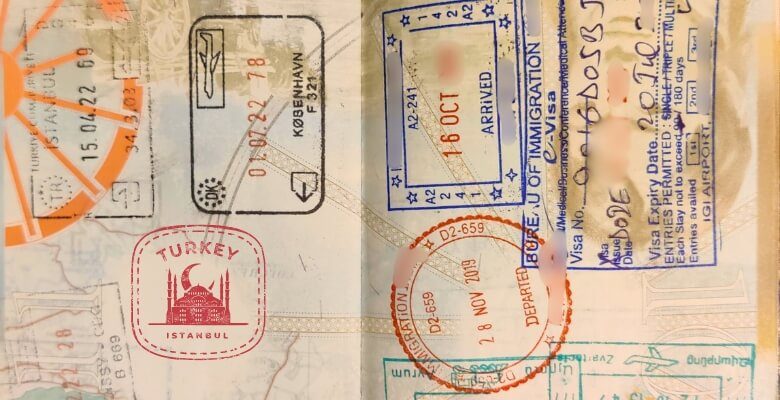
Before you start planning your Istanbul itinerary, you need to sort out one thing: can you get into Turkey? The good news is that Turkey has one of the world’s most accessible visa systems. Many nationalities enter visa-free, dozens more can get an e-visa online in under 5 minutes, and a new digital nomad visa is opening the door for remote workers who want to make Istanbul their base. Here’s everything you need to know about Turkey visa requirements in 2026.
How the application works: The Digital Nomad Visa is a two-step process. First, you apply online for the Digital Nomad Identification Certificate at digitalnomads.goturkiye.com. Once that is approved, you visit a Turkish consulate or embassy in your home country with your certificate to receive the actual visa stamp in your passport.
The Three Entry Options
1. Visa-Free Entry
Citizens of many countries can enter Turkey without any visa at all. You simply show your passport at immigration and get stamped in.
Visa-free for 90 days (within 180 days):
Most EU countries (Germany, France, Italy, Spain, Netherlands, Sweden, etc.), Japan, South Korea, Brazil, Argentina, Chile, Singapore, Malaysia, and many others.
Visa-free for 30 days:
Some countries have shorter visa-free periods. Check the official Turkish Ministry of Foreign Affairs website (mfa.gov.tr) for your specific nationality.
Key requirement: Your passport must be valid for at least 60 days beyond your intended stay. So if you plan to stay 30 days, your passport needs at least 90 days of validity from your entry date.
2. E-Visa (Electronic Visa)
If you’re not visa-free, you likely need an e-visa. This is the most common visa type for tourists from countries like the US, UK, Canada, Australia, and many others.
How to apply:
- Go to evisa.gov.tr (the ONLY official site — beware of fake sites that charge extra)
- Select your nationality and travel dates
- Fill in passport details (takes 3 minutes)
- Pay the fee ($20–60 depending on nationality)
- Receive your e-visa by email — usually instantly
E-visa facts:
- Valid for 180 days from issue
- Allows stays up to 30 or 90 days (depending on nationality)
- Single or multiple entry (depending on nationality)
- Purpose: tourism or business only
Common e-visa prices:
- US citizens: $50 (multiple entry, 90 days)
- UK citizens: $20 (multiple entry, 90 days)
- Canadian citizens: $60 (single entry, 30 days)
- Australian citizens: $60 (multiple entry, 90 days)
💡 Pro Tip: Apply at least 48 hours before travel, even though it’s usually instant. Occasionally the system experiences delays. Print a paper copy of your e-visa as backup, though immigration usually scans it digitally.
Important: Some nationalities (India, Pakistan, Afghanistan, and others) need a valid US, UK, Schengen, or Ireland visa/residence permit to be eligible for a Turkey e-visa. If you don’t have one, you’ll need to apply through a Turkish embassy or consulate.
3. Sticker Visa (Embassy/Consulate)
If you’re not eligible for visa-free entry or an e-visa, you’ll need to apply at a Turkish embassy or consulate in person. This typically takes 7–15 working days and requires documents including passport photos, places to stay bookings, flight itineraries, and financial proof.
The Digital Nomad Visa (Türkiye)
Turkey has introduced provisions for remote workers who want to live and work in the country. While the formal “digital nomad visa” program has evolved, the current pathway typically involves:
Short-term (tourist visa): Many remote workers enter on a standard 90-day tourist visa or e-visa and work remotely (technically a grey area, but widely practiced).
Residence permit: For stays beyond 90 days, you can apply for a short-term residence permit. This requires:
- Proof of income (typically $3,000+/month)
- Health insurance valid in Turkey
- Turkish address
- Application through the e-ikamet system
Work permit for freelancers: A more formal pathway exists for those set uping a business presence in Turkey.
💡 Pro Tip: The digital nomad landscape in Turkey is evolving. For the most current information, check the Turkish Ministry of Interior’s Directorate General of Migration Management (goc.gov.tr) and connect with expat groups on Facebook and Reddit for real-time updates from people getting around the process.
Common Visa Mistakes
- Using fake e-visa websites. Only use evisa.gov.tr. Third-party sites charge $50–150 in unnecessary “service fees” on top of the actual visa fee.
- Inenough passport validity. Your passport must be valid for 60 days BEYOND your stay, not just until your departure date.
- Overstaying your visa. Turkey tracks entry/exit dates digitally. Overstaying results in fines, potential deportation, and entry bans.
- Not printing the e-visa. While immigration usually checks digitally, having a printed copy is wise backup.
- Assuming visa-free = unlimited. The 90-day visa-free period is within a 180-day window. You can’t stay 90 days, leave for a day, and re-enter for another 90.
At Turkish Immigration
Istanbul Airport (IST) immigration is generally efficient. Expect:
- E-visa/visa-free: Scan passport, fingerprint scan, stamp — 2–5 minutes.
- No questions are typically asked (unlike some countries). Have your hotel booking confirmation accessible just in case.
- E-gates may be available for certain passport holders.
The Turkish immigration process is straightforward and rarely stressful. Get your visa sorted before you travel, carry the right documents, and you’ll be sipping çay by the Bosphorus before you know it.
Questions about Turkey visas? Ask in the comments — I’ll help where I can.
—
—
Useful links: Booking.com Istanbul · Go Türkiye Istanbul
Prices last updated: March 2026. Exchange rate used: 1 USD ≈ 45 TL. Prices in Turkish lira can change frequently due to inflation. Attraction fees set in euros (€) are more stable. Always check official websites for the latest prices before your visit.