After years of living in Istanbul and helping friends, family, and readers plan their trips, I’ve heard every question imaginable — from the practical to the paranoid to the surprisingly insightful. Here are the 30 questions first-timers ask most, with honest answers from someone who knows this city inside out.
Getting There and Entry
1. Do I need a visa for Turkey?
Depends on your nationality. Many Europeans are visa-free for 90 days. US, UK, Canadian, and Australian citizens need an e-visa ($20–60, takes 3 minutes at evisa.gov.tr). Check the Turkish Ministry of Foreign Affairs website for your country.
2. Which airport should I fly into — IST or SAW?
Istanbul Airport (IST) on the European side is the main international hub with better city connections (M11 metro, Havaist buses). Sabiha Gökçen (SAW) on the Asian side serves budget airlines and is farther from most tourist areas. IST is preferred unless SAW saves you significant money.
3. How do I get from the airport to the city?
M11 metro from IST to Gayrettepe (35 min, 42 TL), then transfer. Havaist bus to Taksim (275 TL, 40–70 min). Taxi (1,500–2,500 TL, traffic-dependent). Always prefer metro for reliability.
Money
4. What currency does Turkey use?
Turkish Lira (TL/TRY). As of early 2026, roughly 37 TL = 1 USD.
5. Should I exchange money at the airport?
Only a small amount for immediate transport. City exchange offices (döviz) and ATMs offer much better rates. The Grand Bazaar area has the best exchange rates.
6. Do places accept credit cards?
Widely. Visa and Mastercard work at most restaurants, hotels, shops, and museums. Carry cash for market vendors, street food, small shops, and tipping.
7. How much should I tip?
10–15% at sit-down restaurants. Round up for taxis. 50–100 TL for hammam attendants. Tipping is appreciated but not as expected as in the US.
8. How much money do I need per day?
Budget: $25–40/day (lokanta food, free sights, public transit). Mid-range: $60–120/day. Comfortable: $120–250/day.
Transport
9. What is an Istanbulkart and do I need one?
A rechargeable smart card for all public transport. YES, you absolutely need one. Card costs 165 TL + top-up credit. Single ride: 42 TL. Without it, you pay nearly double for individual tickets.
10. Is Uber available in Istanbul?
Yes, but it dispatches yellow taxis (not private cars). Works well for tracked fares and avoiding scams. BiTaksi is the local alternative app.
11. Can you walk between main sights?
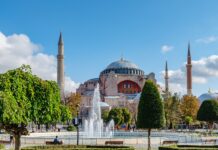
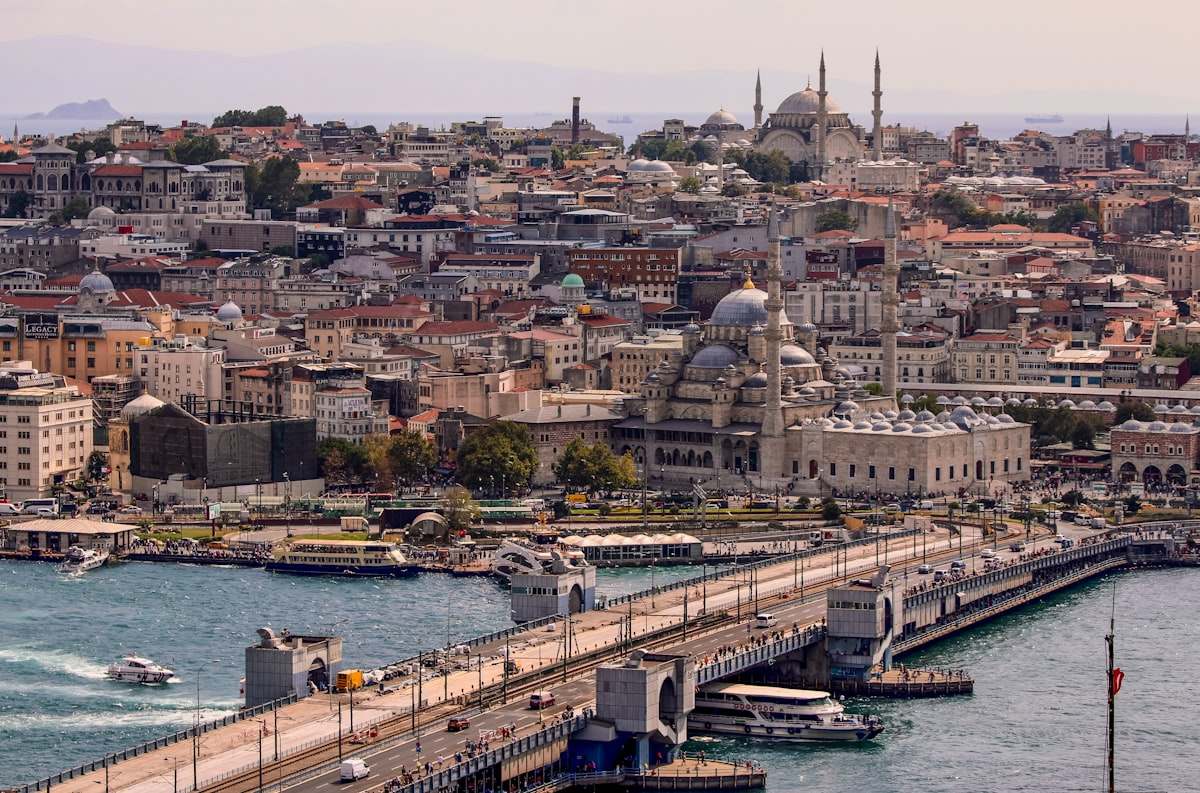
Sultanahmet sights are walkable (Hagia Sophia to Blue Mosque: 3 min). Sultanahmet to Galata Tower: 25 min walk across the Galata Bridge. The city is walkable within neighborhoods but hilly.
12. Can you walk across the Bosphorus?
No. You cannot walk across the Bosphorus bridges. Use ferries (25 min, 53–59 TL) or the Marmaray underground rail (4 min under the strait).
Safety
13. Is Istanbul safe for tourists?
Yes. Very safe by global big-city standards. Strong police presence in tourist areas. The main risk is financial (scams), not physical.
14. Is Istanbul safe for solo female travelers?
Yes, with normal awareness. Dress modestly in conservative areas, use ride-hailing apps instead of random taxis, stay in busy areas after dark. Most solo female travelers report overwhelmingly positive experiences.
15. What scams should I watch out for?
Taxi meter tricks, the shoe-shine brush drop, friendly strangers inviting you to expensive bars, restaurants with no visible prices, and Istanbulkart machine “helpers.” See our full safety guide for details.
Sightseeing
16. How many days do I need in Istanbul?
Minimum 3 days to see the highlights. 5 days is the sweet spot. 7+ days for a deep experience. Even 1 day (a long layover) is worth it.
17. Is the Istanbul Museum Pass worth it?
At €105 for 5 days, it’s worth it if you visit 4+ included museums. Topkapı Palace alone is 2,750 TL. The pass also skips queues. Note: it does NOT include Dolmabahçe Palace, Basilica Cistern, or Galata Tower.
18. Is Hagia Sophia free?
The mosque area is free for worshippers. The tourist visiting area (upper gallery) costs €25. Whether the paid section is “worth it” is debated — the ground-floor experience is still magnificent.
19. What’s better — the Blue Mosque or Süleymaniye Mosque?
The Blue Mosque is more famous, but many consider Süleymaniye more beautiful — and it’s free, less crowded, and has better views. Visit both if you can.
20. Is the Grand Bazaar a tourist trap?
It IS touristy, but it’s also a genuine 550-year-old market. Prices are negotiable (start at 50% of asking price). The experience is worth it even if you don’t buy. Closed Sundays.
Culture and Etiquette
21. Do I need to cover up to enter mosques?
Yes. Remove shoes. Women should cover their hair, shoulders, and knees. Men should wear long pants. Most major mosques provide loaner scarves and wraps at the entrance.
22. Is alcohol available in Istanbul?
Yes. Istanbul has a vibrant bar and restaurant scene. Alcohol is widely available except in very conservative neighborhoods. Rakı (anise spirit) is the national drink.
23. What’s the deal with Turkish tea?
Çay (pronounced “chai”) is Turkey’s social lubricant. Served in tulip-shaped glasses, usually with sugar on the side. Refusing tea from a shopkeeper or host is considered slightly rude — accept it even if you just take a sip.
24. Do people speak English?
In tourist areas, hotels, and restaurants: usually yes. Off the beaten path: much less. Learning a few Turkish phrases (merhaba = hello, teşekkürler = thanks, ne kadar = how much) goes a long way and earns genuine warmth from locals.
Food
25. What are the must-try foods?
Simit, balık ekmek, döner kebab, lahmacun, içli köfte, menemen (Turkish breakfast eggs), Turkish breakfast spread, baklava, künefe, Turkish delight, and a full meyhane meze dinner with rakı.
26. Is Turkish breakfast worth the hype?
Absolutely. A proper Turkish kahvaltı spread — 15+ small dishes of cheeses, olives, honey, clotted cream, eggs, jams, bread, and endless tea — is one of the world’s great breakfast experiences. Budget 250–400 TL per person at a good spot.
27. Can I drink the tap water?
Technically safe, but most locals drink filtered or bottled water. The taste varies by neighborhood. Buy large bottles from supermarkets rather than tourist-priced small bottles.
Practical
28. Do I need travel insurance?
Strongly recommended. Medical care in Istanbul is good and relatively affordable, but emergency hospital visits without insurance can still be expensive. Standard travel insurance covers this plus cancellations and lost luggage.
29. What’s the best SIM card for tourists?
Turkcell, Vodafone, and Türk Telekom all offer tourist SIM cards at the airport. Expect to pay around $10–20 for a SIM with data (5–20 GB). You’ll need your passport. Alternatively, buy an eSIM before arrival (Airalo, Holafly).
30. What are the biggest mistakes first-timers make?
- Staying only in Sultanahmet (visit it, but stay in Galata or Kadıköy)
- Not getting an Istanbulkart
- Taking taxis without apps
- Eating at tourist-trap restaurants near major sights
- Trying to see too much in too few days
- Not visiting the Asian side
- Not bringing comfortable walking shoes (those cobblestones are killer)
Istanbul is a city that rewards curiosity, punishes laziness, and delights anyone willing to venture beyond the obvious. These 30 answers are your starting framework — the real answers come when you’re here, with a glass of çay in hand, watching the world’s most extraordinary city unfold around you.
What question did I miss? Ask in the comments — I’ll answer them all.
—
—
Useful links: Go Türkiye – Istanbul Tourism · Turkish Museums Portal
Prices last updated: March 2026. Exchange rate used: 1 USD ≈ 45 TL. Prices in Turkish lira can change frequently due to inflation. Attraction fees set in euros (€) are more stable. Always check official websites for the latest prices before your visit.