There are cities with history and then there is Istanbul. Four empires — Roman, Byzantine, Latin, and Ottoman — made this place their capital over more than two millennia. Every layer of the city is written on top of the last, and walking through Sultanahmet feels less like a history lesson and more like time travel. You can stand between a Byzantine cistern, a 6th-century Christian basilica, and an Ottoman mosque within a 10-minute walk. It still staggers me, even after visiting dozens of times.
Here is a timeline walk through Istanbul’s greatest historical sites, in roughly chronological order, with 2026 entrance fees and honest advice on what’s worth your time.
—
657 BC: Ancient Byzantium — The Foundation
The city now called Istanbul was founded as Byzantium by Greek colonists from Megara around 657 BC, according to tradition, by a leader named Byzas. Very little survives above ground from this era, but you can orient yourself to where the original city stood: the hill where Topkapi Palace now sits was the acropolis of ancient Byzantium.
The Istanbul Archaeological Museums (Arkeoloji Müzeleri), next to Topkapi Palace, hold the best material from this period — including the Alexander Sarcophagus, one of the most extraordinary pieces of Hellenistic sculpture ever found. Entrance is 15 EUR (approximately 770 TL / $17).
Best Time to Visit: Open Tuesday through Sunday, 9:00 AM to 7:00 PM. Arrive at opening to beat groups.
—
330 AD: Constantinople — Roman Capital of the World
When Emperor Constantine I moved the capital of the Roman Empire here in 330 AD and renamed it Constantinople, he chose its location for obvious reasons: surrounded on three sides by water, commanding the strait between Europe and Asia, and easily defensible.
The Hippodrome (Sultanahmet Meydanı) was the heart of Roman public life — a racetrack seating up to 100,000 people, with monuments looted from across the empire. Today it’s an open square, but the original monuments still stand: the Egyptian Obelisk (from Luxor, ~1450 BC), the Serpentine Column (from Delphi, 479 BC), and the Column of Constantine. Entry is free.
The Valens Aqueduct (Bozdoğan Kemeri), built in 364 AD, still spans across Atatürk Bulvarı in the Fatih district. It’s free to walk under and around — one of the most underrated sights in the city.
—
537 AD: Hagia Sophia — The Greatest Church Ever Built
⚠️ Restoration note (2026): Hagia Sophia is undergoing a multi-year structural restoration. Significant interior areas may be covered with scaffolding during your visit. The site remains open and the entrance fee is unchanged.
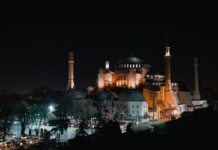
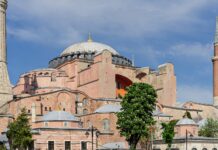
Hagia Sophia (Ayasofya) was completed in 537 AD under Emperor Justinian I and for nearly a thousand years it was the largest church in the world. Its floating dome, 55 metres high, was an engineering marvel that the Byzantines believed was suspended from heaven by a golden chain.
Today it functions as an active mosque with a paid tourist gallery section. Visitors access the upper galleries, where some of the most beautiful Byzantine mosaics survive — the golden Deesis mosaic of Christ, the Virgin, and John the Baptist is alone worth the entrance fee.
Entrance Fee: 25 EUR / approximately 1,270 TL / ~$28.50 (tourist gallery section). Tickets must be purchased online. Tourist entry is via the side entrance. Closed during Friday prayers and main Ramadan prayer times. Ground floor prayer hall is for worshippers only — not part of the paid tourist visit.
💡 Pro Tip: Book your ticket at least a day in advance online. The queue to purchase on-site can be an hour or more in peak season.
—
532 AD: The Basilica Cistern — Underground Byzantine Wonder
Built under Justinian I in 532 AD, the Basilica Cistern (Yerebatan Sarnıcı) held 80,000 cubic metres of water — enough to supply the Great Palace and surrounding buildings for months. It’s a forest of 336 marble columns, dimly lit and hauntingly atmospheric, with two Medusa heads repurposed as column bases in the far corner.
Entrance Fee: 1,950 TL / ~$45 for daytime entry. Evening sessions (19:30–22:00) are 3,000 TL / ~$68 and include atmospheric lighting. The Museum Pass is NOT valid here — you must buy a separate ticket. Children under 6 free.
Getting There: Walking distance from Hagia Sophia — exit and walk across Yerebatan Caddesi. You’ll see the entrance on the right.
—
1453: The Conquest — The World Changes
On May 29, 1453, Sultan Mehmed II rode into Constantinople, ending the Byzantine Empire after 1,123 years. He is said to have walked directly into Hagia Sophia and ordered it converted into a mosque. The city was renamed Istanbul (though this name was already used informally for centuries), and a new Ottoman capital was born.
The Fortress of Rumeli Hisarı (Rumeli Fortress), built by Mehmed II in just four months in 1452 to cut off Byzantine supply lines before the conquest, is one of the most dramatic military structures on the Bosphorus. Entrance is 6 EUR / 310 TL / ~$7. Children under 12 free. Museum Pass valid.
Getting There: Take bus 40 or 42T from Taksim toward Sarıyer, exit at Rumeli Hisarı stop.
—
1459–1839: Topkapi Palace — The Heart of the Ottoman Empire
For nearly 400 years, Topkapi Palace was the nerve centre of the Ottoman Empire, home to sultans and their court, a city within a city housing up to 4,000 people. The Harem — the private quarters of the sultan’s family — contains some of the most beautiful tilework in existence.
Entrance Fee: 2,750 TL / ~$65 for the palace including the Harem (the standard ticket now sold to foreign visitors). The Harem add-on (if purchased separately from the palace ticket) is 1,050 TL / ~$24. Museum Pass covers the main palace but NOT the Harem. Children under 6 free.
Best Time to Visit: Arrive right at opening (9:00 AM) — the palace gets overwhelmingly crowded by mid-morning. Allow at least 3–4 hours for the full complex including the Harem.
💡 Pro Tip: Don’t skip the Treasury room — the 86-carat Spoonmaker’s Diamond and the Topkapi Dagger alone justify the entrance fee.
—
16th Century: The Süleymaniye Mosque
Built between 1550 and 1558 under the direction of master architect Mimar Sinan for Sultan Süleyman the Magnificent, the Süleymaniye Mosque is arguably the most architecturally refined of all Ottoman mosques. The interior is calmer and less touristy than the Blue Mosque, with stunning proportions and light.
Entry: Free. The mosque is active — dress respectfully (covered shoulders, legs, and head for women) and avoid prayer times.
Getting There: Walk from the Grand Bazaar area up toward the mosque complex on the ridge above the Golden Horn.
—
1616: The Blue Mosque — Istanbul’s Most Famous Silhouette
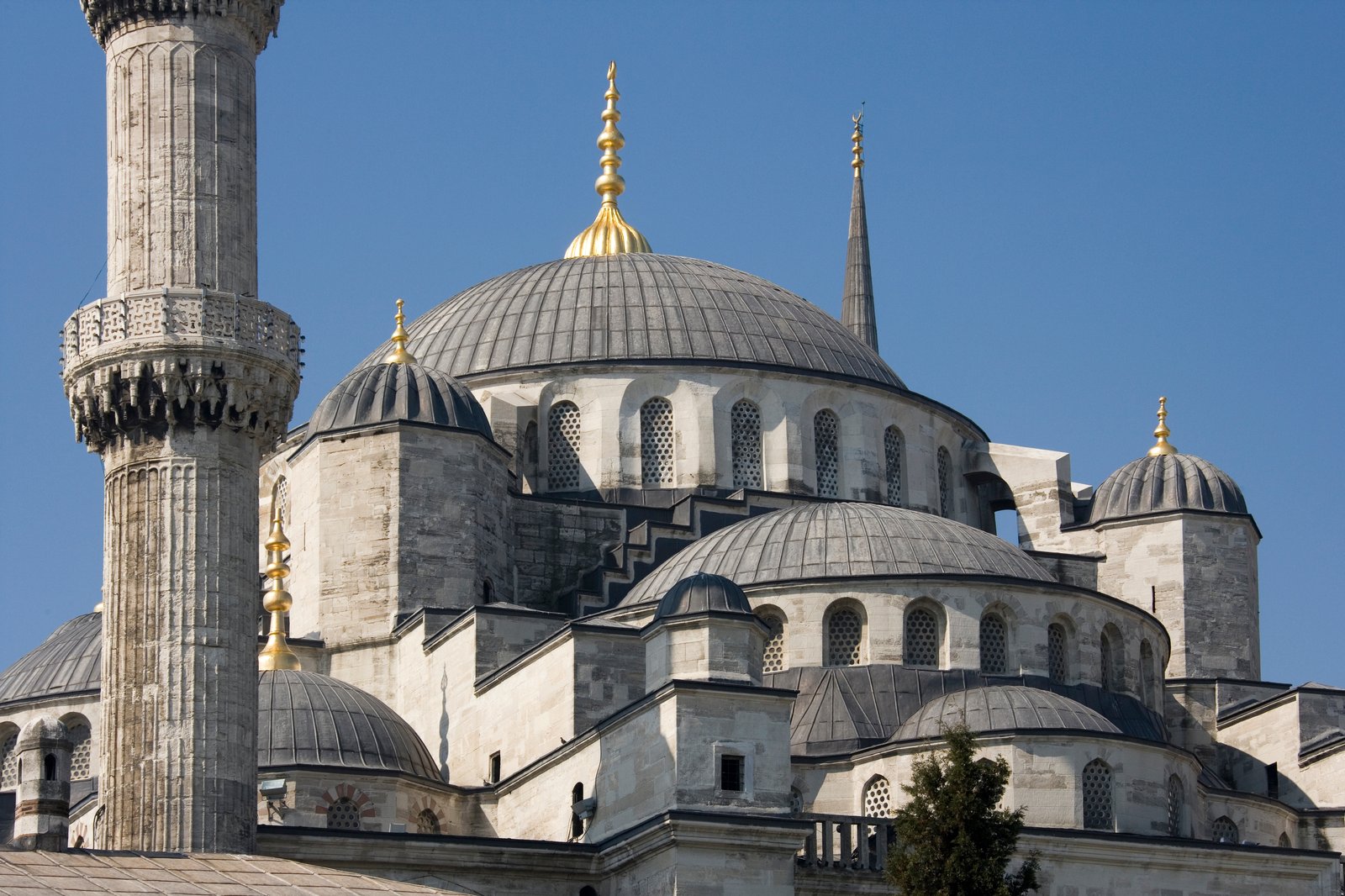
Officially called the Sultanahmet Camii, the Blue Mosque was completed in 1616 under Sultan Ahmed I. Its six minarets were controversial at the time — only the Masjid al-Haram in Mecca had six, and the number was seen as presumptuous.
Entry: Free for all visitors. Open 8:30 AM to approximately one hour before dusk, closed to tourists during 5 daily prayer times (~90 minutes each) and on Friday mornings until 14:30. Strict dress code enforced.
What to Avoid: Touts standing outside offering “free tours” and fake ticket sellers — no ticket is needed or exists for the Blue Mosque. Ignore anyone who says you need to pay.
—
1853–1856: Dolmabahçe Palace — Ottoman Meets Europe
When the Ottoman sultans finally moved out of Topkapi in the 19th century, they built Dolmabahçe Palace on the Bosphorus shore — a spectacular attempt to blend Ottoman grandeur with European Baroque style. The result is genuinely magnificent: 45,000 square metres, 285 rooms, 43 halls, and a chandelier from Bohemia weighing 4.5 tonnes.
Entrance Fee: 2,000 TL / ~$47 (Selamlık + Harem combined ticket for foreign visitors). Museum Pass NOT valid. Closed on Mondays. Children under 6 free.
Getting There: Bus or taxi to Beşiktaş, then a 5-minute walk along the Bosphorus waterfront.
—
The Museum Pass: Is It Worth It?
The Istanbul Museum Pass (5-day) costs 5,350 TL / ~$124. It covers Topkapi Palace (main sections, not Harem), Galata Tower, Istanbul Archaeological Museums, Maiden’s Tower, and several smaller museums.
It does NOT cover: Basilica Cistern, Dolmabahçe Palace, Chora/Kariye Mosque, or the Topkapi Harem.
For most visitors doing 3–4 days of sightseeing, the pass pays for itself if you visit Topkapi (main palace), Galata Tower, and the Archaeological Museums. Check muze.gen.tr for the official government-issued version.
—
One-Day Historical Walk: Sultanahmet Essentials
| Time | Sight | Entry |
|---|---|---|
| 8:30 AM | Hagia Sophia (tourist gallery) | 1,270 TL / $28.50 |
| 10:30 AM | Blue Mosque (if not prayer time) | Free |
| 11:30 AM | Hippodrome / Egyptian Obelisk | Free |
| 12:00 PM | Basilica Cistern | 1,950 TL / $45 |
| 2:00 PM | Topkapi Palace + Harem | 2,750 TL / $65 |
| 5:00 PM | Archaeological Museums | 15 EUR / $17 |
Budget for the day (one person, all entry fees): approximately 6,500–7,000 TL (~$148–160)
—
What to Avoid
– Visiting multiple major sites on the same day without booking ahead: Queues at Hagia Sophia and Topkapi can eat 1–2 hours. Book online.
– Believing you can see everything in a day: You cannot. Topkapi alone deserves a full morning.
– Missing the Chora Museum (Kariye Mosque): Fewer visitors, extraordinary Byzantine mosaics, entrance 20 EUR (~$27). Worth a half-day trip to the Fatih district.
—
Conclusion
Walking through Istanbul’s historical sites is one of those rare experiences that makes the world feel genuinely larger. This isn’t a themed park — these are the actual places where empires rose and fell, where history pivoted. What’s the one historical site in Istanbul that surprised you most? Tell us in the comments.
[Image alt text: Interior of Hagia Sophia looking up at the Byzantine mosaic dome in Istanbul]
Prices last updated: March 2026. Exchange rate: 1 USD ≈ 45 TL.
—
Article 5 | Title: Istanbul Museums Guide: The Complete List from Ancient to Modern | Category: culture
—
—
Useful links: Go Türkiye – Istanbul Tourism · Turkish Museums Portal