
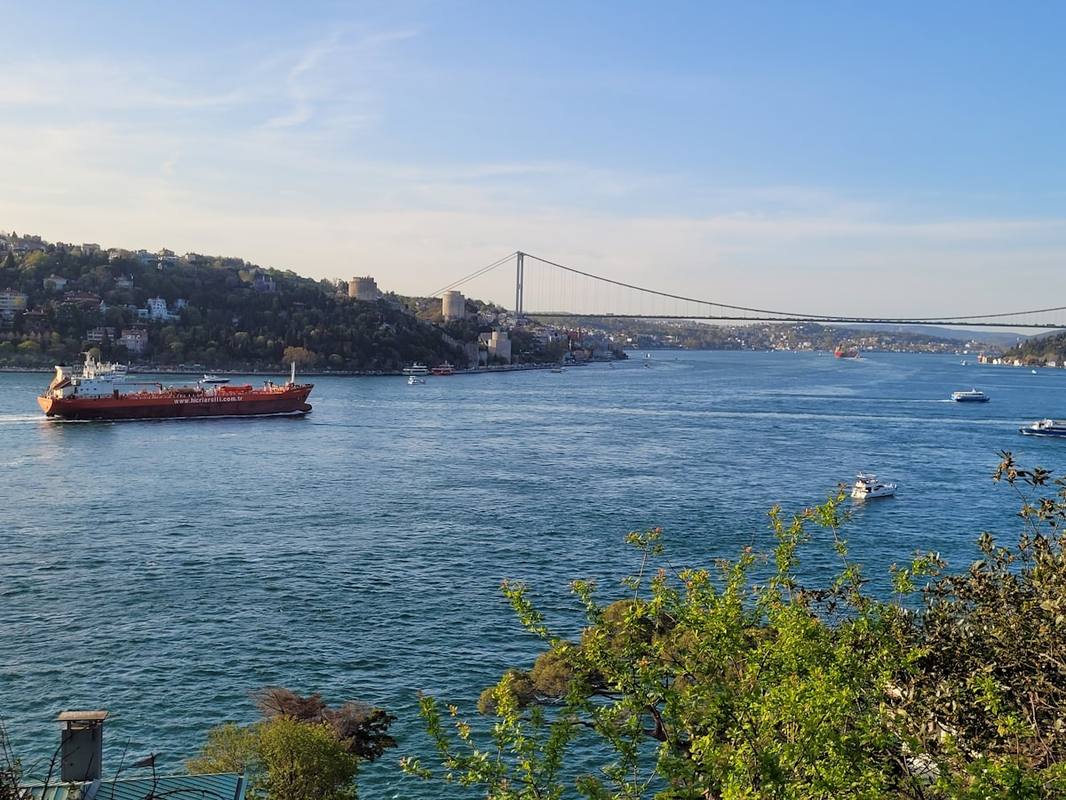
It’s 9 AM on a Tuesday in Kadıköy. You order a filter coffee at a place with wooden shelves full of plants and exposed brick, open your laptop, and start your first call of the day. Through the window, the Bosphorus glimmers between the buildings. By noon, you’ll wrap up, walk five minutes to a lokanta for a 200 TL lunch, and spend the afternoon exploring a neighborhood you’ve never been to. This is what working in Istanbul looks like.
Istanbul has quietly become one of the best cities in the world for digital nomads. It has fast internet, excellent café culture, a time zone (UTC+3) that works well for European clients, a cost of living that’s dramatically lower than Western Europe, and enough cultural depth to keep you engaged for months. This article isn’t a logistics guide — it’s about the lifestyle. What a week actually looks like, where to plant yourself, and how to find your people.
Where to Base Yourself
The neighborhood you choose shapes your entire Istanbul experience. Here’s the honest breakdown.
Kadıköy and Moda — The Nomad Heartland
Kadıköy is where most nomads end up, and for good reason. It has the highest density of excellent cafes with reliable Wi-Fi, a young and international community, great street food, excellent public transport connections to the European side, and a relaxed energy that makes working in public feel natural rather than performative.
Moda, the coastal sub-neighborhood of Kadıköy, adds parks, a seafront promenade, and a slightly more residential feel. Sitting at an outdoor café table in Moda with the sea visible between buildings is one of those Istanbul moments you come back to in your memory long after you leave.
Rent: Furnished apartments in Kadıköy run roughly 25,000–45,000 TL per month ($700–1,250) for a decent one-bedroom, though prices vary significantly by location and season.
Recommended cafés for work:
- Tasarım Bookshop & Café (Caferağa, Kadıköy): Great Wi-Fi, inspiring shelves full of design books, outlets at every table
- IDEA Kadıköy (Moda): A hybrid café/coworking space with garden seating and sea views
- Various unnamed small cafes along Moda Caddesi — walk until one feels right
Cihangir — Bohemian and Creative
Cihangir, clinging to a hill in Beyoğlu, has been Istanbul’s creative neighborhood for decades. Writers, artists, architects, and expats have called it home. The streets are narrow, the cats are plentiful, the coffee is excellent.
Cafes here tend to be smaller and more atmospheric than in Kadıköy — windowside seats with Bosphorus glimpses, mismatched furniture, good music. Great for working alone. The community is more artsy and international than anywhere else in the city.
Practical note: Cihangir is hilly. If you’re carrying a laptop bag, you’ll notice it. The neighborhood also attracts nightlife — some streets are very quiet by day but busy at night.
Karaköy / Galata — Hip and Central
Karaköy and the Galata area sit at the northern end of the Galata Bridge. The Bank Hotel area has several good working cafes and coworking-adjacent spots. It’s convenient — 15 minutes walk to the ferry, close to Beyoğlu nightlife, near Galata Tower. MOC (Ministry of Coffee) in Karaköy is a nomad favorite — sleek, good coffee, outlets everywhere.
EspressoLab across multiple Istanbul locations has reliable Wi-Fi, good seating, and a consistent professional vibe.
What a Nomad Week in Istanbul Actually Looks Like
Monday: Start slow. Make coffee at home, do your morning admin, then head to your regular café around 10. Work until 13:00. Walk to the market for lunch ingredients — Kadıköy’s covered market (Kadıköy Çarşısı) has the best produce you’ve seen at prices that still surprise you. Afternoon: get some actual work done. Evening: cook at home or find a lokanta.
Tuesday: Different café, same routine. By your second week, you’ll have a rotation of three or four places, switching based on mood. After work, take the ferry to Eminönü — the 20-minute crossing costs 35 TL ($1) and gives you the best view in the city. Wander Galata for an hour. Tea at a çay bahçesi (tea garden).
Wednesday: Smileys Community language exchange night in Kadıköy. Show up at Rock’n Rolla Gastro Pub on Moda Caddesi. Drink something cold, practice your three words of Turkish, make friends. You might end up staying until midnight.
Thursday: Productive day. Sometimes the best work days in Istanbul are when you just hunker down in a familiar spot and get through the week’s main task. Reward yourself with a sunset ferry.
Friday: Morning at Kolektif House or another proper coworking space — something about the structured environment helps you sprint through work before the weekend. Wrap early. Start the weekend at 17:00.
Saturday: Weekend mode. Take the bus to the Princes’ Islands, rent a bicycle, spend the day somewhere almost car-free and very beautiful. Or go north to Belgrad Forest for a proper walk. Or just wander — Balat, Fener, Arnavutköy.
Sunday: Brunch culture in Istanbul is real. Find a çay bahçesi in Moda or Ortaköy. Eat slowly. Plan nothing.
Coworking Spaces When You Need Them
Cafés are great but sometimes you need a real desk, a proper chair, and professional surroundings. Istanbul’s coworking scene has grown significantly.
Kolektif House is the most established coworking brand in the city, with locations in Beyoğlu/Şişhane, Maslak, and several other neighborhoods. The design-forward spaces have excellent internet, meeting rooms, coffee stations, and a community feel. Day passes are available — monthly membership runs around $107/month at Şişhane. Open 24/7.
IDEA Kadıköy / Moda: A hybrid café-coworking spot with sea views and garden seating. More relaxed than Kolektif House but excellent for focused work.
eOfis Bahariye Plaza (Kadıköy): Flexible office space in a well-connected location, close to the Kadıköy transport hub.
Urban Station (Şişli, Levent): Modern, professional, multiple locations. Good for video calls and longer stints.
💡 Pro Tip: Most coworking spaces offer a free trial day — use it before committing to a membership. Istanbul also has a growing number of coliving-with-coworking setups; Nest Digital Nomad House in Kadıköy is one of the more established options if you want the full community package.
The Practical Stuff (Briefly)
Internet: Istanbul’s café Wi-Fi is generally good — 25–100 Mbps is common in the better spots. For backup, get a local SIM from Turkcell, Vodafone, or Türk Telekom on arrival. Monthly data plans are very affordable — 10GB+ for 200–400 TL ($5–11).
Cost of living: The Instagram estimate of $1,000–1,500/month is achievable — if you cook most meals, live in Kadıköy, and don’t go to fancy restaurants every night. A more comfortable budget including going out, local travel, and occasional treats sits around $1,500–2,500/month for most people.
Time zone: UTC+3. Works brilliantly for clients in Europe (1–3 hours ahead of central Europe) and manageable for the US East Coast (7 hours behind).
Transport: Get an İstanbulkart (reloadable transit card, available at any metro station) immediately. It covers metro, bus, tram, and the ferries. Single journey: 35 TL ($1). Monthly unlimited pass: significantly cheaper than paying per journey.
Finding Your Community
Istanbul has a genuine nomad community, not just the loose collection of people who happen to be working in cafes.
Smileys Community (Meetup.com) runs weekly events specifically for nomads, expats, and travelers — language exchanges, sailing trips, picnics, and social nights. Mainly Kadıköy-based. Search “Istanbul Socialising Networking Group” on Meetup.
Istanbul Digital Nomads on Facebook is an active group for tips, housing leads, and meetups.
Turkey Nomad Fest launched As of early 2026 as Turkey’s first digital nomad festival — watch their Instagram (turkiye.nomadfest) for upcoming events.
The nomad community in Istanbul tends to naturally concentrate in Kadıköy — if you spend time in the right cafés, you’ll start recognizing faces within a week.
Weekend Escapes from Istanbul
One of the great advantages of being based in Istanbul is the day trips and weekend escapes.
Princes’ Islands (Adalar): 90-minute ferry from Kabataş or Bostancı. Car-free islands with good restaurants and beaches. Perfect for a digital-free Saturday. Ferry: around 80–120 TL.
Bursa: 3–4 hours from Istanbul (ferry to Bursa or bus). Ottoman capital, great food, silk market, cable car up Mount Uludağ. Excellent weekend trip.
Şile and Ağva: Black Sea coast villages 2 hours by bus. Good beaches, fresh fish, and a rural pace that resets your brain.
Edirne: 3 hours by bus. Remarkable Ottoman mosques, low tourist footprint, and food (the liver dish, ciğer, is famous). Easy solo day trip.
The Vibe — Why Nomads Stay
Here’s the thing about Istanbul that doesn’t fit neatly into a practical guide: it gets under your skin.
Most nomads who come for a month end up extending. Not because the coworking spaces are the world’s best, or the internet is the fastest. It’s the feeling of the city. The ferry crossings. The way the light hits the water in the late afternoon. The tea that appears when you didn’t ask for it. The cats. The food markets where you spend 150 TL and walk home with more vegetables than you can carry. The sense that you’re living in a city that’s been continuously inhabited for 2,700 years and somehow still feels alive and restless.
Istanbul is not a city you pass through. It’s a city that happens to you.
What to Avoid
Getting There from the Airport: Istanbul Airport (IST) on the European side: the metro M11 line connects to Gayrettepe, where you can transfer to other lines. Alternatively, take the Havaş bus to Taksim (around 100–150 TL). For Kadıköy, Sabiha Gökçen Airport (SAW) is the closer option — the Havaş bus goes directly to Kadıköy for around 100 TL.
Don’t try to work in Sultanahmet cafes near the big tourist sights: noisy, slow Wi-Fi, and aggressively priced for tourists. Head to Karaköy or Beyoğlu instead.
Don’t sign a long-term apartment lease before you’ve spent at least a week in the neighborhood: Istanbul’s neighborhoods feel very different from each other. What sounds good online and what feels right in person can be completely different.
Avoid the tourist restaurants on İstiklal Caddesi for regular meals: you’ll spend 3x more for lower quality. Find your neighborhood lokanta within the first few days.
Conclusion
Istanbul as a digital nomad base is one of those things that sounds good on paper and somehow exceeds expectations in real life. The city is big enough to never run out of things to explore, affordable enough to actually save money while living well, and warm enough — in every sense — to feel like home much sooner than you’d expect.
Are you considering basing yourself in Istanbul? Or already here? Ask your questions or share your favorite café in the comments — we genuinely want to know.
External links: Smileys Community meetups (meetup.com/istanbul-socialising-networking-group) | Kolektif House coworking (kolektifhouse.co)
Useful links: Go Türkiye – Istanbul Tourism · Turkish Museums Portal
Prices last updated: March 2026. Exchange rate used: 1 USD ≈ 45 TL. Prices in Turkish lira can change frequently due to inflation. Attraction fees set in euros (€) are more stable. Always check official websites for the latest prices before your visit.









[…] require this), withdraw TL without international ATM fees, receive payments if you’re doing any remote work, and take advantage of local payment systems that don’t always accept foreign […]
[…] 1, Cihangir — Bakraç Sokak No: 19, Cihangir. A minimalist café popular with digital nomads, where cats freely come and go. Great coffee, strong Wi-Fi, and regular feline […]