Istanbul has been a capital city for 1,600 consecutive years — longer than Rome, longer than London, longer than anywhere in Europe. It has been Constantinople, the seat of Eastern Christendom, the jewel of the Ottoman Empire, and the cultural capital of the modern Turkish Republic. Walking its streets is walking through layers of civilization: a Roman cistern beneath an Ottoman bazaar beneath a modern coffee shop. This Istanbul history itinerary is built for travelers who want more than selfies in front of the Blue Mosque — it’s for those who want to understand the city through its stones, mosaics, inscriptions, and walls.
Day 1: Constantinople — The Byzantine City
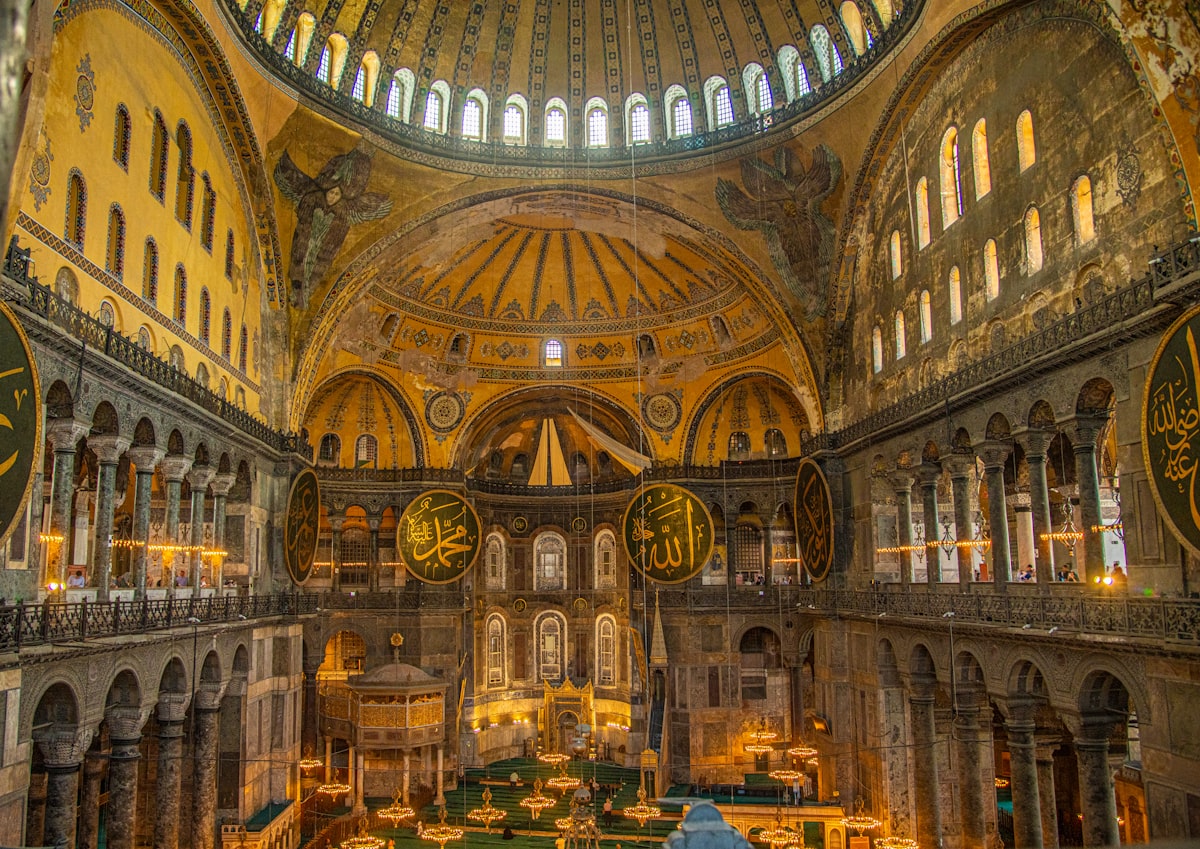
Morning: Hagia Sophia — Start where the story reaches its crescendo. Built in 537 by Emperor Justinian, this was the world’s largest cathedral for nearly a thousand years. Even after conversion to a mosque, the Byzantine mosaics in the upper gallery (€25 tourist entry) tell the story of an empire’s devotion: the Deësis mosaic (Christ flanked by Mary and John the Baptist) is one of the finest examples of Byzantine art surviving anywhere.
Midday: Basilica Cistern — Built by Justinian in 532 to supply the Great Palace, this underground reservoir held 80,000 cubic meters of water. The 336 columns were recycled from ruined temples — look for the two Medusa heads used as column bases, turned sideways and upside-down. 1,950 TL entry.
Afternoon: The Hippodrome — Once the social and political center of Constantinople, seating 100,000 spectators for chariot races. Today it’s Sultanahmet Square, but three ancient monuments remain: the Egyptian Obelisk (1500 BCE, brought from Luxor in 390 CE), the Serpentine Column (from Delphi, 479 BCE — one of the oldest monuments in Istanbul), and the Constantine Column (a walled obelisk from the 10th century).
Late Afternoon: Little Hagia Sophia (Küçük Ayasofya) — Built as the Church of Saints Sergius and Bacchus in 527, this predates the “big” Hagia Sophia. The interior columns and capitals are original 6th-century work. Converted to a mosque, it’s free, peaceful, and usually empty. One of Istanbul’s most underrated sites.
Evening: Walk to Bucoleon Palace ruins — visible from the coastal road below Sultanahmet. The last visible remains of the Great Palace of Constantinople, with marble-framed windows overlooking the Sea of Marmara. Atmospheric at sunset.
Day 2: Imperial Ottoman Istanbul
Morning: Topkapı Palace (2,750 TL combined ticket). This was the administrative heart of the Ottoman Empire from 1465 to 1856. Highlights for history lovers: the Imperial Treasury (housing the Topkapı Dagger and the Spoonmaker’s Diamond), the Sacred Relics chamber (containing items attributed to Prophet Muhammad), and the Harem — the private quarters of the sultan’s family, with some of the most intricate tilework in the world.
Midday: Istanbul Archaeology Museums (€15, included with Museum Pass). Three museums in one complex:
- The main Archaeology Museum holds the Alexander Sarcophagus and the Treaty of Kadesh — the world’s oldest surviving peace treaty (1259 BCE).
- The Museum of the Ancient Orient has Mesopotamian, Egyptian, and pre-Islamic Arabian artifacts.
- The Tiled Kiosk (Çinili Köşk) is one of the oldest Ottoman buildings in Istanbul (1472), with stunning Seljuk and Ottoman tile collections.
Afternoon: Süleymaniye Mosque — Architect Sinan’s masterpiece (1558), commissioned by Sultan Süleyman the Magnificent. The proportions are mathematically perfect. The cemetery behind contains the ornate tombs of Süleyman and Hürrem Sultan (Roxelana). Free entry. Allow 1 hour for the mosque and grounds.
Evening: Walk through the old theological schools (medrese) around Süleymaniye, now restaurants and tea gardens with views over the Golden Horn. Dinner at one of the restored medrese restaurants.
Day 3: The Walls and the Conquest
Morning: Theodosian Walls — The land walls of Constantinople, built in the 5th century, ran 6.5 km from the Sea of Marmara to the Golden Horn. They were the strongest fortification in the ancient world and held off invaders for 1,000 years — until 1453. Walk sections near Yedikule (Seven Towers Fortress) and the Edirnekapı gate. Much of the wall is in ruins but powerfully atmospheric.
💡 Pro Tip: The walls are in a non-touristy, working-class area. Go during daylight, stay aware of your surroundings, and consider joining a guided walking tour for context and safety.
Midday: Panorama 1453 History Museum — Located near the Topkapı Gate (where Sultan Mehmed’s forces breached the walls), this museum recreates the Conquest of Constantinople with a massive 360-degree panoramic painting and sound effects. Around 200 TL. It’s dramatic and effective, even if not academically rigorous.
Afternoon: Kariye Mosque (Chora Church) — If accessible to visitors (check current status — it has alternated between mosque and museum), this small church contains some of the most extraordinary Byzantine mosaics and frescoes in the world. The Anastasis fresco in the parekklesion (Christ pulling Adam and Eve from their tombs) is considered one of the masterpieces of all medieval art.
Late Afternoon: Fethiye Mosque (Pammakaristos Church) — Another Byzantine church-turned-mosque, with a side chapel containing beautiful mosaics. Free and almost never visited by tourists. A genuine hidden gem for Byzantine art enthusiasts.
Day 4: Sultanate of the Sea — Bosphorus History
Morning: Dolmabahçe Palace (1,800 2,000 TL, closed Mondays) — The last Ottoman palace (1856), replacing Topkapı. European Baroque and Neoclassical architecture with Ottoman interior decoration. The Crystal Staircase, the Ceremonial Hall with its 4.5-ton Bohemian crystal chandelier, and the room where Atatürk died (all clocks stopped at 9:05 AM) are historically significant.
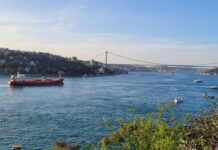
Midday: Bosphorus cruise to Rumeli Fortress (Rumelihisarı) — Built by Sultan Mehmed II in just four months in 1452, this fortress on the European side of the Bosphorus was the key to controlling the strait before the Conquest. Entry ~€6. Climb the walls for extraordinary Bosphorus views.
Afternoon: Anadolu Fortress (Anadoluhisarı) on the Asian side — The earlier, smaller fortress built by Sultan Bayezid I in 1394. Together with Rumeli, the two fortresses strangled Constantinople’s supply line through the Bosphorus.
Late Afternoon: Walk through Bebek to Arnavutköy — a Bosphorus waterfront walk past historic yalıs (wooden waterfront mansions) from the Ottoman and early Republic period.
Day 5: Hidden Byzantine and Multi-Faith Istanbul
Morning: Ecumenical Patriarchate (Fener) — The spiritual center of Eastern Orthodox Christianity since 1601. The modest exterior belies a richly decorated interior with icons and mosaics. Free entry.
Visit the Bulgarian Iron Church — A technical marvel: a complete church fabricated from cast iron in Vienna, shipped in pieces down the Danube, and assembled in Istanbul in 1871.
Midday: Balat and Fener walking tour — These neighborhoods preserve the multicultural history of Ottoman Istanbul: Greek, Armenian, Jewish, and Bulgarian communities lived here for centuries. Historic synagogues, churches, and the remnants of a cosmopolitan past visible in the architecture.
Afternoon: Eyüp Sultan Mosque and Cemetery — The tomb of Abu Ayyub al-Ansari, the companion of Prophet Muhammad, makes this one of the holiest Islamic sites outside Mecca, Medina, and Jerusalem. The mosque (built 1458, rebuilt 1800) is pilgrimage site and architectural treasure. Walk through the historic cemetery on the hillside — Ottoman graves with elaborate headstones and turbans carved in marble.
Evening: Pierre Loti Café — Take the cable car from Eyüp to this hilltop café named after the French novelist. The view over the Golden Horn is a fitting end to a history-focused trip — a panorama that covers the Byzantine walls, Ottoman mosques, and modern city stretching to the horizon.
Further Reading and Resources
- “Istanbul: Memories and the City” by Orhan Pamuk — Nobel Prize–winning memoir of growing up in Istanbul, with deep reflections on the city’s melancholy and history.
- “Constantinople: The Last Great Siege, 1453” by Roger Crowley — Gripping narrative history of the Ottoman conquest.
- “Justinian’s Flea” by William Rosen — The story of the plague and the building of Hagia Sophia.
Istanbul doesn’t just have history — it IS history, still breathing, still contested, still unfolding. Every stone has a story, and five days barely begins to tell them.
What’s your favorite historical site in Istanbul? Tell me in the comments.
—
—
Useful links: Go Türkiye – Istanbul Tourism · Turkish Museums Portal
Prices last updated: March 2026. Exchange rate used: 1 USD ≈ 45 TL. Prices in Turkish lira can change frequently due to inflation. Attraction fees set in euros (€) are more stable. Always check official websites for the latest prices before your visit.