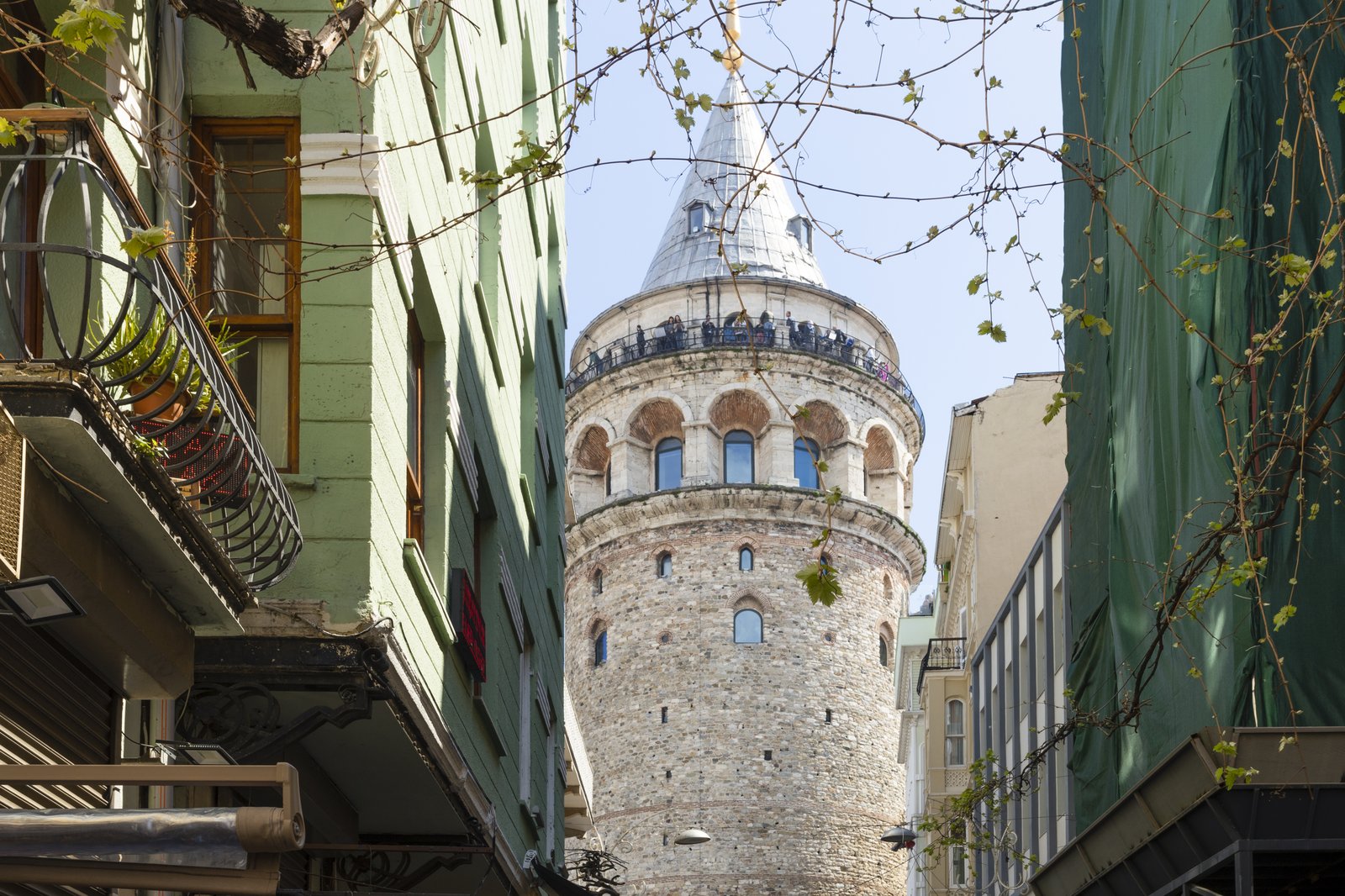
Galata is one of Istanbul’s oldest quarters and one of its most walkable. The district runs up the hill from Karaköy waterfront to the Galata Tower and then continues through a tangle of lanes up to the Tünel funicular at the bottom of İstiklal. You can walk the full length in thirty minutes. You should take at least two hours.
The History in One Paragraph
Galata was a Genoese trading colony in the medieval period, established on the north side of the Golden Horn as a commercial counterpart to Byzantine Constantinople. The tower dates to 1348. After the Ottoman conquest in 1453, the district became home to European merchants, Greek and Armenian communities, and later Jewish traders from Spain. The architecture reflects this layered history. Narrow lanes, stone buildings, ornate 19th-century apartment facades, and the occasional Byzantine or Genoese fragment still embedded in the walls.
Starting at Karaköy
The best way to approach Galata is from the water. Take the Marmaray or metro to Karaköy station, or cross from Eminönü on foot over the Galata Bridge. Stand at the bridge and look up the hill. The tower is visible from here. That is your destination.
The first section of Galata, immediately above the waterfront, is full of marine supply shops, boat equipment dealers, and hardware stores that have been here for generations. This industrial edge is part of what makes lower Galata interesting. It is not curated for tourists.
Galata Tower
The tower is the obvious centerpiece. Entry costs 400 TL as of 2026. The view from the top is excellent: 360 degrees over Istanbul’s rooflines, the Bosphorus, the Golden Horn, and the bridge. On a clear day the Asian shore is close enough to feel real.
The queue can be long in summer. If you go in the morning before 10:00 or late afternoon after 17:00, you will wait less. The tower is managed through the Ministry of Culture ticketing system, and you can book online: Müzeler Genel Müdürlüğü.
💡 Pro Tip: The square immediately around the Galata Tower is tourist-facing and the prices at the surrounding cafes reflect that. Walk one street in any direction and prices drop significantly. The cafes on the streets leading toward Cihangir are much better value.
The Streets Between Tower and Tünel
Above the tower, the lanes narrow and get steeper. This section is where Galata’s character is strongest. A few things to look for:
- Galata Mevlevi Lodge: A functioning Sufi lodge on Galip Dede Caddesi with a museum and courtyard. Entry is 150 TL. Sema (whirling dervish) ceremonies are held on specific dates. Check the schedule at the entrance.
- Musical instrument shops: Galip Dede Caddesi has been a street of music shops for decades. Luthiers, oud makers, sellers of classical Turkish instruments and Western guitars. You can watch repairs being done through the windows.
- The old Galata hans: Several Ottoman-era caravanserais survive in varying states of repair. Some are now office buildings or have workshops on the ground floor. The Büyük Hendek Caddesi area has a few worth walking past.
- The Neve Shalom Synagogue: On Büyük Hendek Caddesi, this is one of Istanbul’s still-functioning synagogues. Not open for tourist visits without prior arrangement, but the building’s exterior is historically significant in the context of the old Galata community.
Tünel: The World’s Second Oldest Metro
Tünel is a short underground funicular that has been running since 1875, making it the second oldest underground railway in the world after the London sections that predate it. It runs between Karaköy and the bottom of İstiklal Caddesi. Journey time is ninety seconds. The fare is 42 TL with an Istanbulkart.
The Tünel end of İstiklal is more local and less commercial than the Taksim end. There are second-hand bookshops, small art galleries, and a few of Beyoğlu’s better coffee shops in the immediate vicinity. IETT manages the Tünel service alongside the broader public transport network.
💡 Pro Tip: If you are walking from Karaköy up to Tünel and the hill is getting to you, use the Tünel funicular itself. It is a genuine piece of urban infrastructure history and the price is the same as any other Istanbul transit: 42 TL with an Istanbulkart. There is no reason not to use it.
Eating and Drinking in Galata
Galata has become one of the more reliable areas for good independent cafes and bars in Istanbul over the last decade. The coffee culture here is genuinely good. Third-wave coffee shops have opened alongside the old Turkish tea houses and the result is a neighborhood where you can drink both within fifty meters of each other.
In the evening, the bars on the streets adjacent to Galata Tower and in lower Cihangir serve a young local crowd. These are not late-night clubs; they are relaxed drinking spots. The nightlife proper is higher up the hill toward İstiklal and Nevizade.
Making the Most of the Walk
Do this walk on foot and let it take as long as it takes. Galata is one of Istanbul’s most rewarding neighborhoods precisely because it has not been cleaned up into a single shopping experience. The lane changes every forty meters: a music shop here, a courtyard there, a carpenter’s workshop next to a specialty coffee bar.
The full Beyoğlu context, including transport details, is in the neighborhood overview: Beyoğlu Neighborhood Guide. If you want to continue the walk above Tünel into Cihangir, that route is covered separately: Cihangir Walking Guide.