
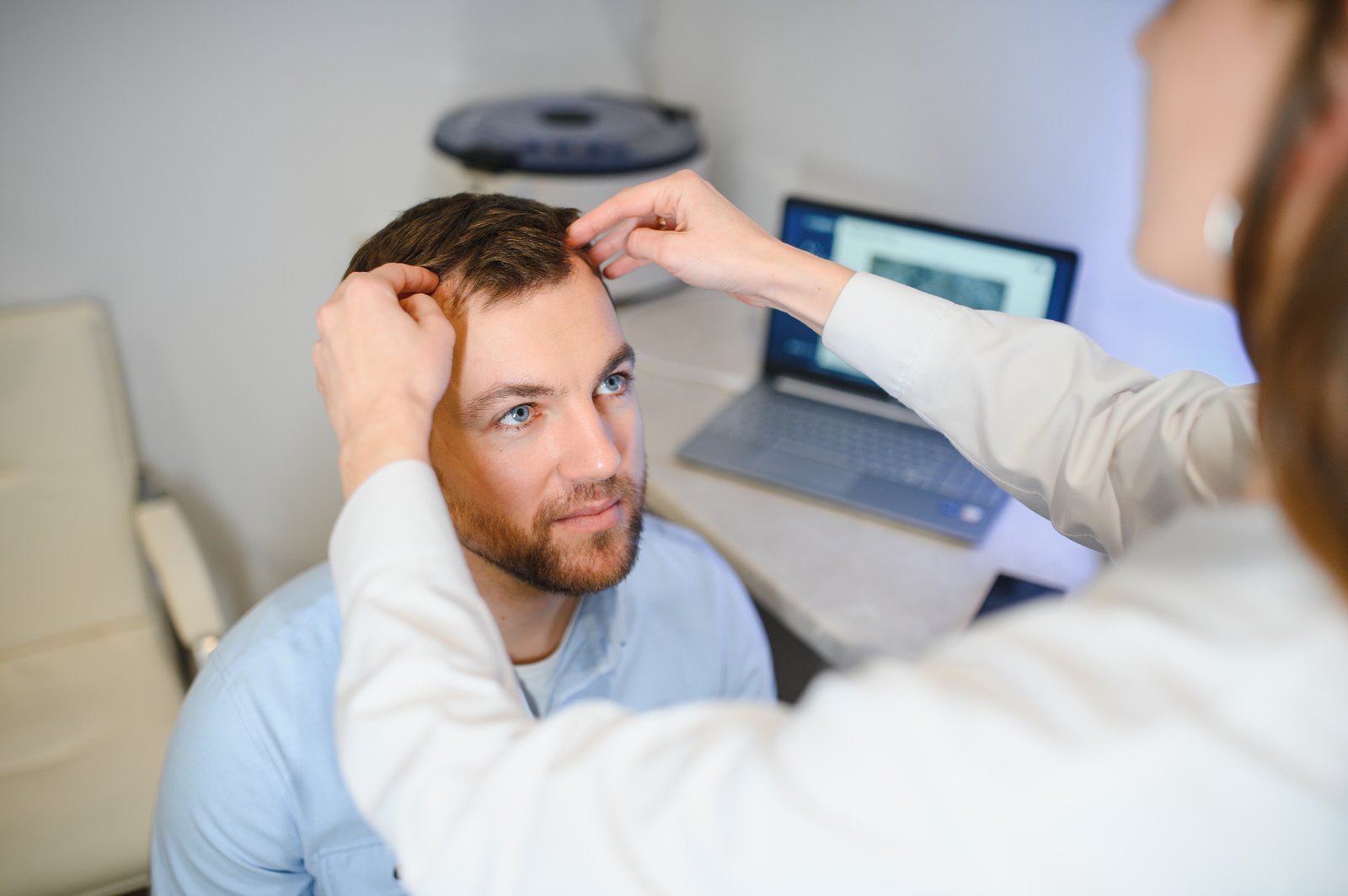
Hair transplants in Turkey can go very well. They can also go badly. The price advantages are real, but so are the risks, and some of those risks are specific to the way a portion of the market operates here. This article covers what actually goes wrong, how often, and what distinguishes a complication that could happen anywhere from one that specifically results from poor practice. No sales pitch. Just the honest picture.
The Spectrum of Risk: Unavoidable vs. Preventable
Some risks exist in every hair transplant procedure, regardless of country or quality of clinic. Others are directly linked to standards of care, and are preventable with better practice.
Understanding this distinction matters because it affects how you evaluate a bad outcome. Shock loss after transplant is common and expected. Necrosis (tissue death) from contaminated instruments is not. The first is part of the normal biological process; the second is a failure of sterile technique.
Infection: The Most Common Serious Complication
Post-surgical infection is the most frequently reported serious complication from hair transplants in Turkey. It ranges from mild folliculitis (inflamed follicles, usually cleared with antibiotics) to more serious wound infections requiring medical intervention.
Risk factors for infection:
- Non-sterile instruments or work environment
- Procedures performed in non-clinical settings (hotel rooms, converted apartments)
- Inadequate post-operative wound care instructions
- Patient not following hygiene instructions during recovery
- Surgeon or technician not wearing proper sterile gloves and gowns
Mild infections caught early respond well to antibiotics. Infections that develop into abscess or spread to the scalp can cause permanent scarring and graft failure. If you notice increasing pain, swelling, heat, or discharge from the transplant area after returning home, see a doctor immediately and bring your procedure documentation.
💡 Pro Tip: Before leaving Istanbul, confirm with your clinic what the specific signs of infection look like, what to do if you notice them, and what documentation you need to show your home country GP or emergency service. This conversation should happen before discharge, not at the airport.
Poor Graft Survival and Low Density
One of the most common disappointments reported by hair transplant patients is not an acute medical complication but a chronic one: the transplanted area looks thin. The promised density did not materialise.
This happens for several reasons:
- Graft damage during extraction: FUE grafts are fragile. If the extraction tool is incorrectly calibrated or the technician is inexperienced, graft survival rates drop significantly.
- Poor handling outside the body: Grafts held outside the scalp for too long, in inadequate storage solution, or in warm conditions have lower survival rates.
- Too many grafts attempted at once: Clinics sometimes promise very high graft counts to attract patients. High graft counts in a single session can exceed what the scalp can support, and grafts implanted in over-saturated areas fail.
- Incorrect angle and depth: Grafts implanted at the wrong angle grow in the wrong direction. Grafts implanted too shallowly fail entirely.
Poor density is often not obvious until twelve to eighteen months after surgery, when full growth should have occurred. By then, the patient is home, the money is spent, and legal recourse is difficult.
Unnatural Hairline Design
Hairline design is a clinical and aesthetic skill. A poorly designed hairline, one that is too straight, too low, too thick at the front, or mismatched to the patient’s facial structure, can look worse than the original hair loss.
This is less about infection and more about surgical artistry and planning. Clinics that rush the consultation stage, that do not discuss hairline design in detail before surgery, and that proceed without showing the patient exactly what they intend to create are more likely to produce unnatural results.
A revision procedure to correct a bad hairline design is expensive, painful, and sometimes not fully correctable.
Scarring at the Donor Site
FUE (Follicular Unit Extraction) is marketed as “scar-free” compared to the older FUT (strip) technique. This is not accurate. FUE creates multiple small punch scars across the donor area at the back of the scalp. These are typically small enough to be invisible under normal hair length, but poor technique or overharvesting makes them more visible.
Overharvesting, taking too many grafts from the donor area, permanently reduces donor density and can leave the back of the scalp looking patchy. Once hair follicles are removed, they do not regrow.
Ask your surgeon specifically: what is your maximum graft count per session, and why? A surgeon who sets limits based on donor density assessment is working responsibly. One who promises unlimited grafts is not.
💡 Pro Tip: Ask to see examples of patients at two years post-procedure, not just six months. Early results look better than long-term results at many clinics, because some initial density is from inflammation swelling rather than established graft survival. Two-year photos tell the real story.
Allergic and Anaesthetic Complications
Local anaesthesia complications are rare but real. Allergic reactions to anaesthetic agents, pain medication, or antibiotics can occur during or after the procedure. In a properly equipped clinical setting, these are managed quickly. In a converted apartment or hotel room without emergency equipment, they are dangerous.
This is one of the reasons why the physical setting of a clinic matters. Emergency resuscitation equipment, trained anaesthetic staff, and proximity to a hospital are not bureaucratic requirements. They are the practical safety net for rare but serious events.
Scams and Financial Fraud
Beyond medical complications, the hair transplant industry in Istanbul has documented financial scams. Common patterns:
- Quoting a low price and adding charges after surgery (anaesthesia, medication, transport) that were not mentioned upfront
- Collecting full payment in advance with no written contract, then delivering a reduced service
- Misrepresenting the seniority of the surgeon who will perform the procedure
- Selling packages through middlemen who take a large commission, reducing the amount that reaches the actual clinical operation
Get itemised written quotes. Confirm exactly what is included. Pay a deposit, not the full amount, before surgery. Bring a record of exactly what you were promised.
What to Do If Something Goes Wrong After You Return Home
If you experience a complication after returning home, the first step is to see your own GP or a dermatologist, not to call the Istanbul clinic. Bring all your documentation from the procedure.
For formal complaints about medical practice in Turkey, the Istanbul Provincial Health Directorate (İstanbul İl Sağlık Müdürlüğü) accepts complaints from patients including foreign nationals. The Turkish Ministry of Health also has a complaints process. These routes are slow and do not guarantee resolution, but they are the official channels.
Legal action across international jurisdictions is expensive and uncertain. Prevention is the realistic strategy.
Before you book, read our guide to red flags to watch for when choosing an Istanbul hair transplant clinic. If you need help communicating with medical staff during your visit, the medical translator services guide covers your options. For vetting plastic surgery clinics more broadly, the plastic surgeon vetting guide covers the credential verification process in detail.
If you have had a hair transplant in Turkey and are willing to share what happened, your experience in the comments is genuinely useful for other readers making this decision.