Sunday in Istanbul looks nothing like what you see in the tourist guides. Residents sleep later, dress less formally, and move through different parts of the city than they use on weekdays. If you want to see Istanbul as it actually is, Sunday is the best day to do it. Here is where people actually go.
Morning: The Neighbourhood Pazar
Every district in Istanbul has a weekly outdoor market, the pazar. Many of them fall on Sunday. These are not souvenir markets. They are where people buy vegetables, cheese, olives, eggs, and clothing for the week ahead. They are loud, crowded, and a genuine window into how the city feeds itself.
- Kadıköy Sunday market (Moda caddesi area) is one of the largest and most varied. Get there by 10:00 before the best produce sells out.
- Fatih Sunday market near Fevzi Paşa Caddesi is larger still and serves a more conservative neighbourhood. Excellent dried fruits, cheese, and olives.
- Ortaköy pazar on the Bosphorus has a mix of street food and handicrafts and draws a younger crowd from Beşiktaş and Bebek.
The correct pazar protocol: bring a bag, do not photograph people without asking, and buy something from anyone who helps you. Tasting before buying is expected at cheese and olive stalls.
Late Morning: Breakfast That Takes Two Hours
Turkish Sunday breakfast is a serious institution. It is not a meal. It is a session. Tables fill up with small plates: white cheese, olives, tomatoes, cucumbers, sucuk (spiced sausage), kaymak (clotted cream) with honey, eggs cooked however you want them, and unlimited tea. The point is to stay for a long time and talk.
In Kadıköy, the streets around Moda are full of cafes doing exactly this from 09:00 to about 14:00 on a Sunday. In Balat on the European side, several old Greek and Armenian neighbourhood cafes do extended breakfasts in their courtyards. In Beşiktaş, the market area turns into an outdoor breakfast scene by mid-morning. Expect to wait for a table at the popular spots after 11:00.
💡 Pro Tip: Ask for sınırsız çay (unlimited tea) when you sit down at any breakfast spot. It is standard, but some places only bring it automatically if you ask. Tea on Sunday morning is not optional.
Afternoon: The Bosphorus Walk
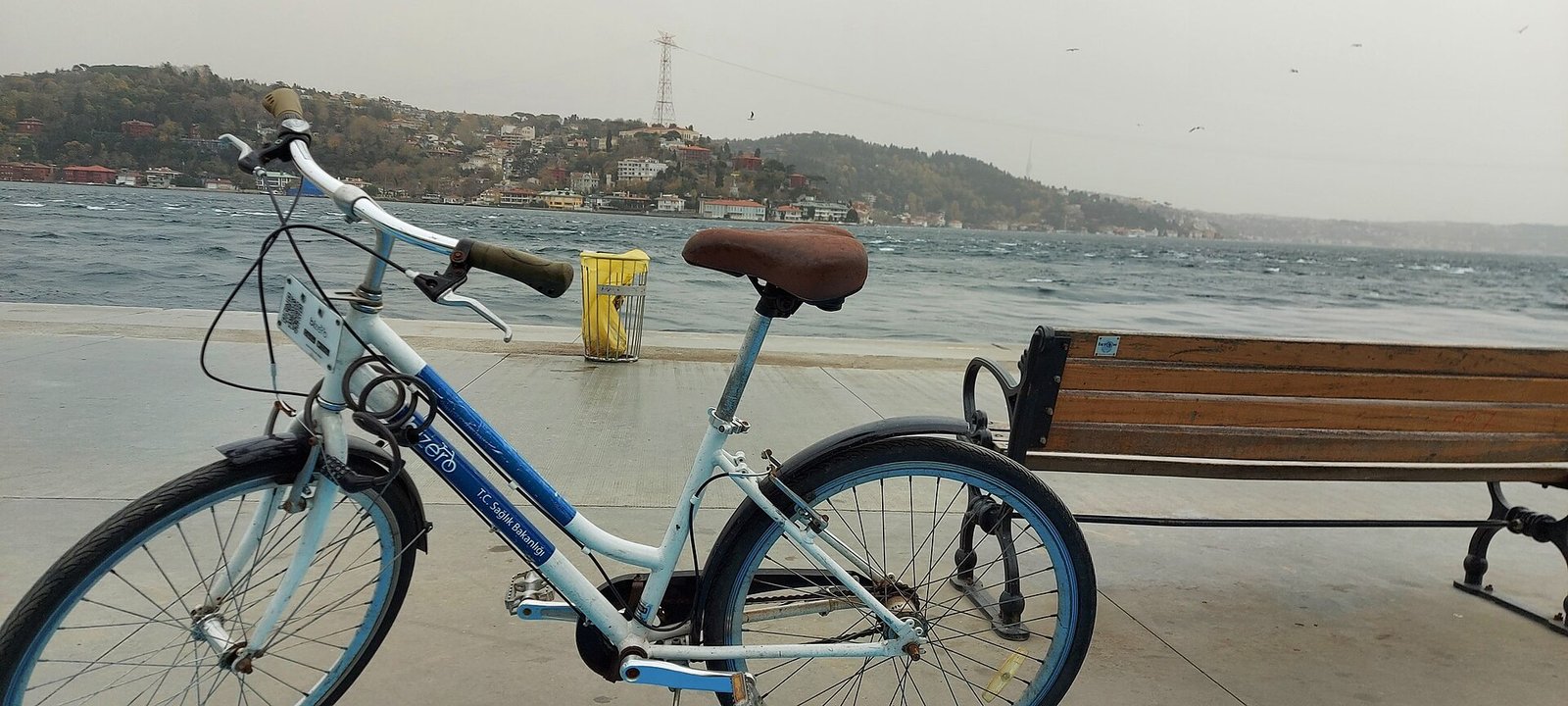
Sunday afternoon is the Bosphorus’s best moment. Families walk the waterfront promenades, old men fish from the seawalls, and the light on the water in the afternoon is genuinely beautiful. The main places to experience this:
- Arnavutköy to Bebek walk on the European side: 2 km of Bosphorus shoreline with cafes, çay bahçesi (tea gardens), and Bosphorus views all the way
- Üsküdar waterfront on the Asian side: wide promenade, Maiden’s Tower views, lots of families and older couples
- Karaköy to Ortaköy: longer, mixes neighbourhoods, ends at the Ortaköy mosque and its famous kumpir (baked potato) stalls
The ferry from Eminönü or Karaköy to Üsküdar costs 73 TL with an Istanbulkart and takes 20 minutes. On a Sunday afternoon, take the one that crosses the full strait rather than the short hop, just for the view.
The Çay Bahçesi: The Real Social Centre
Tea gardens are where Istanbullites actually spend their Sunday afternoons. Not bars, not restaurants. Tea gardens. They are in parks, in Bosphorus-view gardens, on rooftops, and tucked into hillside neighbourhoods. Most charge 25 to 50 TL for a glass of tea and nothing else. The point is to sit for two hours. Some have backgammon sets. Some have views you would pay a hundred times more for in another city.
Good çay bahçesi for Sunday: Emirgan Korusu park (beautiful park on the Bosphorus European side, free entry), Pierre Loti hilltop in Eyüp (cable car up, extraordinary Golden Horn view), and the Gülhane Park tea garden below Topkapi (busy but historic). Each costs almost nothing and is entirely local.
Evening: The Meyhane Question
Sunday evenings in Istanbul often end at a meyhane. These are traditional taverns serving raki (aniseed spirit), cold meze plates, and long fish or meat mains. The point is the table: a meyhane dinner on a Sunday is meant to last three to four hours. Kanaat in Üsküdar has been doing this for over a century. Çiya Sofrası in Kadıköy is more casual but equally serious about the food. Any meyhane in the Nevizade Sokak area of Beyoğlu will do the job, though they get noisy by 21:00.
💡 Pro Tip: At a meyhane, do not rush through the meze plates to get to the main course. The meze is the meal. Order slowly, ask what is good today (bugün ne tavsiye edersiniz?), and let the evening extend past what feels normal. That is the whole point.
What Locals Do Not Do on Sunday
They do not queue at Hagia Sophia (Hagia Sophia entry is €25 and the line on a Sunday is brutal). They do not go to the Grand Bazaar, which closes on Sundays. They do not eat in the tourist restaurants of Sultanahmet. They do not spend two hours in traffic trying to get to an Asian-side shopping mall if they live on the European side.
The logic of an Istanbul Sunday is: stay close to water, eat slowly, walk when possible, and take tea as a legitimate use of time. If you can align your Sunday to that rhythm, you will see a completely different city.
For more on living in Istanbul’s rhythms rather than touring through them, read our piece on what changes after a year in Istanbul. Our neighbourhood guide can help you find the right area for your Sunday depending on which part of the city you are staying in. And for planning your week around local events, see our monthly roundup series.
For a look at what is happening any given Sunday in terms of events and markets, the Istanbul Metropolitan Municipality publishes weekly cultural listings on their website, including free park events and outdoor performances that run through the warmer months.
Sunday in Istanbul is not a day off from the city. It is the day you finally see what the city is for.