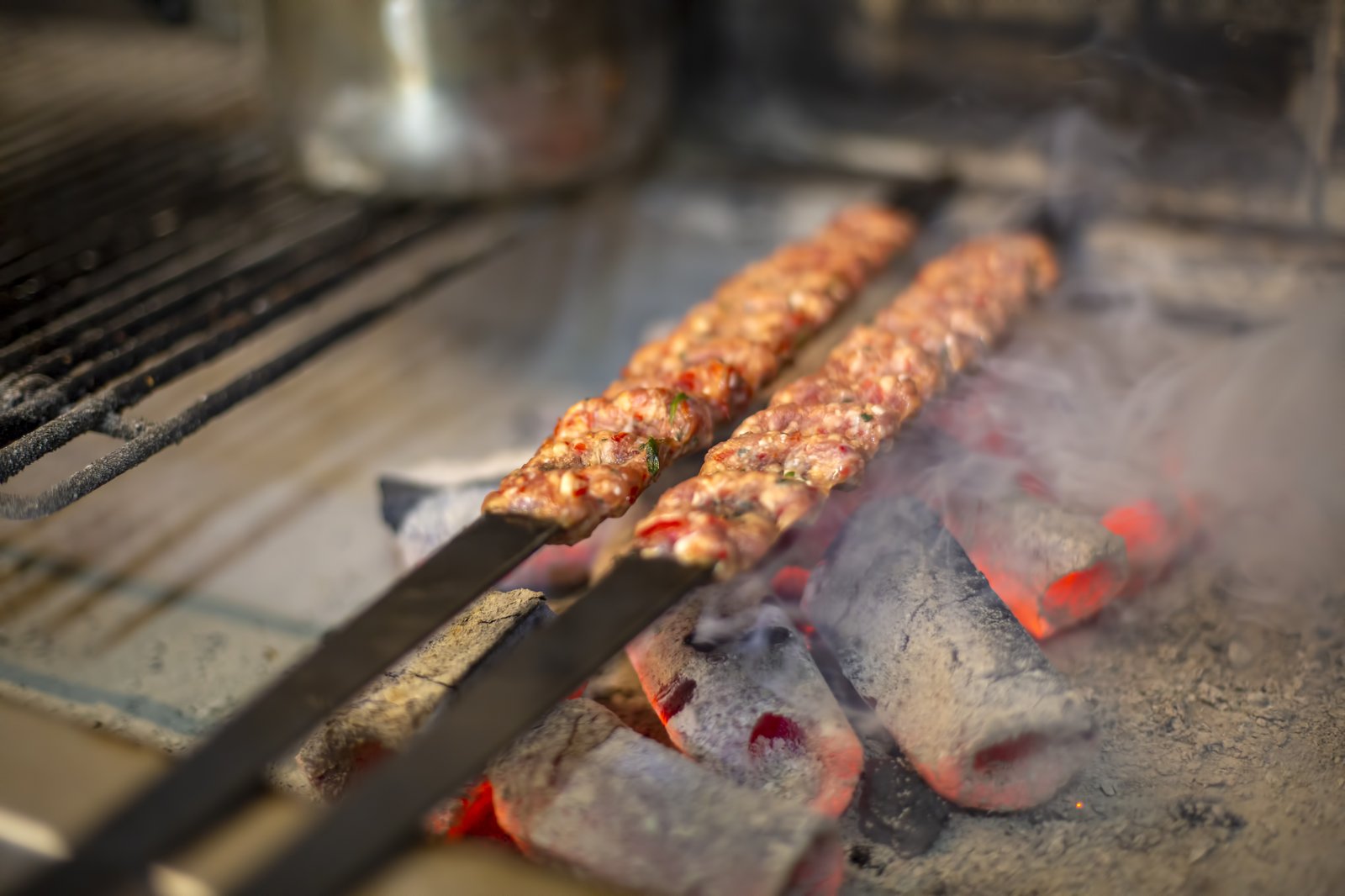
I once watched a kebab master in Istanbul shape Adana meat onto a skewer for six minutes before it went anywhere near the fire. Six minutes of kneading, shaping, pressing, and testing for texture. He didn’t look up once. This, he told me afterward through a translator, was the point — the work happens before the heat, not during it.
Turkish kebab culture is one of the most technically sophisticated meat traditions in the world, and Istanbul gives you access to versions from every corner of Anatolia. This guide tells you exactly what each kebab is, what it tastes like, and where to eat the best version in Istanbul.
—
Adana Kebab: The Spicy King
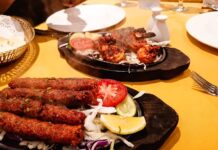
Named after the city in southeastern Turkey where it originated, Adana kebab is hand-minced lamb (and sometimes beef) mixed with red pepper flakes and tail fat. The key technique is called “zırh” — a distinctive hand-chopping motion with a curved blade that produces the right texture. The meat is pressed onto wide flat metal skewers and grilled over real charcoal until the outside is slightly charred and caramelised while the inside stays juicy.
It arrives on the skewer, served over thin lavash bread that soaks up the juices, with grilled peppers, tomatoes, and raw onion with sumac alongside.
Flavour: Spicy, smoky, intensely savoury. The fat from the lamb tail keeps it juicy. If you don’t like spice, the Urfa version (below) is made for you.
Price in Istanbul: 300–600 TL ($7–14) for a full portion at a local ocakbaşı. Tourist-area restaurants charge 500–900 TL ($11–20).
Where to eat it: Adana Ocakbaşı in Taksim and various ocakbaşı (open grill) restaurants in Kadıköy. Look for places with a visible charcoal grill — if you can’t see smoke, the kebab probably isn’t authentic.
—
Urfa Kebab: Adana’s Gentler Cousin
From Şanlıurfa in southeastern Turkey, Urfa kebab uses the same hand-minced technique as Adana but skips the hot red pepper. Instead, it relies on black pepper, cumin, fresh garlic, and occasionally sweet paprika. The result is rich, savoury, and deeply satisfying without the heat.
Flavour: Meaty, herby, warm spice but no fire. Perfect if you love the concept of Adana but can’t handle chilli.
Where to eat it: Any good ocakbaşı that serves both Adana and Urfa will give you a side-by-side comparison. The Konyalı Restaurant in Sultanahmet is a reliable option.
—
Çağ Kebap: The Horizontal Rotisserie
Çağ kebap (pronounced “chaa”) is one of Turkey’s most distinctive and underappreciated kebabs. It originates from Erzurum in eastern Turkey and is cooked on a horizontal rotating spit rather than a vertical one — the opposite of a döner. Marinated lamb is stacked on long skewers and rotated slowly over a wood fire, with the chef cutting thin slices as the outside cooks.
The wood fire gives it a smoky flavour completely different from charcoal-grilled kebabs. It’s served on thin flatbread with fresh basil leaves, black pepper, and a squeeze of lemon.
Flavour: Smoky, herby, clean. The wood fire creates a character that no charcoal grill can replicate.
Where to eat it in Istanbul: Şehzade Cağ Kebap in Sirkeci (Hocapaşa Mah.) is the most celebrated spot in Istanbul for this dish and is frequently recommended by chefs and food writers. It’s in a street full of kebab joints but stands out entirely.
Price: Around 350–500 TL ($8–11) per portion.
—
İskender Kebab: The Butter Bath
İskender kebab was invented in Bursa in the late 1800s by a chef named İskender Efendi. It’s essentially döner meat arranged over squares of soft pita bread, then doused in hot tomato sauce, followed by a pour of sizzling browned butter. A generous spoonful of thick yogurt sits on the side.
This kebab requires a fork and knife. The bread soaks up the butter and sauce into something extraordinary. The cool yogurt against the hot, buttery meat creates a temperature and texture contrast that makes it genuinely special.
Flavour: Rich, buttery, tomato-bright, with the tangy cool yogurt as counterpoint. Not diet food.
Price: 350–600 TL ($8–14) at a good restaurant.
Where to eat it: Bebek Kasap and various dedicated İskender restaurants in Beşiktaş and Kadıköy.
—
Döner Kebab: The Classic
Döner is vertical-spit meat — layered and pressed lamb, beef, or chicken rotating slowly on a vertical grill, shaved off and served in bread or on a plate. The street version (dürüm wrap) is the most common fast food in Istanbul.
Price: Dürüm wrap (street version): 80–120 TL ($1.80–2.75). Sit-down plate: 200–400 TL ($4.55–9.10).
Where to eat it: Bayramoğlu Döner in Beşiktaş is one of Istanbul’s most respected döner spots — over 30 years old, using wood fire, with their own thin oven bread baked daily.
💡 Pro Tip: The best döner comes from places that make their own bread. Pre-made dürüm wrappers are a red flag for shortcuts elsewhere in the kitchen.
—
Beyti Kebab: The Wrapped Wonder
Created at the famous Beyti Restaurant in Florya, İstanbul, beyti kebab takes seasoned ground meat, grills it on a skewer, then wraps it in thin lavash, slices it into rounds, and serves it with tomato sauce and yogurt. It’s elegance applied to minced meat.
Where to eat it: Beyti Restaurant in Florya is the original — a bit of a pilgrimage for kebab enthusiasts, though prices are higher than typical ocakbaşı (expect 1,000–1,800 TL / $23–41 per person for a full meal). More affordable versions exist at ocakbaşı restaurants citywide.
—
Ali Nazik: Smoky Eggplant Base
Ali Nazik kebab places grilled meat (usually lamb or beef) atop a bed of fire-roasted eggplant purée mixed with yogurt and garlic. The eggplant is charred over an open flame until blistered and smoky, then mashed with yogurt to create a creamy, tangy, intensely smoky base.
Flavour: The smokiness of the eggplant makes this one of the most complex-tasting kebabs in Turkish cuisine. The yogurt adds freshness.
Where to eat it: Good ocakbaşı restaurants in Kadıköy and Beşiktaş usually have Ali Nazik on the menu. Mikla Restaurant at The Marmara Pera does an upscale version.
—
Şiş Kebab (Shish Kebab): The Original
The most fundamental kebab — chunks of marinated lamb or beef threaded on a skewer and grilled. No grinding, no pressing. Just good meat, good marinade (olive oil, yogurt, thyme, onion juice), and honest fire.
At good Istanbul restaurants, the lamb should be from specific cuts — shoulder or neck — with the right fat ratio for juiciness. Chicken şiş is also excellent, marinated in yogurt and spices.
Price: 250–500 TL ($5.70–11) at a local ocakbaşı.
Where to eat it: Zübeyir Ocakbaşı in Taksim is one of Istanbul’s most celebrated ocakbaşı restaurants — always crowded, genuinely excellent, worth the wait.
—
Testi Kebabı: The Clay Pot Theatre
Originating from Cappadocia, testi kebabı is cooked in a sealed clay pot — lamb, vegetables, and aromatics slow-cooked for hours inside the pot, which is then sealed with bread dough or foil. At your table, the waiter cracks it open with a small hammer.
The drama is half the appeal, but the food delivers: fall-apart meat in an intensely fragrant sauce. You need to order this in advance (usually 24 hours ahead) because of the cooking time. Several Istanbul restaurants specialising in Anatolian cuisine offer it.
Price: 600–1,200 TL ($14–27) per pot, usually serves 1–2 people.
—
What to Avoid
– Kebab places on İstiklal Caddesi with laminated photo menus: The photos look great; the kebabs rarely match. Walk one or two streets off the main tourist drags for significantly better food at half the price.
– Places without a visible grill: Real kebab is grilled over real fire, not heated in a microwave or oven.
– Ordering döner without watching it being carved: Fresh-carved döner is different from pre-sliced reheated döner in ways that are immediately obvious.
– Skipping the bread: The bread (lavash or pide) is an integral part of the dish, not an afterthought. It soaks up the juices and makes the meal complete.
—
Price Guide: Istanbul Kebab by Budget
| Kebab Type | Budget Option (TL) | Mid-Range (TL) | USD Range |
|---|---|---|---|
| Döner dürüm (street) | 80–120 TL | 150–200 TL | $1.80–4.55 |
| Adana / Urfa | 300–450 TL | 500–700 TL | $7–16 |
| Şiş kebab | 250–400 TL | 400–600 TL | $5.70–14 |
| İskender | 350–500 TL | 600–900 TL | $8–20 |
| Çağ kebap | 350–500 TL | 500–700 TL | $8–16 |
| Beyti | 500–700 TL | 900–1,400 TL | $11–32 |
—
Conclusion
Istanbul’s kebab scene is vast enough to keep you eating for a week without repeating yourself. Start with a properly charcoal-grilled Adana at a local ocakbaşı, work your way to Çağ kebap at Şehzade, and cap it off with an İskender if you haven’t eaten for six hours. What’s your favourite kebab in Istanbul? Tell us in the comments — we’d especially love to hear about hidden ocakbaşı gems.
[Image alt text: Adana kebab on skewer over charcoal grill at Istanbul ocakbaşı restaurant]
Prices last updated: March 2026. Exchange rate: 1 USD ≈ 45 TL.
—
Article 9 | Title: Turkish Desserts Guide: From Baklava to Künefe and 20 Sweet Treats | Category: turkish-dishes
—
—
Useful links: Go Türkiye – Istanbul Tourism · Turkish Museums Portal