Bayram in Istanbul: Religious Holidays and How They Change the City
What really happens in Istanbul during Ramazan Bayramı and Kurban Bayramı: what closes, what's open, bayram morning prayers at Eyüp Sultan Mosque, why bayram day 1 is the best time to visit crowded sites, and 2026 dates.

In this guide
There are two major religious holidays in the Turkish calendar: Ramazan Bayramı (Eid al-Fitr, at the end of Ramadan) and Kurban Bayramı (Eid al-Adha, the Feast of Sacrifice). Both transform Istanbul in ways that are genuinely interesting to witness as a visitor, provided you know what to expect. This guide explains what the holidays are, how the city changes, what stays open, and how to make the most of being here during bayram.
The Two Bayrams: What They Are
Ramazan Bayramı marks the end of Ramadan’s month of fasting. It lasts three days and is characterised by family gatherings, visiting relatives, giving gifts (especially to children), and communal meals. The mood is celebratory and warm. Kurban Bayramı comes 70 days later and lasts four days. It commemorates the willingness of Ibrahim to sacrifice his son at God’s command and involves the ritual sacrifice of livestock, with the meat divided between family, neighbours, and those in need.
Both bayrams fall on different Gregorian dates each year because they follow the lunar Islamic calendar. In 2026, Ramazan Bayramı fell in late March (20 to 22 March), and Kurban Bayramı in late May (27 to 30 May). Exact dates are confirmed by the Presidency of Religious Affairs a few days before each holiday. For official date announcements, see the Diyanet website.
How Istanbul Changes During Bayram
The most immediate change is traffic, but in an unexpected direction. In the three to four days before a bayram, Istanbul’s highways and bus terminals reach their annual peak congestion: millions of residents leave the city to visit family in their home provinces. Inter-city buses are booked out weeks in advance. The roads south and east of the city are slow.
Then, on the first morning of bayram, the city goes quiet. Roads that are normally gridlocked are nearly empty. Streets that usually feel crowded feel spacious. The ferry terminals run normally but without the usual queues. This is one of the most unusual things about Istanbul: a city of 16 million people, suddenly quiet, for one morning. By the second day it comes back to life. Parks and public spaces fill with family groups. Restaurants that closed on bayram morning reopen. The pace picks up and the atmosphere becomes warm and communal.
What’s Open and What’s Closed
This varies significantly by day and by type of business:
- Bayram eve and day 1 morning: Most small shops, hairdressers, and non-essential businesses close. Supermarkets reduce hours or close. Major shopping malls (AVM) typically stay open because commercial leases require it. Major tourist attractions including Topkapi Palace (2,750 TL combined ticket) and Hagia Sophia (€25 entry) remain open. The Grand Bazaar, however, is closed on the first day of bayram.
- Basilica Cistern (about 2,000 TL or more for foreign visitors, more for evening sessions; check the price at the gate): remains open on bayram days and is noticeably less crowded than normal, which makes it a better visit.
- Days 2-3 (day 4 for Kurban Bayramı): Most restaurants and cafes reopen. The city returns to close to normal rhythm. Street food activity increases.
- Banks and government offices: Closed for the full duration of bayram.
- Transport: Ferries, metro, bus lines, and the Marmaray all run on bayram schedules, which are frequent. Getting around is easier than normal on day 1 because there is almost no traffic.
Bayram Morning Prayers
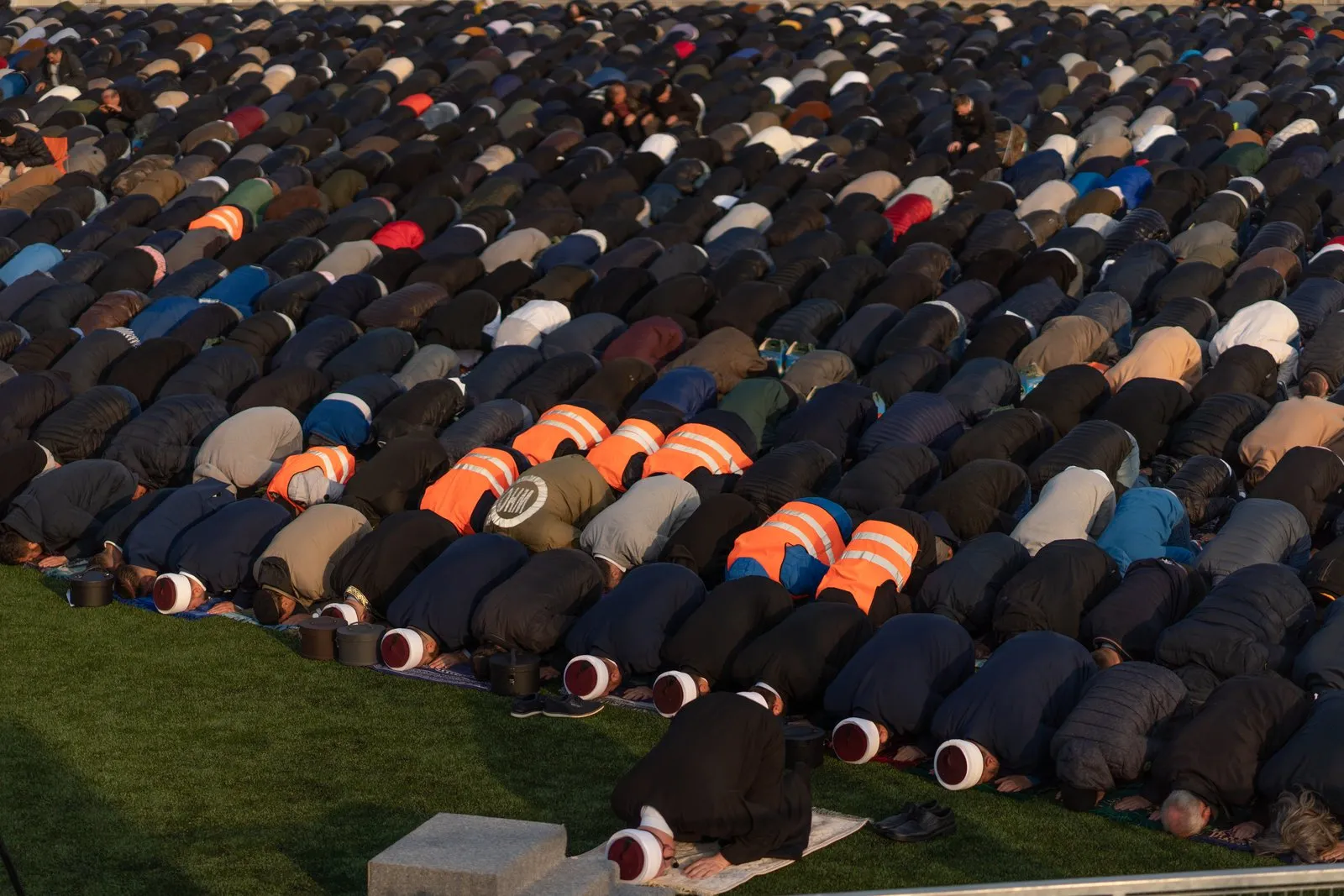
On the first morning of each bayram, mosques across Istanbul hold special collective prayers just after sunrise. These are not the usual five daily prayers: they’re communal celebrations drawing much larger congregations. At major mosques (the Blue Mosque, Süleymaniye, and Eyüp Sultan) thousands gather.
Eyüp Sultan Mosque is particularly worth visiting on bayram morning. The mosque sits at the far end of the Golden Horn and has held religious significance since the early Ottoman period. The street leading to it fills with families in their best clothes arriving for prayer. Men line the courtyard and the surrounding streets before the prayer time. The atmosphere is serious, joyful, and communal in a way that is specific to this moment in the Turkish religious calendar.
As a visitor, you are welcome to observe respectfully from the mosque courtyard and surrounding streets. Dress appropriately: covered shoulders and legs, women cover their hair. Do not photograph people during prayer without permission. A quiet respectful presence is almost always welcomed.
Kurban Bayramı: The Sacrifice
Kurban Bayramı involves the slaughter of a sheep, cow, or camel, the meat divided among family, neighbours, and those who cannot afford it. In Istanbul, the municipality operates centralised slaughter facilities and most families use these rather than performing the sacrifice at home. The weeks before Kurban Bayramı, livestock markets appear in various parts of the city. It’s common to see sheep being transported by pickup truck through residential neighbourhoods.
As a visitor, you’re unlikely to witness the actual sacrifice unless you’re staying in a traditional residential neighbourhood where households still arrange their own. What you will notice is the aftermath: butcher shops with queues, neighbours passing parcels of meat, and a particular smell in the air in some areas on the morning of the first day. The communal distribution of meat is the charitable heart of the holiday and the atmosphere it creates is unlike any other day of the year.
The Best Things to Do During Bayram
The quiet of bayram day 1 is genuinely useful for visiting normally crowded sites. Topkapi Palace, the streets around the Grand Bazaar (the bazaar itself is closed on day 1), and the Sultanahmet mosques are noticeably less crowded on bayram mornings. The Basilica Cistern on bayram day is a particular pleasure: a site that normally requires navigating tour groups is calm and contemplative.
The Bosphorus ferry lines on bayram day are also worth taking for their own sake. A holiday afternoon on the outer Bosphorus ferry, with almost no other tourists and local families out for a holiday excursion, is one of the most enjoyable ways to spend a few hours in this city. The ferry from Eminönü costs about 60 to 77 TL with an Istanbulkart, depending on the line.
For more on seasonal events and religious holidays, see the Ramadan in Istanbul guide and the annual festivals calendar.
A Note on 2026 Dates
The Islamic calendar shifts approximately 11 days earlier each year relative to the Gregorian calendar. Both 2026 bayrams fell in spring. Over the coming years, they will move progressively earlier into winter. If you’re planning a visit specifically around a bayram, always confirm the dates for that year on the Diyanet website, as they move significantly from year to year.
Have you been in Istanbul during a bayram? I’d like to hear what you experienced and where you spent the time. Leave a comment below. Reader experiences from specific years and specific neighbourhoods are genuinely useful for updating this guide.

Written by Deniz
Deniz is a video producer living in Kağıthane who explores a new corner of Istanbul every week and writes the practical guides she wishes friends had before visiting.