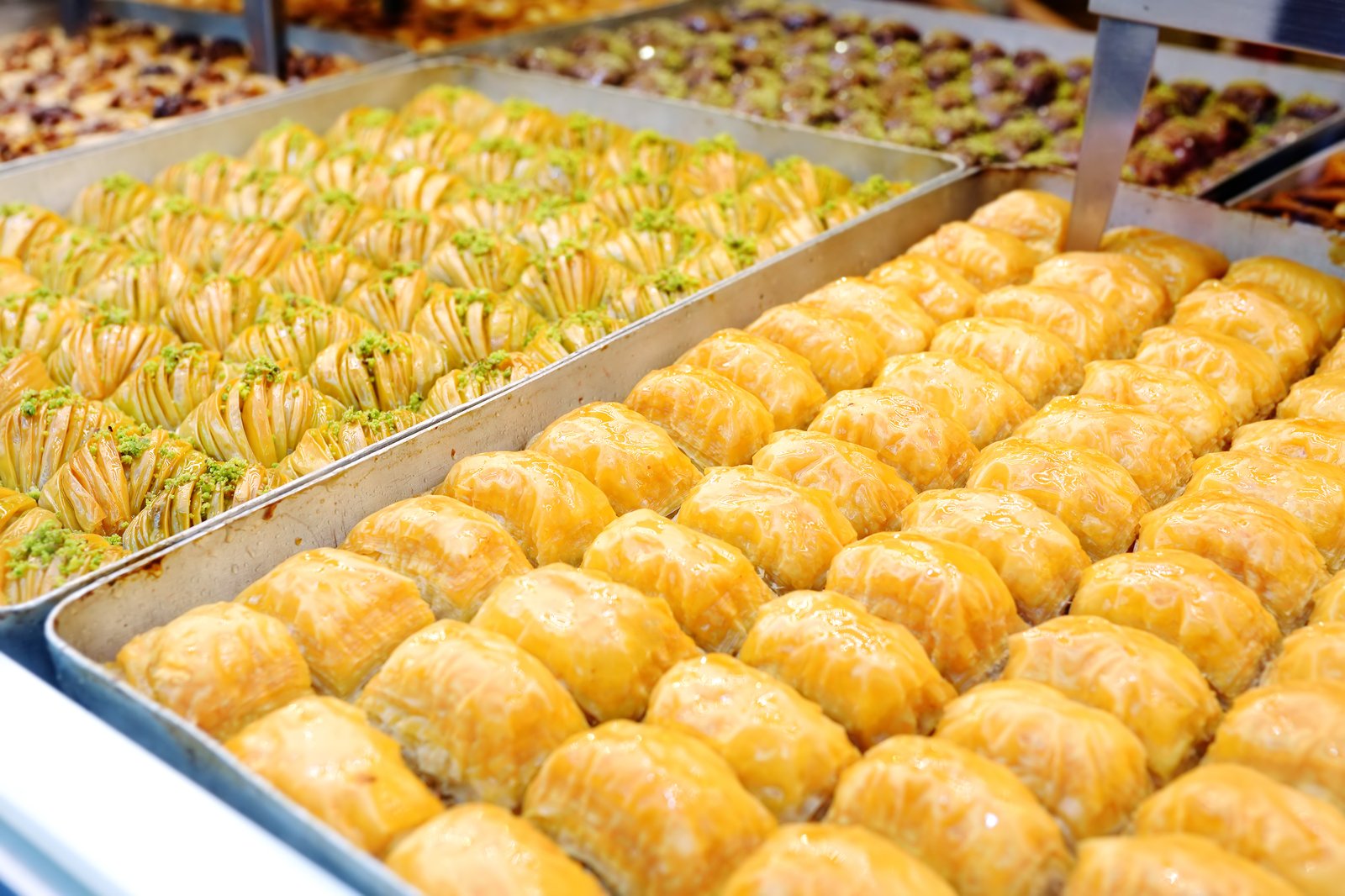
I am not naturally a dessert person. Ask my family — I’ll pass on birthday cake, skip the chocolate fondant, and leave the tiramisu. But Istanbul made me a convert. Something about a perfectly layered baklava dripping with pistachio-scented syrup, or a slab of künefe hot from the pan with that salty-sweet cheese pull, bypassed all my usual restraint.
Turkish dessert culture is ancient, intricate, and deeply serious. The Ottoman palace had entire guilds devoted to confectionery. Today that tradition lives on in pastane windows filled with glistening sweets that look as good as they taste. Here are 20 Turkish desserts you need to try, with where to find the best in Istanbul.
—
1. Baklava: The Gold Standard
Layers of paper-thin filo pastry, butter, and crushed pistachios (or walnuts), soaked in sugar syrup or honey. Done right, each layer of pastry is distinct, not soggy, and the pistachio flavour is vivid and fresh. Done badly, it’s a limp pool of sweetness.
Best in Istanbul:
– Karaköy Güllüoğlu (Rıhtım Cad, Karaköy) — Istanbul’s most famous baklava shop, open since 1949. The pistachios come from Gaziantep, Turkey’s baklava capital. Expect to pay 250–400 TL ($5.70–9) per 100g.
– Hafız Mustafa 1864 (multiple branches, including Sirkeci and İstiklal) — one of the oldest sweet shops in Turkey, beautifully presented, and consistently excellent.
💡 Pro Tip: Baklava from Gaziantep (southeastern Turkey) uses a different, more intensely green pistachio than the standard version. When you see “Antep fıstıklı” on the label, that’s the real thing.
—
2. Künefe: The Hot Cheese Dessert
Künefe is shredded filo pastry (kadayıf) stuffed with a special unsalted white cheese, baked until golden and crispy, then doused in sugar syrup. The result is simultaneously crispy, gooey, sweet, and slightly salty. The cheese pull, when you cut into it, is theatrical.
It’s a Hatay specialty (from the southern border region near Syria) and must be eaten hot. Crushed pistachios are sprinkled on top.
Best in Istanbul:
– Lezzet-i Şark Antep Sofrası (Hasırcılar Cd. No:38, Fatih) — near the Egyptian Bazaar, excellent value, light sugar syrup that doesn’t overwhelm.
– Hatay Asi Künefeleri (Tahtakale mah. Hasırcılar cad. No:27, Fatih) — specialises exclusively in künefe with multiple varieties.
– Keyfeder Künefe Katmer (Katip Mustafa Çelebi, Beyoğlu) — 14 types of künefe, open until 2 AM.
Price: 150–250 TL ($3.40–5.70) for a portion.
—
3. Lokum (Turkish Delight): The Original Luxury Sweet
Turkish delight dates to at least the 18th century. The classic versions are rose water or mastic flavoured, dusted with powdered sugar. Modern versions include pistachio, walnut, pomegranate, orange, and dozens of other flavours.
Best in Istanbul:
– Ali Muhiddin Hacı Bekir (Hamidiye Cad., Eminönü) — the shop that is said to have invented lokum in 1777. Still operating from the same location.
– Hafız Mustafa 1864 — beautifully packaged, great as gifts.
Price: 150–500 TL ($3.40–11) per 200g box depending on quality.
—
4. Kazandibi: Caramelised Milk Pudding
Kazandibi means “bottom of the cauldron” — so named because the base of this milk pudding is deliberately caramelised (almost burnt) to create a distinctive bittersweet crust. The rest of the pudding is smooth, creamy, and delicate.
Found at muhallebici (milk pudding shops). Saray Muhallebicisi (multiple branches, including İstiklal Caddesi) is the most famous muhallebici in Istanbul.
Price: 60–120 TL ($1.35–2.75).
—
5. Sütlaç (Rice Pudding)
Baked rice pudding with a golden, slightly caramelised top crust. It’s served cold in individual terracotta bowls. Simple, creamy, and intensely comforting. Particularly good in autumn and winter.
Price: 50–100 TL ($1.15–2.25) at muhallebici shops.
—
6. Tavuk Göğsü: Chicken Breast Milk Pudding
Yes, you read that right. Tavuk göğsü (literally “chicken breast”) is a milk pudding made with finely shredded chicken breast — so fine you can barely detect it, but it gives the pudding an unusual, silky texture that is genuinely extraordinary once you get past the concept. An Ottoman recipe dating to the 15th century.
Where to try it: Saray Muhallebicisi and any traditional muhallebici.
—
7. Aşure (Noah’s Pudding)
Aşure is the most ancient of Turkish desserts — a thick grain pudding made from wheat berries, dried fruits, legumes, nuts, and rose water, cooked together into something sweet and deeply nourishing. It’s associated with the 10th of Muharrem (the Islamic month), but you can find it year-round.
The combination of textures — chewy wheat, tender chickpeas, plump raisins, crunchy pomegranate seeds on top — is unlike anything else.
—
8. Revani: Semolina Cake in Syrup
Revani is a semolina sponge cake soaked in sugar syrup, often flavoured with lemon or orange zest. It’s lighter than baklava, with a distinct graininess from the semolina that provides texture against the syrup. Common at traditional pastanes and in lokanta dessert sections.
—
9. Helva: Tahini Sweetness
Tahin helvası is made from sesame paste (tahini) and sugar, pressed into dense, crumbly blocks. The quality varies enormously — cheap versions are grainy and over-sweet; premium helvası from Tarihi Eminönü Helvacısı (near the Egyptian Bazaar) is smooth, nutty, and deeply satisfying.
Also try un helvası — flour-based helva made at home for special occasions, warm and fragrant with butter.
—
10. Dondurma: Turkish Stretchy Ice Cream
Turkish ice cream (dondurma) is made with mastic and salep, giving it a distinctive chewy, stretchy texture quite unlike regular ice cream. Street vendors in traditional dress perform theatrical tricks — pulling it on long metal rods, refusing to give you the cone, twisting it in impossible ways.
Don’t be fooled: the performance is for tourists. The product underneath is genuinely excellent.
Best brands/shops: Mado (widespread chain), Ali Usta (street vendors near the Bosphorus). Price: 60–120 TL ($1.35–2.75).
—
11. Kadayıf (Shredded Wheat Pastry)
Kadayıf is fine shredded pastry, baked with butter and nuts (usually walnut or pistachio), and soaked in syrup. Texture-wise it’s more rustic and crunchy than baklava, with a nuttier, less sweet profile. Often formed into a log shape.
—
12. Muhallebi: Plain Milk Pudding
The simplest of the muhallebici range — just milk, sugar, rice flour or cornstarch, and rose water. Silky smooth, delicate, and best when very cold. Top with cinnamon or ground pistachio for the full effect.
—
13. Profiterol: Turkish Eclairs
Profiterol at Turkish muhallebici shops are mini cream puffs drowning in warm chocolate sauce and topped with whipped cream. Very different from the French version — the sauce is thicker and sweeter, and they come in portions of six to eight at a time. Saray Muhallebicisi’s profiterol is legendary.
Price: 100–180 TL ($2.25–4.10).
—
14. Şekerpare: Semolina Cookies in Syrup
Small dome-shaped semolina cookies soaked in syrup, often topped with a single almond or pistachio. Very sweet, soft, and a little chewy. A traditional home-cooking dessert that’s also made commercially.
—
15. Güllaç: Rose-Water Phyllo
A Ramadan speciality — ultra-thin dried cornstarch sheets soaked in warm rosewater-scented milk, topped with pomegranate seeds and crushed walnuts. Eaten only in Ramadan at most establishments, though some traditional pastanes sell it year-round. Incredibly delicate and fragrant.
—
16. Bülbül Yuvası (Nightingale’s Nest)
A variation on baklava — pistachio-filled filo pastry rolled into small round nests. The visual presentation is beautiful; the taste is similar to regular baklava but with a more concentrated pistachio hit per bite.
—
17. Cezerye: Carrot and Pistachio Sweet
A Mersin speciality — pressed blocks of caramelised carrot and pistachio, dense and chewy, with a distinctive orange colour. Sounds unusual; tastes brilliant. Look for it at speciality food shops near the Spice Bazaar.
—
18. Pişmaniye: Cotton Candy Halva
Pişmaniye is made from tahini and sugar pulled into fine, silky threads — somewhere between cotton candy and halva. It’s light, almost powdery, and melts on your tongue. A Kocaeli speciality but widely sold as a gift item in Istanbul.
—
19. Zerde: Saffron Rice Pudding
A golden rice pudding perfumed with saffron, rose water, and cinnamon — an Ottoman palace dessert. Rare today but you can sometimes find it at traditional restaurants during holidays.
—
20. Lokma: Fried Dough Drops
Lokma are small fried dough balls soaked in syrup. They’re often made in large quantities on the street for specific occasions — if you see smoke and a crowd near a cauldron in Istanbul, you’ve likely found someone making lokma as a religious offering (sadaka) to distribute free to passersby. Don’t hold back — take one.
—
Best Sweet Shops in Istanbul
| Shop | Speciality | Location |
|---|---|---|
| Karaköy Güllüoğlu | Baklava (Gaziantep-style) | Karaköy waterfront |
| Hafız Mustafa 1864 | Baklava, lokum, all sweets | Sirkeci, İstiklal, Eminönü |
| Saray Muhallebicisi | Milk puddings, kazandibi, profiterol | İstiklal Caddesi + branches |
| Ali Muhiddin Hacı Bekir | Lokum (since 1777) | Eminönü + İstiklal |
| Tarihi Eminönü Helvacısı | Tahini helva | Eminönü |
| Hatay Asi Künefeleri | Künefe | Fatih/Eminönü |
—
What to Avoid
– Baklava sold in plastic trays at tourist souvenir shops: It’s usually stale and oversweet. Always buy from a dedicated pastane or sweet shop.
– “Turkish delight” sold near the Grand Bazaar by touts with free sample carts: The samples are good; the price you’ll pay for a box to take home is not.
– Eating künefe cold: It tastes completely different warm vs cold. Always insist on it fresh from the oven.
—
Conclusion
Turkish desserts are generous in spirit — most of them were invented for celebrations, offerings, and hospitality. Even the most modest lokum or muhallebi carries that generosity with it. Which Turkish sweet have you fallen hardest for? Leave your answer in the comments and add any hidden gem sweet shops we should know about.
[Image alt text: Tray of pistachio baklava at Karaköy Güllüoğlu in Istanbul]
Prices last updated: March 2026. Exchange rate: 1 USD ≈ 45 TL.
—
Article 10 | Title: Best Restaurants in Istanbul: Locals’ Picks by Neighborhood | Category: turkish-dishes
—
—
Useful links: Go Türkiye – Istanbul Tourism · Turkish Museums Portal