
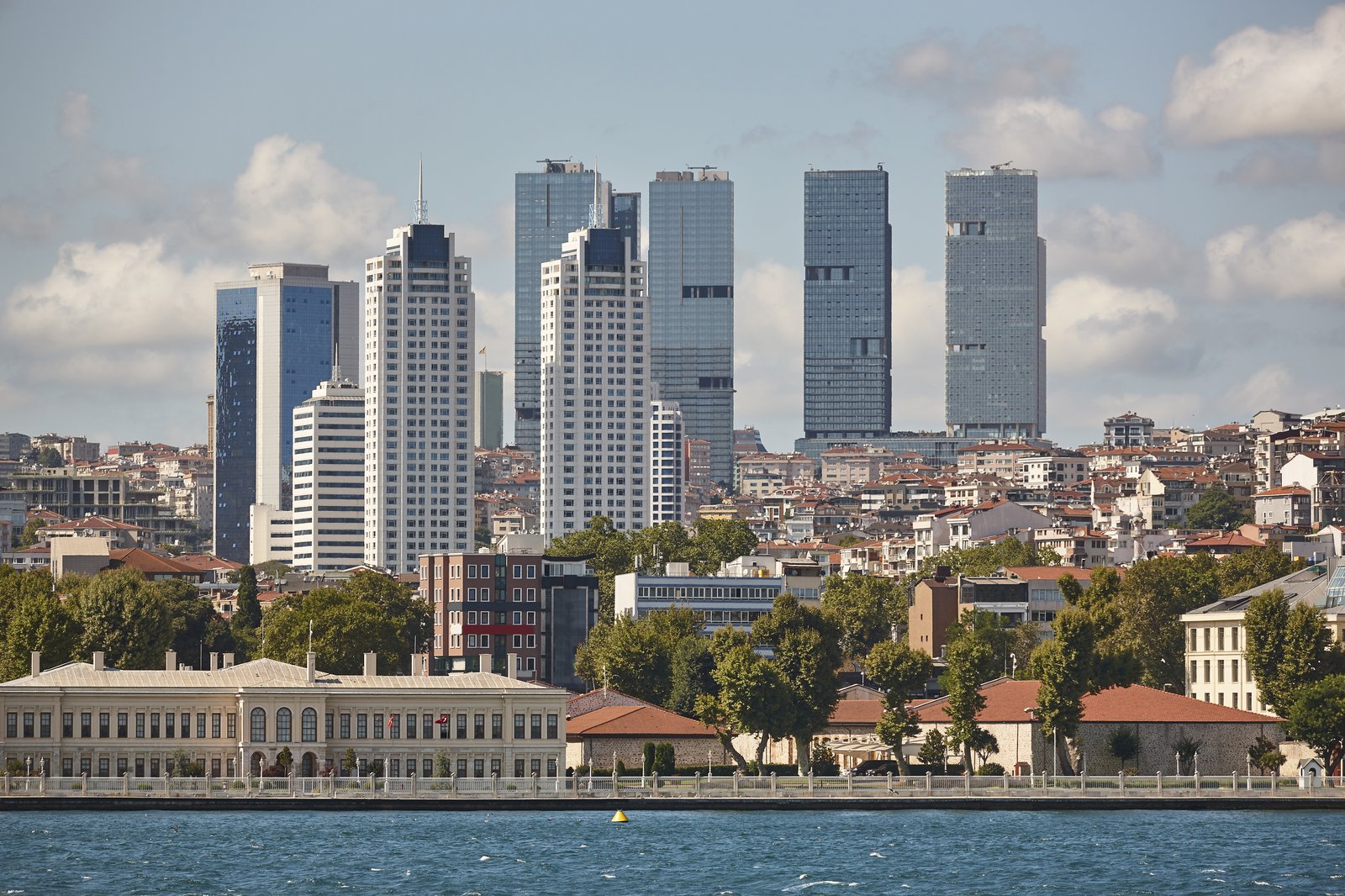
Turkey is a market that divides investors. On one side: a growing population of 85 million, a strategic location between Europe and Asia, a tourism economy that continues to boom, and a stock market that has shown dramatic gains in recent years. On the other: persistent inflation, currency volatility that has eroded returns for foreign holders, and regulatory unpredictability.
If you’re thinking about putting money to work in Turkey — through the stock market, cryptocurrency, real estate, or a business venture — here’s an honest look at what’s available, what’s worked, and what carries real risk.
Borsa Istanbul: Investing in Turkish Stocks
The Borsa Istanbul (BIST) is Turkey’s main stock exchange, with the BIST 100 index as its benchmark. Foreign investors are legally permitted to buy and sell Turkish stocks — Law No. 4875 (Foreign Direct Investment Law) explicitly grants foreigners the same rights as local investors in the capital markets.
How to invest as a foreigner:
1. Obtain a Turkish tax identification number (available at any tax office with your passport — takes 15 minutes)
2. Open an account with a licensed Turkish brokerage or bank (Yapı Kredi, Garanti BBVA, İş Bank’s brokerage arms, or specialized brokerages registered with the Capital Markets Board of Turkey — SPK)
3. Fund your account and begin trading
You can also access Turkish ETFs through international brokerages (some EU and US platforms include Turkish market exposure), though direct Borsa Istanbul access gives you the full range of companies.
What sectors are drawing investor interest in 2026?
Banking stocks (GARAN, AKBNK, ISCTR) tend to be high-volume and relatively liquid. Defense and aerospace (ROKET, ASELSAN) have attracted attention given Turkey’s growing defense industry. Retail and consumer goods companies benefit from domestic population dynamics. Real estate investment trusts (GYO/REITs) are another watched category given the property market.
The honest risk picture:
Turkish stocks priced in TL can show enormous percentage gains while you’re actually losing money in dollar terms if the lira weakens enough. This happened dramatically in 2021–2022. In 2024–2025, as the Turkish central bank pursued tighter monetary policy, foreign investor interest returned and the lira stabilized somewhat. But this is not a stable, low-volatility market. It rewards those who understand the dynamics; it can surprise those who don’t.
If you own over 5% of any listed company’s shares, Turkish law requires notification to the Capital Markets Board (SPK). Some strategic sectors (defense, energy) require special approval for significant foreign ownership.
Cryptocurrency in Turkey
Turkey has one of the highest rates of cryptocurrency adoption in the world, driven largely by inflation-hedging behavior and a population comfortable with mobile finance. Bitcoin, Ethereum, and USDT (stablecoins) are widely used for both investment and as a store of value.
Turkish crypto platforms include Binance TR (the Turkish arm of Binance), Paribu, BTCTurk, and Bitexen. These are licensed platforms under regulation by Turkey’s Capital Markets Board (SPK), which implemented crypto regulation in 2023.
Current regulatory landscape (as of early 2026):
Turkey’s crypto regulations require platforms to be licensed with the SPK. Unlicensed platforms are prohibited. KYC (know your customer) requirements apply — trading on licensed platforms requires identity verification. Crypto profits are taxable income in Turkey; how you report depends on your tax residency status.
What’s happening with stablecoins: Many Turks and residents use USDT and USDC as a practical USD equivalent — a way to hold dollar-denominated value without a foreign bank account. This use case has grown significantly as the lira fluctuated.
Transferring crypto internationally: Turkey’s regulations allow international transfers but require proper documentation. Large transfers (over certain thresholds) require declaration.
Starting a Business in Istanbul
Istanbul’s position as a regional hub — between Europe, the Middle East, and Central Asia — makes it genuinely attractive for certain types of businesses. The city has a young, educated workforce, growing startup ecosystem, and government incentive programs for technology and export-oriented businesses.
Business entity options for foreigners:
– Limited Şirketi (LTD): The most common structure for small to medium businesses. Minimum capital requirement: 10,000 TL (roughly $225). Requires at least one shareholder and one director (can be the same person; can be foreign).
– Anonim Şirket (A.Ş.): For larger companies or those planning public investment. Higher administrative requirements.
Registration process: Company formation in Turkey can be completed in 1–3 business days through the Central Registry System (MERSİS) if documentation is in order. You’ll need a local address and a Turkish tax number.
Work permit: Foreign nationals working in their own Turkish company still require a work permit (çalışma izni). Applications are submitted to the Ministry of Labor and Social Security. Requirements include the company meeting minimum capital and employee standards.
What business models are working in Istanbul:
– Export-oriented services: With a lower-cost base than Western Europe, Istanbul is viable for engineering, software development, design, and consulting services sold to European clients.
– Tourism-adjacent businesses: Tour operations, travel coordination, boutique hospitality, food experiences.
– Real estate and property management: Managing properties for foreign owners is a growing segment.
– Education and language services: English tutoring, international curriculum schools, language schools.
Government incentives: Turkey has technopark (Teknoloji Geliştirme Bölgesi) zones offering significant tax exemptions for qualifying technology companies. R&D incentive programs also exist for qualifying businesses.
The honest challenges:
Bureaucracy in Turkey can be slow and require in-person visits. Language is a real barrier — while many businesspeople speak English, government processes are in Turkish. A bilingual accountant and a business lawyer are not optional when starting.
Inflation affects planning: signing contracts in TL means costs rise over time with inflation. Many international businesses in Turkey price services in EUR or USD to manage this.
A Practical Note on Returns
For investors from hard-currency countries (USD, EUR, GBP), the fundamental math on Turkish investments involves a currency layer. Even when Turkish assets perform well in TL terms, the USD return depends on what happens to the TL/USD rate over your holding period.
This doesn’t make Turkish investments bad — it means you need to understand what you’re buying. Dollar-earning businesses (exporting services, USD-denominated rents, foreign tourist-facing revenues) have a natural hedge built in. Pure domestic TL-earning investments carry full currency exposure.
Prices last updated: March 2026. Exchange rate: 1 USD ≈ 45 TL.
—
Thinking about investing in Turkey, or already invested? Share your experience and questions below.
Useful links: Invest in Turkey Official Portal · Borsa Istanbul Stock Exchange