
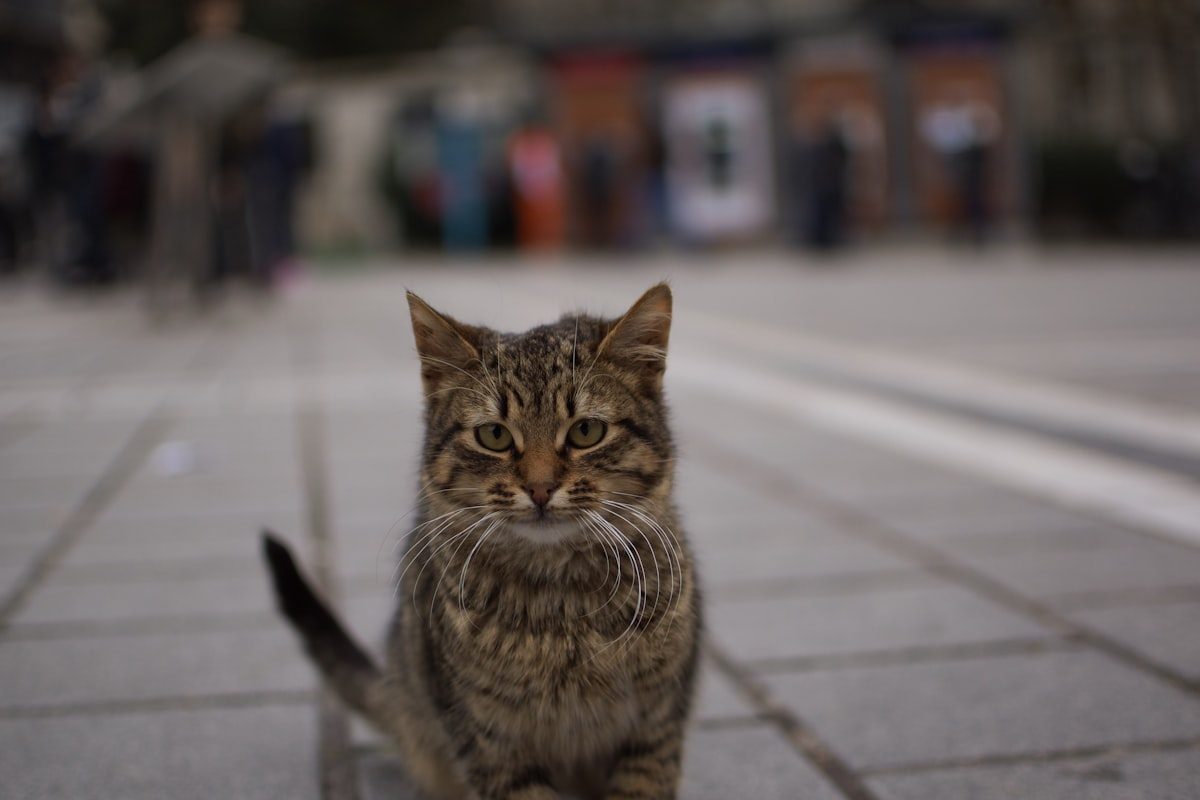
You will fall in love in Istanbul. That much is certain. But it might not be with a person.
Sit at any café table and within minutes, a cat will find you. It will jump up without asking, settle on your lap as if it owns you, and stare at you with the quiet authority of a being that knows it runs this city. Istanbul has somewhere around 250,000 street cats — and every single one of them acts like royalty.
This isn’t just a cat guide. It’s a full-day (or full-week) itinerary for anyone who came to Istanbul partly for the cats. And if that wasn’t on your list yet, it will be after reading this.
—
Why Istanbul and Cats Are Inseparable
The cats of Istanbul didn’t arrive yesterday. For thousands of years, ships docking at Istanbul’s ports brought cats to fight the rats in their holds. When the ships left, the cats stayed. They climbed the hills, learned the neighbourhoods, and became part of the city’s soul.
During the Ottoman era, cats were considered sacred — cleaning mosques, sleeping on prayer rugs, being fed by the faithful. Sultans kept cats. Sufis wrote poetry about cats. The relationship never ended.
Today the city’s [BBC Travel coverage](https://www.bbc.com/travel/article/20251118-istanbul-turkey-inside-the-city-where-cats-rule-the-streets) describes Istanbul’s about 250,000 street cats as “neither wild nor tame — a blend of both definitions” — cared for by the community rather than owned by any individual. Every municipality has a veterinary unit offering free neutering for street cats, and private vets often work at reduced rates.
>
💡 Pro Tip: Buy a small tin of wet cat food from any market before you start your day. Open it in a park or quiet street and you’ll have five new best friends within two minutes.
—
The Kedi Documentary: Your Film Before You Arrive
Before your trip — or on your first Istanbul evening — watch Kedi (2016), directed by Ceyda Torun.
The documentary follows seven Istanbul street cats across the city: Sarı, Duman, Bengü, Aslan Parçası, Gamsız, Psikopat, and Deniz. Each lives in a different neighbourhood and each has a different personality and “job” — one is a hustler, one a hunter, one a charmer.
What makes Kedi remarkable is that it’s also a film about Istanbul itself. The neighbourhoods it shows — Karaköy, Cihangir, Kandilli, the fish markets along the Bosphorus — feel real and lived-in rather than touristic.
Where was Kedi filmed?
- Karaköy — Several of the market scenes were shot in the old fish and produce markets around Karaköy. The waterfront and its cats are still there.
- Cihangir — This bohemian neighbourhood on the European side is where the cat named Psikopat (Psycho) lived. The steep streets and 19th-century apartment buildings haven’t changed much.
- Kandilli — On the Asian side. The cats in the fish restaurant scenes were filmed at Suna’s Place, described by the director as one of Istanbul’s most famous restaurants.
- Around the Golden Horn — Various neighbourhoods, including sections near Balat and Fener.
>
💡 Pro Tip: Download the Kedi map — fan-made versions exist on Reddit showing approximate filming locations. Use it as a walking itinerary.
—
The Best Neighbourhoods for Cat Encounters
Cihangir (European Side)
This is Istanbul’s cat central on the European side. The narrow streets of Cihangir, just below Taksim, are famous for their cats. Every doorstep has one. Every café table has a regular feline visitor. The neighbourhood’s bohemian residents leave out food and water on every corner.
Cihangir also inspired a Turkish comic strip character — Bad Cat Şerafettin, a thug cat from these very streets whose adventures were turned into an animated film.
Best street: Cihangir Caddesi and the surrounding side streets.
Getting there: Metro M2 to Taksim, then a 10-minute walk down the hill.
Moda (Asian Side — Kadıköy)
Cross to the Asian side and Moda is Cihangir’s equivalent — bohemian, artsy, full of cats. The seafront promenade at Moda is especially cat-dense. Cats lounge on the sea wall, watch the ferries, and accept tributes from passing humans as their due.
Best time: Early morning or late evening when the promenade is quieter.
Getting there: Ferry from Eminönü/Karaköy to Kadıköy, then a 15-minute walk to the Moda seafront.
Balat and Fener (European Side)
In Balat, the cats have lived alongside locals for generations. They sleep on the colourful steps, curl up in the window boxes of painted houses, and appear in almost every Instagram photo taken here.
Cafe Naftalin K. on Yıldırım Caddesi No: 22/A is a wonderful vintage café where cats sleep on the furniture, sit next to you while you eat, and generally run the place. It’s not a formal cat café — it’s better than that. It’s just a café that happens to be full of cats.
Getting there: Ferry from Eminönü to Fener (Haliç), then walk up the hill.
Sultanahmet
Even the historic peninsula has its cats. Around the Blue Mosque, Hagia Sophia, and Gülhane Park, cats sleep in the sun on ancient stones. One orange tabby at Hagia Sophia named Gli became so famous that he had his own Instagram account and was the subject of news articles when he passed away in 2020.
⚠️ Restoration note (2026): Hagia Sophia is undergoing a multi-year structural restoration. Significant interior areas may be covered with scaffolding during your visit. The site remains open and the entrance fee is unchanged.
Gülhane Park, at the base of Topkapı Palace, is excellent for cat watching any time of day.
Fenerbahçe Park (Kadıköy)
According to regular visitors, Fenerbahçe Park has the highest cat density in Istanbul — literally hundreds of them, all friendly and completely used to humans. Bring cat food and prepare to be swarmed.
Getting there: Metro or bus to Kadıköy, then walk south.
—
Cat-Friendly Cafes and Spots
Istanbul doesn’t have many formal Japanese-style cat cafes — it doesn’t need them. The whole city is a cat café. But a few places are especially beloved:
Cafe Naftalin K., Balat — Already mentioned above. Yıldırım Caddesi No: 22/A. Open daily 9:00–21:00. Cash only. A genuine neighbourhood café where cats are permanent residents.
Kahve 1, Cihangir — Bakraç Sokak No: 19, Cihangir. A minimalist café popular with digital nomads, where cats freely come and go. Great coffee, strong Wi-Fi, and regular feline interruptions.
Almost any meyhane (traditional tavern) in Cihangir or Moda — Street cats in Istanbul have a particular affinity for seafood restaurants. If you’re eating fish anywhere near the water, expect company.
>
💡 Pro Tip: If you want to bond with a street cat, sit still and look away. Turkish street cats are confident but not desperate — they come to you on their terms, not yours. The second you stop trying, one will climb on your lap.
—
Cat-Themed Souvenirs and Shops
Istanbul’s cat love has spawned a whole souvenir industry — and some of it is genuinely good.
Grand Bazaar area: Look for hand-painted ceramic tiles featuring cats, cat-shaped evil eye charms, and embroidered cushion covers. The ceramics vendors around Arasta Bazaar (behind the Blue Mosque) tend to have higher quality work than the tourist shops near the main bazaar entrance.
Karaköy: Several boutique design shops along Kemeraltı Caddesi sell cat-themed prints, notebooks, and tote bags made by local artists. These make far better gifts than the mass-produced options.
Kadıköy market: The Tuesday market (Salı Pazarı) and the permanent market streets around Mısır Çarşısı-style vendors in Kadıköy sell handmade cat jewellery, brooches, and textiles.
Cat Museum Istanbul: A small museum and gift shop dedicated entirely to Istanbul’s cat culture. Check their current location as it moves periodically — search “Kedi Müzesi Istanbul” for the latest address.
>
💡 Pro Tip: Skip the mass-produced cat fridge magnets at every tourist stall. Instead, look for work by local illustrators in Karaköy and Kadıköy galleries — you’ll find genuinely beautiful cat art prints for 150–500 TL ($4–$14 USD).
—
Help Istanbul’s Cats: Volunteer and Donate
Istanbul’s street cats exist in a fragile balance. The city’s Trap-Neuter-Return (TNR) programme has helped manage the population humanely, with municipal veterinary units offering free neutering services. But individual cats still get injured, fall ill, or need help.
How visitors can help:
- Buy food from local shops and leave it at designated feeding stations in parks (small bowls are placed in parks throughout the city). This is the simplest, most direct help.
- Donate to local rescues. Search “Istanbul Kedi Koruma” (Istanbul Cat Protection) on social media for active rescue groups. Most accept PayPal or bank transfers.
- Report injured cats. The Istanbul Metropolitan Municipality has a hotline for injured street animals: 153 (general Istanbul service line).
- Adopt. If you’re staying longer or are based in Istanbul, Turkish rescues work with international adopters to get cats transported to new homes abroad.
> What to Avoid: Don’t pick up healthy street cats “to help them.” The vast majority of Istanbul’s street cats are fine — they have food, water, and shelter provided by the community. Interfering can disrupt their territory and cause stress. Injured or obviously sick cats are a different matter.
—
Getting Around Istanbul as a Cat Lover
Istanbul’s best cat neighbourhoods are on both sides of the Bosphorus. Here’s how to get between them:
- Balat/Fener: Ferry from Eminönü to Haliç (Golden Horn) or bus from Eminönü. Free with Istanbulkart.
- Cihangir: Metro M2 to Taksim, then walk 10 minutes downhill toward the Bosphorus.
- Moda/Kadıköy: Ferry from Eminönü or Karaköy (16 TL/~$0.40 USD with Istanbulkart). Or metro to Kadıköy via the Marmaray tunnel.
- Sultanahmet/Gülhane: Tram T1 to Gülhane stop. Free entry to the park.
- Fenerbahçe Park: Metro to Kadıköy, then walk 20 minutes south or take a local minibus.
>
💡 Pro Tip: Get an Istanbulkart (transport card) from any metro station for 100 TL deposit. Each journey costs around 16 TL (~$0.40 USD). One card works on ferries, trams, metros, and buses.
A Cat Lover’s Day in Istanbul
Morning: Start in Balat. Coffee at Cafe Naftalin K. with the resident cats. Walk the Balat streets photographing the painted houses and their feline residents.
Late Morning: Ferry from Fener to Eminönü. Walk through Sultanahmet, stopping at Gülhane Park to meet the garden cats.
Afternoon: Ferry to Kadıköy. Walk to Moda seafront. Sit on the sea wall and let the cats come to you. Lunch at any fish restaurant on the waterfront.
Evening: Ferry back to Karaköy. Walk up through Cihangir. Stop at a meyhane for dinner — the cats will join you for the fish course.
—
Istanbul doesn’t love cats because it decided to. It loves cats because it can’t help it. The cats were here before the name, before the bridges, before the minarets. They’ll be here long after all of us have gone.
Which Istanbul neighbourhood had the best cats when you visited? We’d love to hear your stories in the comments.
—
—
Useful links: Go Türkiye – Istanbul Tourism · Turkish Museums Portal
Prices last updated: March 2026. Exchange rate used: 1 USD ≈ 45 TL. Prices in Turkish lira can change frequently due to inflation. Attraction fees set in euros (€) are more stable. Always check official websites for the latest prices before your visit.