Best Historic Sites in Istanbul: A Historical Timeline Walk with 2026 Tickets
The best historic sites in Istanbul in timeline order, from Byzantium to the Ottomans, with 2026 ticket prices, opening hours and a one day walk.

In this guide
Istanbul, a city rich in history and culture, is a paradise for travelers. It was first known as Byzantium, then renamed Constantinople. It was the capital of the Eastern Roman Empire and later of the Ottoman Empire. The city has huge mosques, grand palaces, old underground water cisterns and busy markets. In Sultanahmet you can walk from a Roman racetrack to a Byzantine cistern, a 6th century church and an Ottoman mosque in about ten minutes. This guide shows you the best historic sites in Istanbul, in the order history built them, with the 2026 ticket prices and opening hours you need to plan your visit.
The Quick Answer
The must-see historic sites are Hagia Sophia, the Blue Mosque, Topkapı Palace, the Basilica Cistern, Galata Tower, Dolmabahçe Palace and the Grand Bazaar. Most are in or near Sultanahmet, so you can see four of them in one day on foot. The Blue Mosque, the Süleymaniye Mosque, the Hippodrome and the Grand Bazaar are free, while the palaces, Galata Tower and Hagia Sophia charge foreign visitors high fees, so plan your budget ahead. If you have more time, add the Archaeology Museums, the Chora mosaics and Rumeli Fortress.
2026 Ticket Prices and Opening Hours
Prices below are for foreign visitors and come from official sites where possible (checked November 2026). Fees change often, and some are set in euros but paid in lira at the day’s rate.
| Site | Foreign visitor ticket | Opening hours | Closed |
|---|---|---|---|
| Hagia Sophia (upper gallery visitor route) | €25 (about 1,375 TL) | Daily. Check current hours at the gate. | Ground floor is a prayer hall; visits pause around Friday noon prayer (about 12:00 to 14:00) |
| Blue Mosque | Free | Daily, outside prayer times | About 30 minutes at each prayer; Friday until after the midday prayer |
| Topkapı Palace (Palace + Harem + Hagia Irene) | 2,750 TL (Harem alone 1,050 TL) | Opens 09:00 (ticket office 09:00 to 17:00) | Tuesdays |
| Dolmabahçe Palace | 2,000 TL | Ticket office 09:00 to 17:00 | Mondays |
| Basilica Cistern | About 2,000 TL or more (evening sessions cost more); check at the gate | Daily, about 09:00 to 18:30 | Open every day |
| Galata Tower | €30 (about 1,650 TL) | 08:30 to 18:15 (box office until 17:45); night visits 19:00 to 23:00 | Open every day |
| Istanbul Archaeology Museums | €15 | Check current hours | Check before you go |
| Chora (Kariye Mosque) | €20 | 09:00 to 18:00, outside prayer times | Fridays |
| Süleymaniye Mosque, Hippodrome, Valens Aqueduct | Free | Mosque: outside prayer times. Hippodrome and aqueduct: always open | Mosque visits pause at prayers |
| Rumeli Fortress | Check the current price (Museum Pass valid) | Check current hours | Check before you go |
| Grand Bazaar | Free | Monday to Saturday, about 09:00 to 19:00 | Sundays and religious holidays |
For palace prices and hours, see the official National Palaces pages for Topkapı Palace and Dolmabahçe Palace. Chora prices and rules are on the Ministry museum portal.
Planning checklist:
- Don’t plan Topkapı on a Tuesday, Dolmabahçe on a Monday or Chora on a Friday.
- Visit the Blue Mosque in the morning, and avoid Friday midday prayers.
- Bring a scarf (women) and wear clothes that cover shoulders and knees for mosques.
- Go to the Grand Bazaar Monday to Saturday. It’s closed on Sundays.
- Carry a card and some cash. Fees in euros are charged in lira at the day’s rate.
- Book Hagia Sophia online a day ahead in busy months, as the ticket queue can take an hour or more.
Istanbul’s History in a Nutshell
Istanbul is full of history. You can find the remains of the Byzantine Empire next to the glory of Ottoman times, often on the same street. This short timeline helps you see how the sites below fit together:
- About 657 BC: Greek colonists from Megara found Byzantium. Tradition says their leader was named Byzas.
- 330 AD: Emperor Constantine I makes the city the new capital of the Roman Empire and names it Constantinople.
- 532 to 537: Emperor Justinian I builds the Basilica Cistern and Hagia Sophia.
- 1453: Sultan Mehmed II conquers the city on 29 May, ending the Byzantine Empire. Istanbul becomes the Ottoman capital.
- 1459 onward: Topkapı Palace becomes the home of the sultans for nearly 400 years.
- 1550s to 1616: The great Ottoman mosques rise, including the Süleymaniye and the Blue Mosque.
- 1856: The sultans move to the new Dolmabahçe Palace on the Bosphorus.
For a day by day plan built around this story, see our 5 day Byzantine to Ottoman itinerary.
Istanbul’s UNESCO Sites: Hagia Sophia and Topkapı Palace
The Historic Areas of Istanbul are on the UNESCO World Heritage list, and Hagia Sophia and Topkapı Palace are at the heart of them. Their architecture shows what life looked like in Byzantine and Ottoman times, with fine details made centuries ago by skilled artists.
Ancient and Roman Istanbul
Very little of ancient Byzantium survives above ground. But you can still see where it stood: the hill where Topkapı Palace sits today was the acropolis of the ancient city.
Istanbul Archaeology Museums
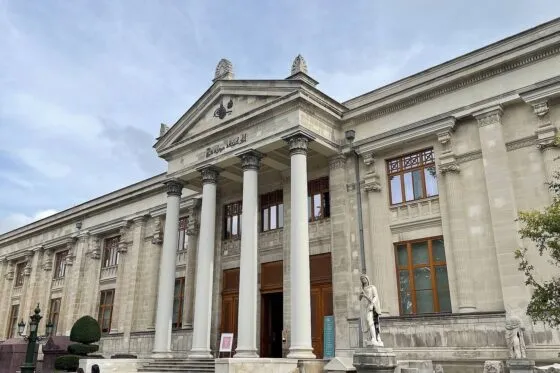
Right next to Topkapı Palace, the Archaeology Museums hold the best finds from the city’s early history. The star is the Alexander Sarcophagus, a masterpiece of ancient Greek sculpture.
Visiting: Entry is €15, and the Museum Pass is valid. Check the current opening hours before you go, and arrive early to beat tour groups.
The Hippodrome
The Hippodrome (Sultanahmet Square) was the heart of public life in Roman Constantinople. It was a racetrack that could seat a huge crowd, often given as up to 100,000 people. Today it is an open square, but three old monuments still stand: the Egyptian Obelisk, about 3,500 years old and brought from Egypt; the Serpentine Column from Delphi, made in 479 BC; and the stone Walled Obelisk. Entry is free.
Valens Aqueduct
The Valens Aqueduct (Bozdoğan Kemeri) was built in the late 300s to bring water into the city. Its tall stone arches still cross Atatürk Boulevard in the Fatih district. It is free to walk under and around, and it is one of the most underrated sights in the city. Our Fatih guide covers the area around it.
Istanbul as the Capital of the Eastern Roman Empire
Istanbul sits where Europe meets Asia, and its location made it one of the most important cities in history. Constantine chose it because water surrounds it on three sides, which made it easy to defend. As Constantinople, it was the capital of the Eastern Roman (Byzantine) Empire for more than a thousand years. Perched on the Bosphorus strait, it controlled trade between the Black Sea and the Mediterranean. That power and wealth are why the city is filled with so many grand buildings today.
Iconic Mosques in Istanbul
Istanbul’s mosques are not just places of worship. They are also monuments that reflect the city’s rich history and the influence of Islam. Two of the most famous are the Blue Mosque and Hagia Sophia, which face each other across Sultanahmet Square. All of the mosques below are working mosques, so visitors should dress modestly, take off their shoes and stay quiet during prayers.
Hagia Sophia: A Mix of Eastern Roman and Ottoman Influences
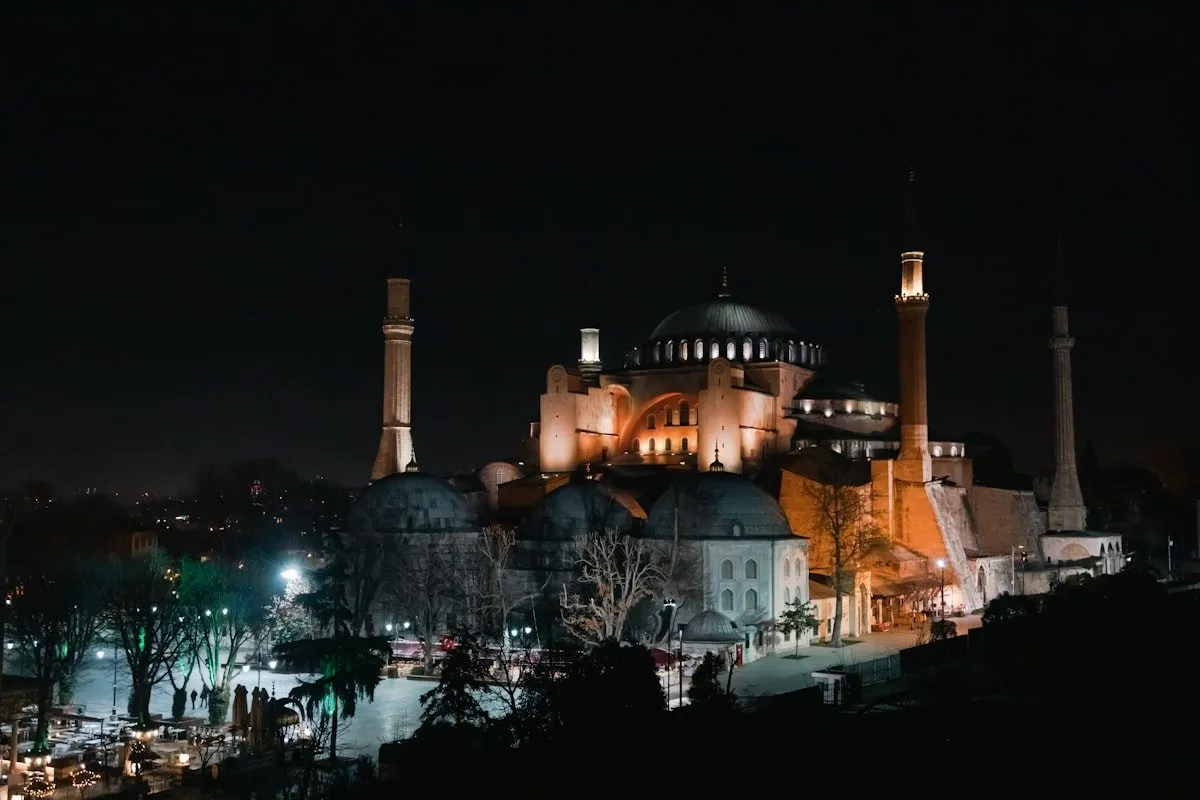
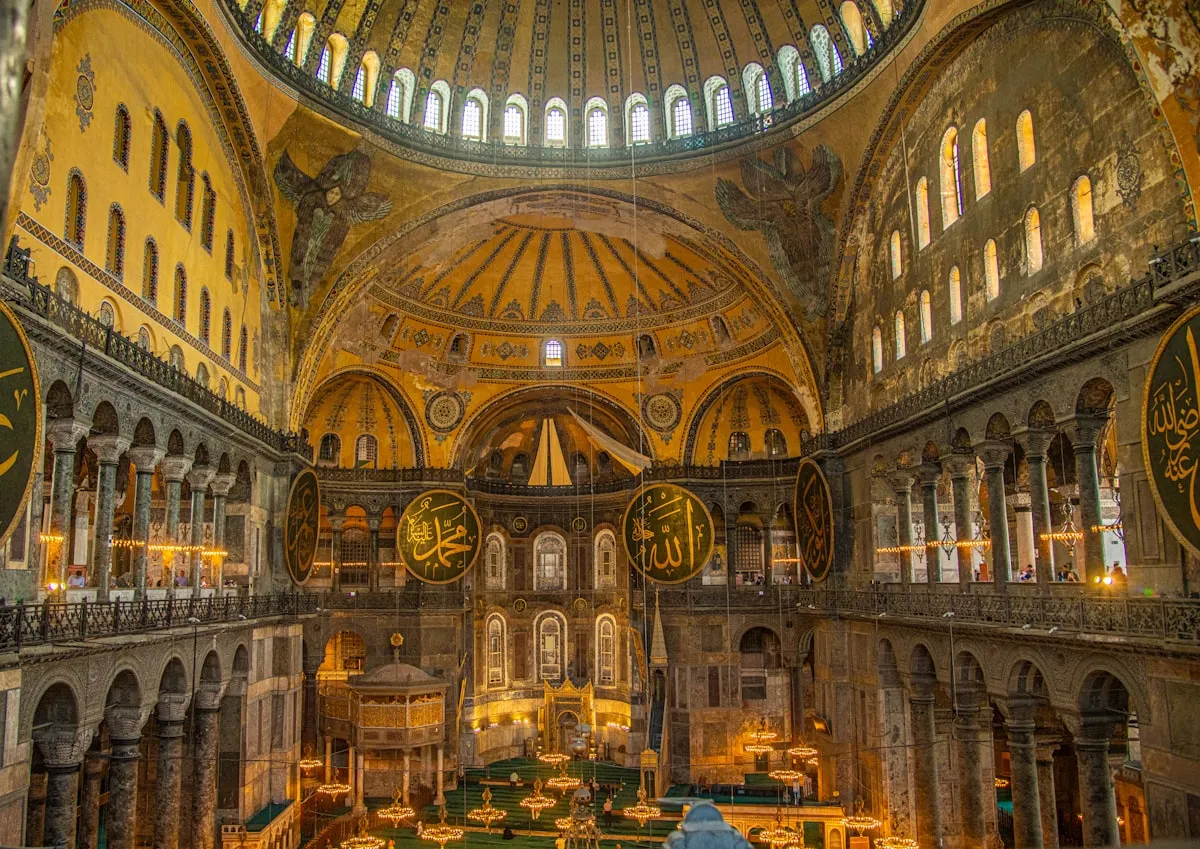
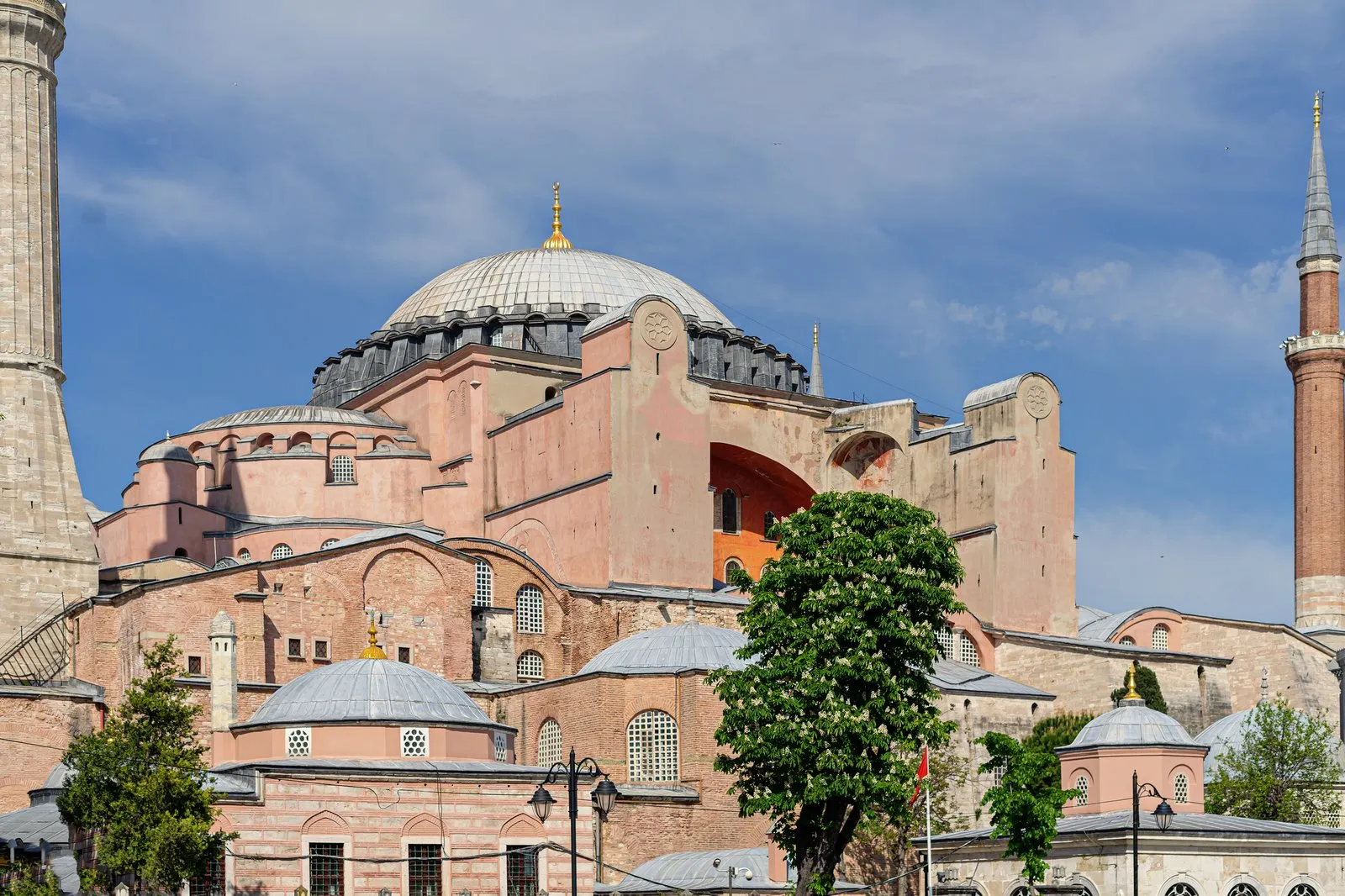
Hagia Sophia was finished in 537 under Emperor Justinian I, and for nearly a thousand years it was the largest church in the world. Its huge dome rises about 55 meters, and it seemed to float to the people who first saw it. Built as a church, it became a mosque after 1453, then a museum and now a mosque again, so it shows how the city changed over time. The upper galleries keep some of the finest Byzantine mosaics. The golden Deesis mosaic, showing Christ, the Virgin Mary and John the Baptist, is a highlight.
Visiting: Foreign visitors pay €25 and follow a visitor route on the upper gallery, using the side entrance. The ground floor is used as a prayer hall for worshippers. Tourist visits pause around Friday noon prayer (about 12:00 to 14:00). Restoration work is ongoing, and in 2026 there is scaffolding inside under the domes, but the building stays open, according to news reports. The nearby Hagia Sophia History and Experience Museum is a separate ticket.
Blue Mosque: A Symbol of Islamic Art
The Sultan Ahmed Mosque, commonly called the Blue Mosque, was finished in 1616 under Sultan Ahmed I. It is a classic example of Ottoman Islamic art. Its blue İznik tiles and great domes give it a breathtaking beauty, and the interior is just as striking. Its six minarets caused a stir at the time, because only the great mosque in Mecca had six.
Visiting: Entry is free. The mosque closes to visitors for about 30 minutes at each of the five daily prayers, and on Fridays it stays closed until after the midday prayer. Use the visitor entrance on the side, not the main worshippers’ door.
Süleymaniye Mosque
The Süleymaniye Mosque was built between 1550 and 1558 by the master architect Mimar Sinan for Sultan Süleyman the Magnificent. Many people see it as the most refined of all Ottoman mosques. It sits on a hill above the Golden Horn, and the inside is calmer and less crowded than the Blue Mosque, with beautiful light.
Visiting: Entry is free. Avoid prayer times and dress respectfully. It is an easy uphill walk from the Grand Bazaar.
Chora (Kariye Mosque)
The former Chora Church in the Fatih district has some of the finest Byzantine mosaics and frescoes in the world, mostly from the early 1300s. It reopened in 2024 as a working mosque with a visitor route, and it gets far fewer visitors than Sultanahmet.
Visiting: Foreign visitors pay €20, and the Museum Pass is not accepted, according to the official museum portal. It is open to tourists 09:00 to 18:00, closed on Fridays, and entry stops shortly before each prayer.
Unique Architecture Details of Istanbul Mosques
Istanbul’s mosques have special design features like tall minarets, courtyards and fountains for washing before prayer. Our guide to hidden mosques tourists skip has more quiet ones to visit.
Palaces and Sultan Residences
The palaces of the sultans show how grand life was for an Ottoman ruler. The most famous is Topkapı Palace, where the sultans and their courts lived for about 400 years.
Topkapı Palace: Home to Ottoman Sultans
Topkapı Palace, with its huge courtyards and richly decorated rooms, shows the power of the Ottoman Empire. Walking through its rooms and quiet gardens gives you a look into the lives of the sultans. Don’t miss the Harem, with some of the most beautiful tilework anywhere, the Treasury and the views over the Bosphorus from the far terraces.
Visiting: Opens at 09:00, and the ticket office closes at 17:00. It is closed on Tuesdays. The combined ticket (Palace, Harem and Hagia Irene) costs 2,750 TL (about $55) for foreign visitors, and the Harem alone is 1,050 TL. The Museum Pass covers the main palace but not the Harem. Arrive right at opening, as it gets very crowded by mid morning, and allow 3 to 4 hours. Our Topkapı Palace guide has more detail.
Dolmabahçe Palace and the Later Ottoman Palaces
The later Ottoman palaces along the Bosphorus, such as Dolmabahçe, show a more European style of royal life. Dolmabahçe was finished in 1856 and mixes Ottoman and European Baroque styles. It is huge, with 285 rooms, 43 halls and a giant Bohemian crystal chandelier said to weigh about 4.5 tonnes. It is also where Atatürk, the founder of modern Turkey, died in 1938.
Visiting: The main ticket for foreign visitors costs 2,000 TL (about $40) and includes the Selamlık, the Harem and the Painting Museum, valid for one week, according to the National Palaces website. The Museum Pass is not valid. It is closed on Mondays. It is a short walk along the waterfront from Beşiktaş.
Visiting the Basilica Cistern and Galata Tower
Basilica Cistern: A Fascinating Byzantine Structure
The Basilica Cistern (Yerebatan Sarnıcı) is a huge underground water store built in 532 under Justinian I. It could hold about 80,000 cubic meters of water for the Great Palace and nearby buildings. Its dim forest of 336 marble columns and the two Medusa-head column bases in the far corner give it a mysterious feeling that takes you back in time.
Visiting: Since June 2026, the cistern has been run by the General Directorate of Foundations (Vakıflar). The new foreign visitor price was not published online when we checked in November 2026. Tickets cost about 2,000 TL or more for foreign visitors, and evening sessions cost more, so check the price at the gate. It is open daily, from about 09:00 to 18:30. The Museum Pass is not valid here. The entrance is a short walk from Hagia Sophia, across Yerebatan Caddesi. See our Basilica Cistern guide for more tips.
Galata Tower: Seeing Istanbul from Up High
Galata Tower, in the historic Galata area, gives visitors an amazing 360-degree view of Istanbul. From the top you can see the Golden Horn, the Bosphorus and the domes of the Old City. In its current form, it was built by the Genoese in the 1300s, when Galata was a trading colony across the Golden Horn.
Visiting: Entry is €30, according to the Ministry of Culture and Tourism museum portal, and the Museum Pass is valid. It is open daily 08:30 to 18:15, with night visits from 19:00 to 23:00. Lines can be long in summer, so come early.
Visiting the Grand Bazaar and Bosphorus
Shopping and Culture at the Grand Bazaar
The Grand Bazaar is one of the oldest covered markets in the world. Its maze of lanes is lined with carpets, lamps, ceramics, jewelry and textiles. It shows Istanbul’s long trading history, and it’s a great place to practice friendly bargaining.
Visiting: Free to enter. Open Monday to Saturday, roughly 09:00 to 19:00, and closed on Sundays and religious holidays. Our Istanbul shopping guide covers the Grand Bazaar, the Spice Market and how to bargain.
Scenic Bosphorus: A Historical Landmark
The Bosphorus, with its beautiful shores and views, is a key part of Istanbul’s history. The strait shaped the city’s growth and its sea trade. A public ferry from Eminönü is a cheap way to see waterfront palaces, mosques and fortresses. Our guide to Bosphorus cruise options compares the boats.
Rumeli Fortress: Prelude to the Conquest
Mehmed II built Rumeli Fortress (Rumeli Hisarı) in about four months in 1452 to cut off supplies to Constantinople before the conquest. Its towers and walls climb the hillside above the Bosphorus and give great views of the strait. The Museum Pass is valid here; check the current ticket price before you go. Buses along the European shore toward Sarıyer stop nearby, and most Bosphorus cruises pass right in front of it.
One Day Historic Walk in Sultanahmet
Hagia Sophia, the Blue Mosque, the Basilica Cistern and Topkapı Palace are all within a short walk of each other. This route links them in one long day. Times are a rough guide, so adjust for prayer times and queues.
| Time | Sight | Entry |
|---|---|---|
| Early morning | Hagia Sophia (upper gallery) | €25 (about 1,375 TL) |
| Mid morning | Blue Mosque (outside prayer time) | Free |
| Late morning | Hippodrome and the Egyptian Obelisk | Free |
| Midday | Basilica Cistern | About 2,000 TL or more |
| Early afternoon | Topkapı Palace and Harem (arrive well before the 17:00 ticket office closing) | 2,750 TL (about $55) |
| Late afternoon | Archaeology Museums, next door to Topkapı (check closing time) | €15 (about 825 TL) |
Entry fees for this day add up to about 7,000 TL or more per person (about $140). Remember that Topkapı is closed on Tuesdays. Our Sultanahmet guide has a full plan for the area.
What to Avoid
- Not booking ahead: Queues at Hagia Sophia and Topkapı can take 1 to 2 hours in busy months. Book online where you can.
- Trying to see everything in one day: You can’t. Topkapı alone needs a full morning.
- Skipping Chora: It has fewer visitors and some of the best Byzantine art anywhere. Just don’t go on a Friday.
Wrapping Up
Istanbul is a very old and important city. Its palaces, mosques, hidden cisterns and busy bazaars invite you on a journey through time. Check the ticket prices and closing days above before you go, and you’ll get the most from your visit to this amazing city. For more places to visit, see our complete Istanbul museums guide.
Questions People Ask
How much is the Hagia Sophia ticket in 2026?
Foreign visitors pay €25 (about 1,375 TL) for the upper gallery visitor route. The ground floor is a prayer hall.
Which Istanbul historic sites are free?
The Blue Mosque, the Süleymaniye Mosque, the Hippodrome, the Valens Aqueduct and the Grand Bazaar are free. Most other big sites, such as Topkapı Palace, Galata Tower and the Basilica Cistern, charge an entry fee.
What days are Istanbul’s historic sites closed?
Topkapı Palace is closed on Tuesdays and Dolmabahçe Palace on Mondays. Chora is closed to tourists on Fridays, and the Grand Bazaar is closed on Sundays.
Does the Museum Pass Istanbul cover Hagia Sophia?
No. The Museum Pass Istanbul (€105, 5 days) does not include Hagia Sophia, the Basilica Cistern, Dolmabahçe Palace or Chora. It does cover the main Topkapı Palace (but not the Harem), Galata Tower and the Archaeology Museums.
How many days do I need for Istanbul’s historic sites?
Two full days covers the main sites. Spend one day in Sultanahmet and a second day on Galata Tower, Dolmabahçe and a Bosphorus ferry. Add a third day for Chora, the Süleymaniye and Rumeli Fortress.
Prices checked November 2026. 1 USD is about 50 TL and 1 EUR is about 55 TL. Prices change often, so check before you go. Attraction fees set in euros (€) are more stable.

Written by Deniz
Deniz is a video producer living in Kağıthane who explores a new corner of Istanbul every week and writes the practical guides she wishes friends had before visiting.