I remember the first time a shopkeeper in Istanbul invited me for tea and genuinely seemed offended when I tried to decline politely. It wasn’t a sales tactic. It was hospitality — misafirperverlik — and it’s as central to Turkish identity as the Bosphorus itself. Understanding Turkish culture doesn’t just make you a more respectful visitor. It unlocks a warmth and generosity that most tourists never access because they didn’t know it was there.
This guide covers the things that actually matter: the daily customs, the social rules, the celebrations you might stumble into, and the unwritten codes that make sense of Istanbul’s behavior.
Çay Culture: The Heart of Everything
Let’s start with tea, because almost everything in Turkish social life orbits around it.
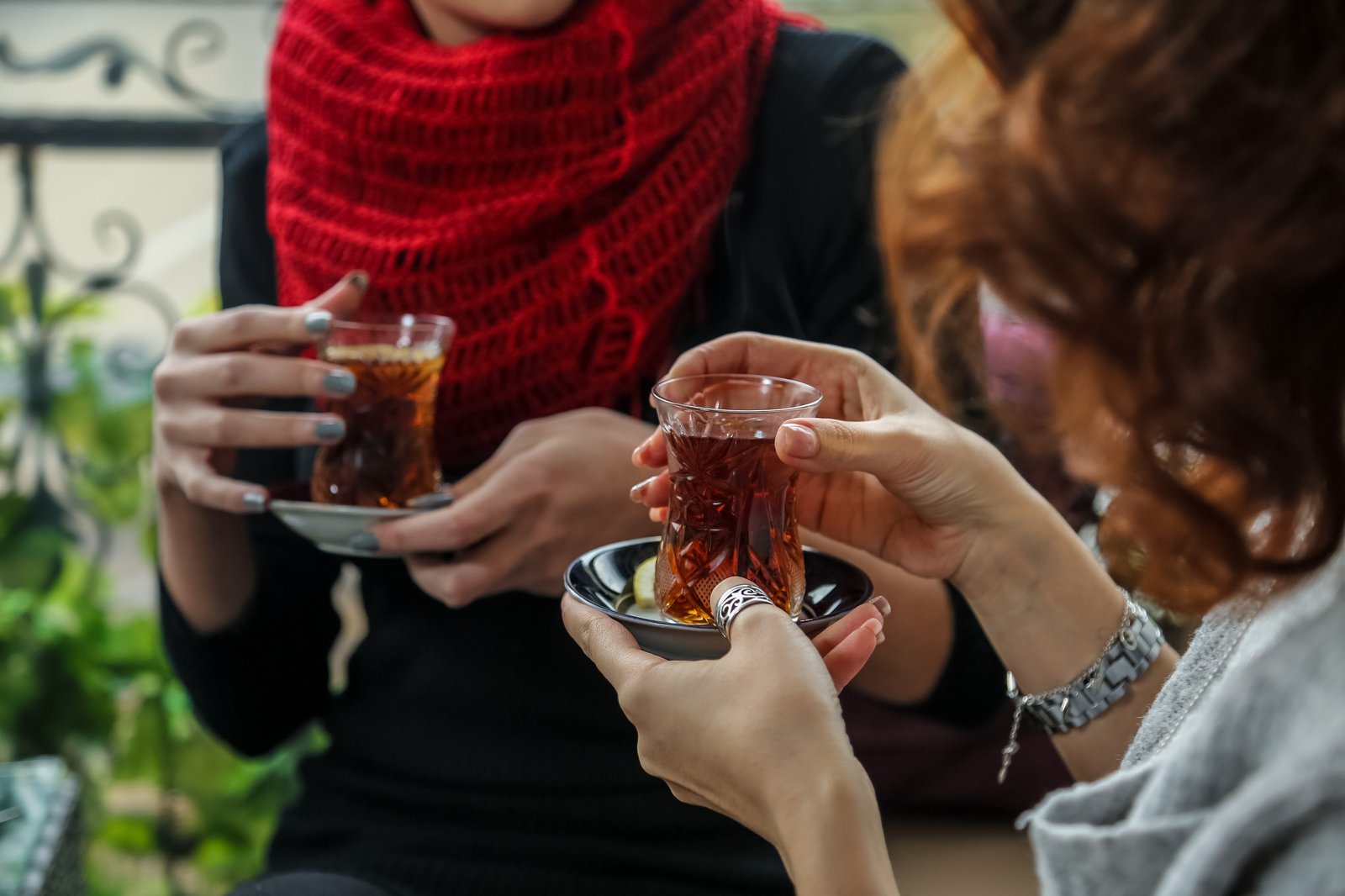
Çay (pronounced “chai”) is black Turkish tea, brewed strong and served in small tulip-shaped glasses with two cubes of sugar on the side. It costs 15–25 TL ($0.35) at a local tea house, practically nothing. But its value is incalculable.
Çay is the medium through which business is done, friendships are formed, arguments are resolved, and time is pleasantly wasted. A shopkeeper who invites you for çay isn’t necessarily trying to sell you something — he’s honoring you with hospitality. A neighbor who brings çay when you move into a new building is welcoming you to the community. A landlord who offers çay at the start of a negotiation is signaling goodwill.
The rules:
– Always accept at least one glass. Refusing is genuinely rude.
– If you don’t want sugar, say “az şekerli” (little sugar) or “şekersiz” (no sugar) before it’s poured.
– When you’ve had enough, turn the glass upside down on the saucer or place the small spoon across the top of the glass. This is the universal “I’m finished” signal.
– Unlimited refills are standard in tea gardens and homes. Don’t feel obligated to finish every glass — just signal when you’re done.
– Turkish coffee (Türk kahvesi) follows its own ritual: waited 2–3 minutes for grounds to settle, drunk slowly, never stirred. The grounds left behind are sometimes read for fortune-telling.
💡 Pro Tip: The phrase “Çok güzel” (very beautiful/delicious) said after drinking will make any host smile.
Hospitality: The Unwritten Law
Turkish hospitality (misafirperverlik) is not performative. It’s a deeply held value that places the guest’s comfort above the host’s convenience.
If you are ever invited into a Turkish home:
– Remove your shoes at the door. Always. Even if the host says “don’t worry about it,” remove them. They’re just being polite.
– You will be fed. Even if you’ve already eaten. Eat something, compliment the cooking (“Elinize sağlık” — “health to your hands”), and let the host feel they’ve honored you properly.
– You may receive gifts. Small items — tea, sweets, a souvenir. The polite response is mild protest followed by gracious acceptance.
– Expect people to drop by unannounced. Turkish social life has a much more fluid relationship with scheduling than Northern European culture. An unexpected visit from a neighbor or relative is a sign of affection, not an imposition.
Paying the Bill: The Great Turkish Battle
One of the most entertaining cultural experiences in Turkey is the battle over who pays the bill at a restaurant. Here’s what actually happens:
When the bill arrives, several people at the table will simultaneously reach for it. This is genuine, not performative. There will be protests, hand-waving, and declarations of intent. The person who “wins” pays for everyone.
Splitting the bill (hesabı bölüşmek) is increasingly common among younger, more urban Turks — but among older generations and in more traditional settings, someone always pays for everyone.
If you’re a guest and a Turkish friend or acquaintance invites you out, there’s a reasonable chance they intend to pay. Protest politely, offer genuinely once or twice, but don’t make a prolonged scene — accept graciously and reciprocate the next time.
“Ben ödeyeyim” (I’ll pay) followed by reaching for the bill is your opening move if you want to treat someone.
Physical Touch and Greetings
Turks are physically demonstrative in same-gender friendships in a way that sometimes surprises visitors from Northern European or American backgrounds.
– Men greet close male friends with a hug and a kiss on both cheeks, or by pressing their temples together
– Women greet female friends similarly
– Cross-gender greetings depend entirely on the individuals: some shake hands, some kiss cheeks, some just nod. Let the Turkish person lead — if they offer their hand, shake it; if they offer their cheek, kiss it; if they don’t, a nod and “merhaba” is perfectly fine
– Men holding hands with male friends or women walking arm-in-arm with female friends are common sights in Turkey. This is friendship, not romantic relationship.
What not to do: Don’t point with your finger directly at someone — use your whole hand to gesture. Don’t show the sole of your shoe toward someone (sitting cross-legged, be careful). Don’t whisper in someone’s ear at a dinner table.
Weddings (Düğün): If You’re Invited
Turkish weddings are enormous, loud, and genuinely joyful. If a Turkish colleague, neighbor, or friend invites you to their wedding — go. It’s one of the great cultural experiences of being in Turkey.
What to expect:
– Scale: Even “small” Turkish weddings often have 200–500 guests. Large family weddings can have 1,000+.
– Music and dancing: Loud Turkish pop and folk music, dancing that starts immediately and doesn’t stop. The halay (a line dance done with hands on shoulders) is everyone’s responsibility.
– Gold pins and money: Guests pin gold coins or TL banknotes directly onto the bride and groom’s clothing. This is a central ritual — bring an envelope with cash or a gold coin as your gift.
– Food timeline: Weddings typically run 4–6 hours. Food comes in waves. There’s no politely leaving early.
– Dress code: Smart-casual at minimum. Women wear colorful dresses (not black, which is associated with mourning). Men wear suit trousers and a shirt at minimum.
Kına Gecesi (Henna Night): The women-only celebration the night before the wedding, where the bride’s hands are decorated with henna. If invited, it’s an honor — these are family affairs rarely opened to outsiders.
Sünnet (Circumcision Celebrations)
One celebration you might stumble into is a sünnet şöleni — a circumcision ceremony. Turkish boys are circumcised between the ages of 5 and 10 (occasionally older), and the event is celebrated as a rite of passage with nearly wedding-like enthusiasm.
The boy is dressed in a white and gold sultan outfit — complete with a satin cape, scepter, and a sash reading “Maşallah” — and driven in a decorated car around the neighborhood, sometimes accompanied by a brass band. The celebration can involve a large party, live music, and guests bringing gifts and money.
The kirve is a Turkish tradition specific to sünnet: a respected friend or community member takes on a godfather-like role for the circumcision ceremony. The relationship between the kirve and the family often becomes lifelong. If you’re ever invited to be a kirve, it’s a serious honor.
Turks joke that a sünnet is “a wedding without the in-laws” — similar scale, similar joy, less complicated.
Lokma: Food as Community Ritual
Lokma are small fried dough balls, dusted in sugar or soaked in syrup. They’re delicious on their own. But in Turkish culture, they carry an entirely different significance.
Lokma is cooked in enormous cauldrons and distributed free to passersby as a religious and communal offering — typically in memory of a deceased person, to fulfill a vow (adak), or to mark a significant occasion. The family organizing the lokma distribution hires a cauldron, sets up in the street or outside a mosque, and gives the fried dough to anyone who walks by, regardless of whether they know the family.
The receiver is expected to say a brief prayer (Fatiha) for the soul of the deceased or the fulfillment of the vow. If you receive lokma, a simple “Teşekkürler” (thank you) is fine for a foreigner — though if you know the Arabic phrase “Fatiha’yı okudum” (I read the Fatiha), the family will be genuinely moved.
You’ll smell lokma before you see it — the scent of frying dough and sugar wafts an impressive distance. Follow your nose.
The Secular-Religious Spectrum
Istanbul is simultaneously one of the most progressive cities in the Muslim world and home to deeply conservative communities within the same city limits. Kadıköy on a Friday night looks nothing like Fatih on a Friday morning. Both are Istanbul.
The key principle: read the room. In Beyoğlu and Kadıköy, you’ll see women in miniskirts next to women in full hijab. In Fatih and Eyüp, conservative dress norms are stronger and alcohol is less visible.
During Ramadan (Ramazan), the entire city shifts: more people are fasting, iftar (fast-breaking) dinners become important social gatherings, and eating and drinking in public during daylight hours in conservative areas is disrespectful. In liberal neighborhoods, restaurants stay open and non-fasting residents eat normally — but sensitivity is always appreciated.
Language Tips
Turks are genuinely delighted when foreigners make any effort with Turkish. A few phrases go an enormous way:
– Merhaba — Hello
– Teşekkür ederim / Sağ ol — Thank you (formal / informal)
– Evet / Hayır — Yes / No
– Tamam — OK / Alright (used constantly)
– Lütfen — Please
– Ne kadar? — How much?
– Çok güzel — Very beautiful / very delicious
Saying “çok güzel” about someone’s cooking or their neighborhood will make them smile every time.
What to Avoid
– Discussing politics, Kurdish issues, or the Armenian Genocide with people you’ve just met: These are sensitive, contested topics that can shift a pleasant conversation into uncomfortable territory quickly
– Being loud on public transport: Turks are generally quieter on metros and buses than Americans or Australians might expect
– Assuming all religious rules apply to everyone: Turkey is secular; not all Turks pray, fast, or avoid alcohol. Don’t assume.
– Photographing people without permission: Especially in conservative neighborhoods, and especially of women
Conclusion
Turkish culture is one of the warmest, most hospitable, and most layered I’ve encountered anywhere. The tea tradition alone deserves a month’s study. What strikes most visitors, once they get past the tourist surface, is how genuinely glad Turks are to share their city, their table, their tea, and their traditions. Come curious, come respectful, and come ready to drink a lot of çay.
What aspect of Turkish culture surprised you most? Share in the comments — we love hearing what visitors discover.
Prices last updated: March 2026. Exchange rate: 1 USD ≈ 45 TL.
Useful links: Invest in Turkey Official Portal · Borsa Istanbul Stock Exchange