Basilica Cistern 2026: Tickets, Hours, and Best Time to Visit
Real 2026 ticket prices for the Basilica Cistern in Istanbul, current opening hours for the day and evening sessions, and why 09:00 or 19:30 beat midday.

In this guide
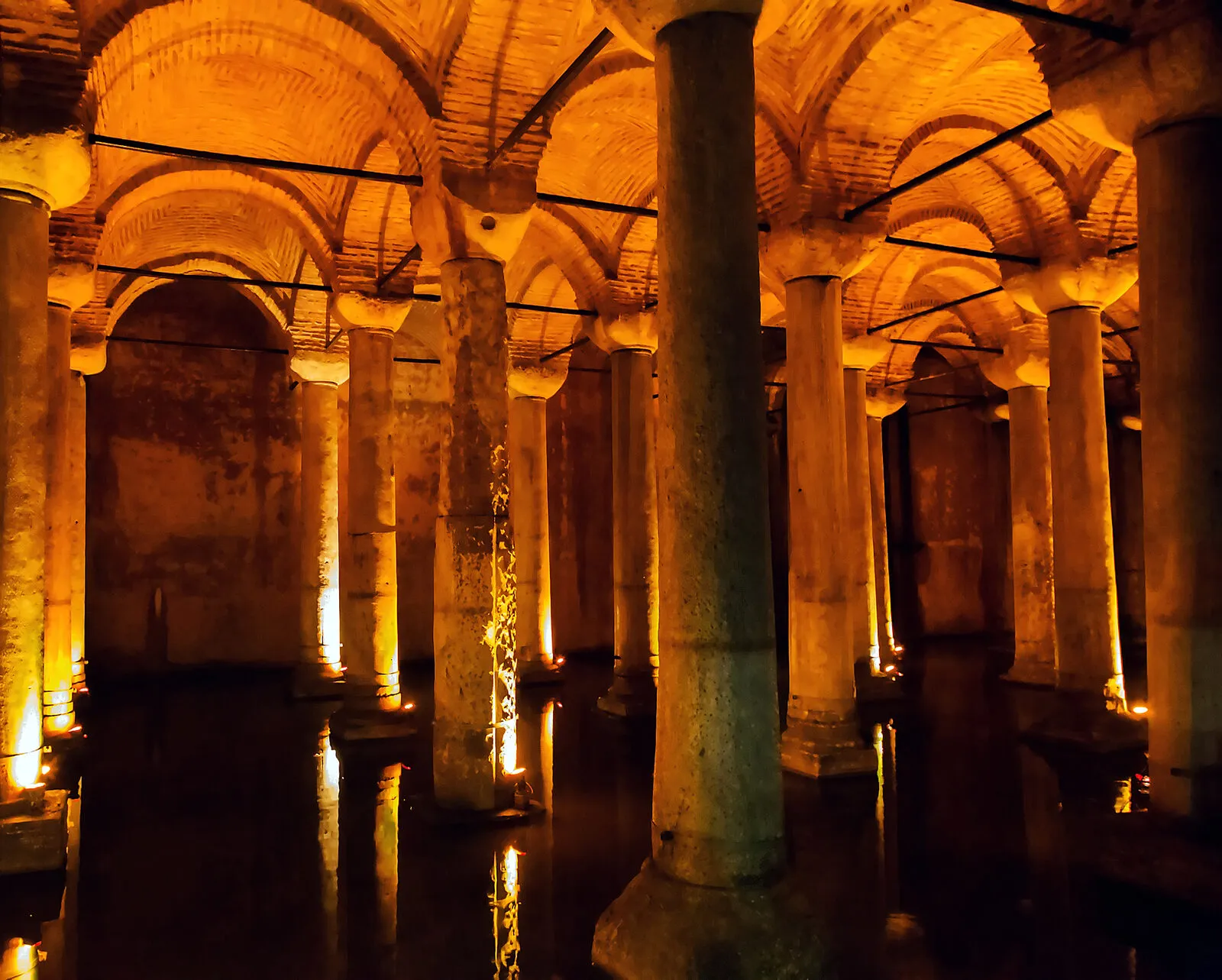
The Basilica Cistern is Istanbul’s most atmospheric attraction, an underground reservoir from the 6th century held up by 336 marble columns. It is also the site where visitors most often get overcharged, misinformed about hours, or stuck in the middle of a midday crowd. This guide covers what you actually need to know in 2026: real prices, session times, when to go, and how to avoid the expensive tourist tickets.
What the Basilica Cistern actually is
Built in 532 CE under Emperor Justinian, the Basilica Cistern (Yerebatan Sarnıcı in Turkish) once held 80,000 cubic meters of water for the Byzantine palace above. Today it is a preserved underground space, dimly lit, cool even in August, with walkways that let you circle 336 columns spread across almost 10,000 square meters. Two of the columns rest on carved Medusa heads placed sideways and upside down, which nobody has fully explained after 1,500 years.
The atmosphere is what people remember. Water still drips from the ceiling. Fish swim between the columns. The lighting is deliberately theatrical. It appears in From Russia With Love and Inferno, which is why some visitors call it the Bond cistern.
Opening hours and sessions (2026)
The cistern operates in two daily sessions, seven days a week:
- Day session: about 09:00 to 18:30
- Evening session: about 19:30 to 22:00
There is a break between sessions (18:30 to 19:30) when the site closes for staff transition. The evening session costs more than the day session, so timing is about budget as well as atmosphere and crowds. The site changed operators in June 2026, so confirm the session times on the official website before you go.
Ticket prices in 2026 (what you actually pay)
This is where visitors get burned. The Basilica Cistern is one of Istanbul’s most expensive attractions per hour spent inside. Depending on how you buy, you will pay anywhere from around 40 to 60 dollars for the same ticket.
- At the door (walk-up): about 2,000 TL or more for foreign visitors, and the evening session costs more. The cistern still charges TL at the physical ticket window, so check the price at the gate.
- Official online ticket (official website / official partners): Around 55 to 60 USD equivalent, with skip-the-line QR code
- Istanbul Welcome Card skip-the-line: €49.90 with audio guide app in 7 languages
- GetYourGuide fast-track + audio guide: From 53 USD, audio guide in 11 languages, flexible date, 24-hour cancellation
Do the math. At the current exchange rate (around 50 TL per USD), a door price of about 2,000 TL is roughly 40 USD for the day session, but you have to queue for the ticket window on top of the security queue.
When to go: crowds, timing, and the evening secret
Google’s Popular Times data (based on anonymized location data from millions of phones) shows a very predictable crowd pattern:
- 09:00 to 10:00: 18 to 25 percent busy, the calm window
- 11:00 to 15:00: 50 to 60 percent busy, the midday crush
- 16:00 to 18:00: 30 to 40 percent busy and winding down
- 19:30 to 22:00 (evening session): 22 to 29 percent busy, almost as quiet as the morning
Two windows to aim for: right at 09:00 opening, or the evening session starting at 19:30. Both give you 30 percent fewer people in your photos and enough space to actually pause at the Medusa columns without being pushed along.
The evening session has one more advantage. The lighting reads differently after dark, more theatrical, more Bond-film. Multiple recent GetYourGuide reviewers specifically call out “a relaxing and fun evening, a wonderful atmosphere” for the after-hours session.
What to look for inside
Most visitors walk the perimeter, take a photo of the Medusa heads, and leave. You can do more:
- The two Medusa columns in the northwest corner. One head is on its side, one is upside down. Various theories exist (Byzantine anti-pagan repurposing, spiritual protection of the water, or just convenient recycled masonry). All theories are guesses.
- The Weeping Column (Peacock Column) toward the middle, carved with tear-shaped drops that some Byzantines associated with the slaves who died building the reservoir.
- The mismatched columns. Because they were recycled from earlier Roman buildings, the 336 columns are different heights, styles, and materials. Look up as you walk. The columns tell you which imperial monuments the Byzantines demolished for parts.
- The fish. Real koi live in the shallow water. They are used to visitors.
Audio guide: yes or no?
Audio guides come with most online tickets (Istanbul Welcome Card offers 7 languages, GetYourGuide 11). The commentary is decent, roughly 45 minutes if you listen to everything. Whether it is worth downloading depends on you:
- Yes, if you like history and would otherwise not know what a cistern was doing under a Byzantine palace
- No, if you just want to walk through, take photos, and feel the atmosphere
What to wear and bring
- Layer up. The cistern is cool and damp year-round, around 15-18°C even in August. Bring a light jacket or long sleeves if you burn easily in air conditioning.
- Grippy shoes. The walkways get wet from ceiling drip. Flip-flops slip.
- Headphones/earbuds. If you are using the audio guide app, no headphones are provided.
- Charged phone. For the audio guide and photos.
- Small bag. Security screens everyone, so anything oversized adds time.
Accessibility (be realistic)
The Basilica Cistern is not wheelchair accessible. Google Maps flags this and the venue confirms it. Access is by stairs down into the underground chamber, with no lift. If mobility is a concern, call ahead on +90 216 695 21 00.
Strollers are also not recommended. Fold-up baby carriers work better.
Combining it with other Sultanahmet stops
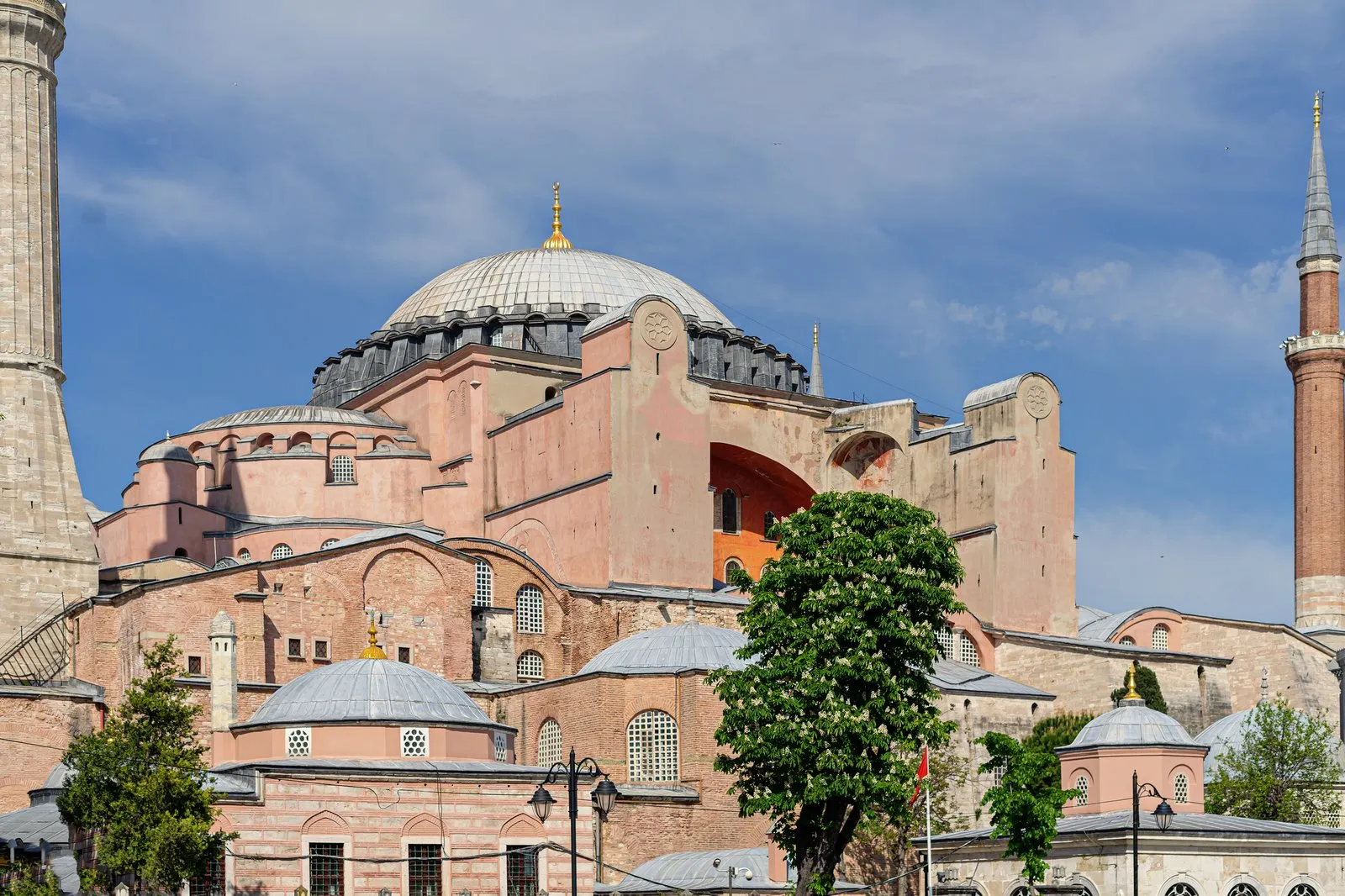
The entrance is at Yerebatan Caddesi 1/3, Sultanahmet, about 90 seconds walk from Hagia Sophia. A logical half-day loop:
- 09:00 open Hagia Sophia (before the tour buses)
- 10:30 walk over to Basilica Cistern
- 12:00 lunch at one of the honest Sultanahmet spots covered in our eating in Sultanahmet guide
- 14:00 Topkapi Palace (allow 3 hours)
Or invert it and do the cistern’s evening session as the last stop after Topkapi, which some people prefer because you leave into a lit-up Sultanahmet Square at night.
Common mistakes visitors make
- Going at 13:00. Peak crowds. You will move at the pace of the group in front of you.
- Buying “skip the line” from a tout outside. Some are legitimate, some are reselling official tickets at a markup. Book online through an established platform.
- Assuming fast-track means no wait. Fast-track skips the ticket queue only. Security is universal.
- Not knowing about the evening session. Half the visitors never realize it exists. The evening is often the better experience.
- Being surprised by the price. At around 40 to 60 USD for what is essentially a 45-minute walk, it is expensive. Frequent visitor complaint in reviews. Set expectations accordingly.
Is it worth it?
Yes, for most first-time visitors to Istanbul. The atmosphere is genuinely different from anything else in the city. But it is expensive, it is short (30 to 60 minutes is typical), and if you are on a tight budget, you can skip it in favor of Topkapi and Hagia Sophia without missing the essential Istanbul experience.
The evening session at 19:30 is what tips it from “worth it” to “worth it and one of my best Istanbul memories” for most people.
Sources
Current opening hours confirmed via Google Maps official listing and the official Yerebatan Cistern website. Ticket prices and skip-the-line options verified against GetYourGuide and Istanbul Welcome Card, both current as of August 2026.
For a full Sultanahmet itinerary, see our Top Historical Sites walking tour and the Sultanahmet hidden corners guide for the quieter streets around the main sights.

Written by Deniz
Deniz is a video producer living in Kağıthane who explores a new corner of Istanbul every week and writes the practical guides she wishes friends had before visiting.